
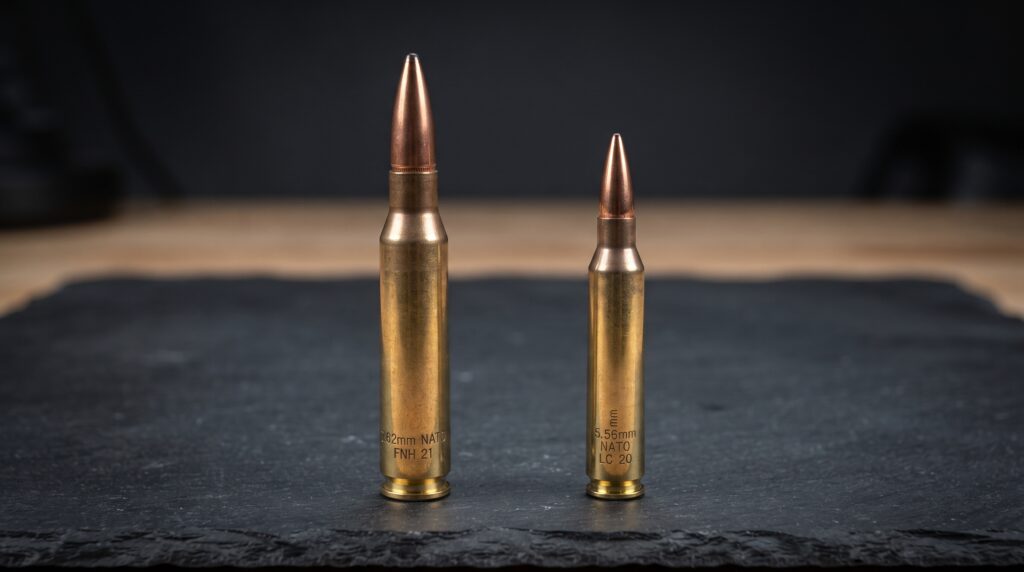
The comparison 7.62 or 5.56 is common when discussing military history, firearms terminology, ammunition, and sporting equipment. Both numbers are widely recognized, but they don’t always refer to one specific cartridge.
The term 5.56 commonly refers to the 5.56×45mm cartridge, while 7.62 can refer to several different cartridges. Examples include 7.62×39mm, 7.62×51mm, and 7.62×54R.
This distinction is important because the numbers alone don’t provide enough information to identify a complete cartridge. Understanding the terminology, historical background, and differences can help readers avoid common misconceptions.
7.62 or 5.56: Quick Answer
7.62 and 5.56 are numerical designations used in the names of different cartridges.
5.56 most commonly refers to 5.56×45mm, while 7.62 can appear in the names of several cartridges.
| Designation | Example | General association |
|---|---|---|
| 5.56 | 5.56×45mm | NATO and modern military history |
| 7.62 | 7.62×39mm | Soviet and Eastern Bloc military history |
| 7.62 | 7.62×51mm | NATO and Western military history |
| 7.62 | 7.62×54R | Long established military cartridge family |
The most important point is that 7.62 does not identify one single cartridge.
What Does 5.56 Mean?
5.56 is commonly used as shorthand for the 5.56×45mm cartridge.
The designation uses millimeter measurements. The first number is associated with the approximate projectile diameter, while the second number refers to the case length.
The 5.56×45mm cartridge became particularly important through military standardization and its association with NATO.
Today, the term 5.56 is widely recognized in discussions involving military history, sporting firearms, and ammunition terminology.
What Does 7.62 Mean?
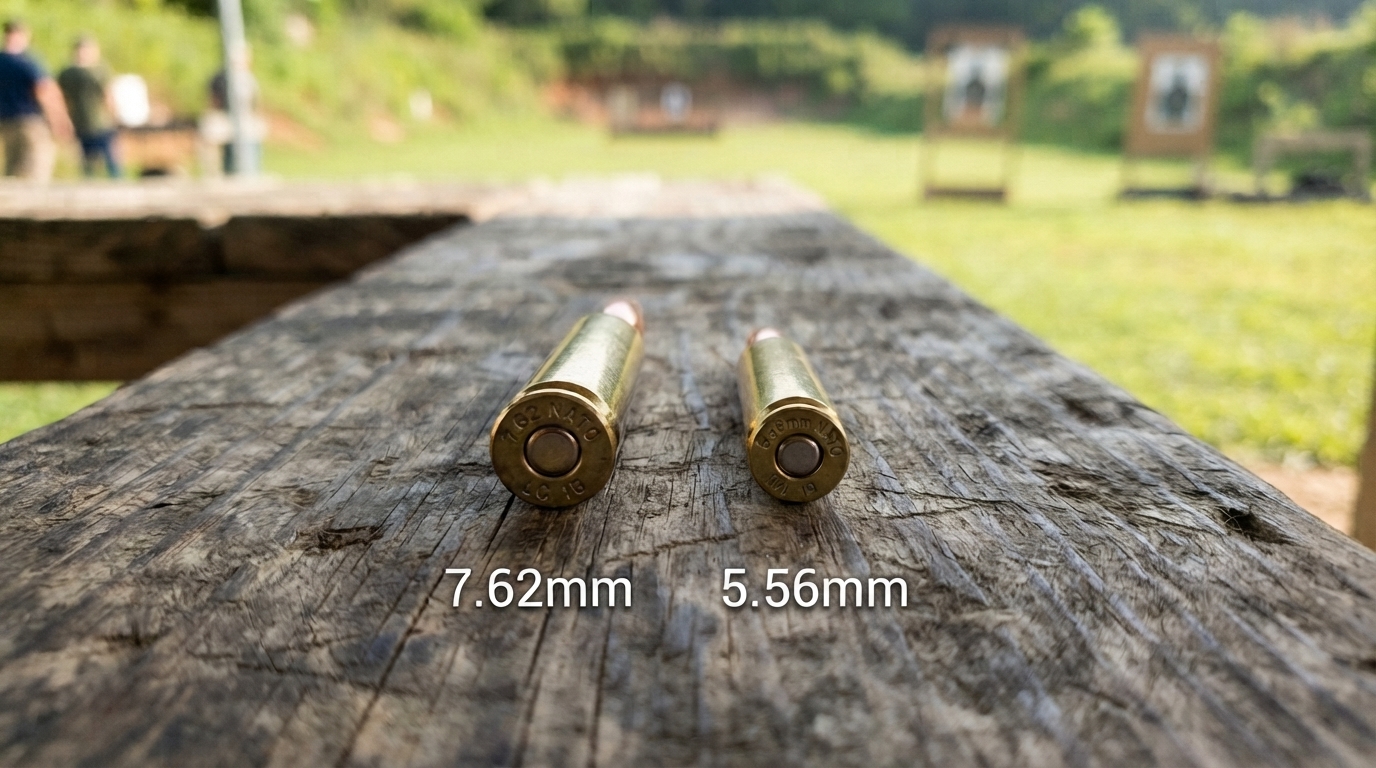
7.62 is a broader designation.
Several different cartridges use 7.62 as part of their names. Some of the best known examples include:
- 7.62×39mm
- 7.62×51mm
- 7.62×54R
Although these cartridges share the 7.62 designation, they are different cartridge designs with different dimensions, histories, and applications.
This is why simply saying “7.62” can be ambiguous.
7.62 vs 5.56: Key Differences
| Feature | 5.56 | 7.62 |
| Common example | 5.56×45mm | 7.62×39mm, 7.62×51mm, 7.62×54R |
| Designation type | Usually associated with one well known cartridge family | Used across several cartridge families |
| Approximate diameter number | 5.56 mm | 7.62 mm |
| Historical associations | NATO and modern military systems | Multiple military systems and historical periods |
| Terminology | Relatively specific | More ambiguous |
| Common misunderstanding | Treating shorthand as a complete specification | Assuming all 7.62 cartridges are identical |
| Complete designation needed | Yes | Especially important |
| Interchangeability | Must be determined from exact specifications | Must be determined from exact specifications |
| Historical importance | Significant | Significant |
| Civilian discussion | Common | Common |
| Safety consideration | Verify exact designation | Never rely on 7.62 alone |
1. Cartridge Designation
The biggest difference between 7.62 or 5.56 is how the numbers are used in cartridge names.
A complete designation provides more information than a single diameter number.
For example, 5.56×45mm identifies a specific cartridge family, while 7.62 can appear in several different cartridge names.
This means the complete designation should be used when accuracy matters.
2. Historical Development
Both 5.56 and 7.62 have important places in modern military history.
The 5.56×45mm cartridge became closely associated with NATO and the development of lighter military ammunition systems.
The 7.62 designation appears in several historically important cartridges developed for different military requirements and periods.
The history of these cartridges reflects changes in military doctrine, technology, and equipment.
3. 5.56×45mm
The 5.56×45mm cartridge is one of the best known cartridges associated with the 5.56 designation.
It became an important NATO standard and has been used by military forces in many countries.
Its widespread adoption helped make 5.56 one of the most recognizable ammunition designations in modern military history.
4. 7.62×39mm
The 7.62×39mm cartridge has a strong historical connection with Soviet designed military firearms and the Cold War period.
It became widely distributed internationally and remains an important part of military and firearms history.
However, it should not be confused with other cartridges that also use the 7.62 designation.
5. 7.62×51mm
The 7.62×51mm cartridge is another important cartridge associated with the 7.62 designation.
It became a NATO standard and has been used in various military systems.
Its history is different from that of the 7.62×39mm cartridge, despite both having 7.62 in their names.
6. 7.62×54R
The 7.62×54R is another well known cartridge using the 7.62 designation.
It has a long history and has been associated with military equipment dating back to the late nineteenth century.
The “R” in its designation is an important part of its name and distinguishes it from other 7.62 cartridges.
7. Why the Number Alone Can Be Misleading
One of the most common mistakes is treating 7.62 as though it describes one specific cartridge.
It doesn’t.
The same numerical designation can appear in different cartridge names.
Similarly, using “5.56” as shorthand can sometimes hide important details about the exact ammunition specification.
For accurate identification, the complete designation is more useful than the number alone.
8. Size Terminology
The numbers 5.56 and 7.62 are expressed in millimeters.
The first number generally relates to approximate projectile diameter.
However, comparing these numbers alone doesn’t tell you everything about a cartridge.
A cartridge includes multiple dimensions and characteristics, so a complete designation is needed when discussing technical compatibility.
9. Military Significance
Both designations have played major roles in military history.
5.56×45mm became strongly associated with NATO and modern service rifles.
Different 7.62 cartridges have been used by military forces across Europe, Asia, North America, and other regions.
Their widespread use makes both designations important subjects in military history and ammunition research.
10. Civilian and Sporting Context
Both 5.56 and several 7.62 cartridges are also discussed in civilian sporting contexts.
Availability and legality vary by country and jurisdiction.
Anyone researching ammunition should check applicable local laws and rely on manufacturer information for exact specifications.
11. Safety and Compatibility
The most important practical point is that ammunition compatibility should never be determined from a number alone.
Two cartridges can have similar or related numerical designations while having different specifications.
Always follow the firearm manufacturer’s stated chamber and ammunition requirements.
If the identification of ammunition is uncertain, don’t rely on appearance, internet shorthand, or assumptions. Consult the manufacturer’s documentation or a qualified professional.
7.62 or 5.56: Which Is Better?
There isn’t one universal answer because 7.62 and 5.56 can refer to different cartridge families.
The comparison depends on the specific cartridges being discussed and the historical or sporting context.
For general educational purposes, it is more accurate to ask about a specific cartridge designation rather than simply asking whether 7.62 or 5.56 is better.
This prevents different cartridges from being incorrectly grouped together.
Common Misconceptions
Misconception 1: All 7.62 Cartridges Are the Same
This is incorrect.
7.62 appears in several different cartridge names.
Misconception 2: 7.62×39mm and 7.62×51mm Are Identical
They are different cartridges with different specifications and historical backgrounds.
Misconception 3: The Number Tells You Everything
A single diameter number isn’t enough to identify a complete cartridge.
Misconception 4: Similar Numbers Mean Compatibility
They don’t.
Exact compatibility depends on the firearm and cartridge specifications.
Misconception 5: 5.56 and 7.62 Each Represent Only One Cartridge
The 7.62 designation is particularly broad, with several well known cartridges using the number.
Pros and Cons of the Terminology
5.56
Advantages
- Commonly associated with 5.56×45mm
- Widely recognized
- Important in NATO history
- Frequently discussed in modern military history
- Relatively specific when used with the complete designation
Limitations
- Often used as shorthand
- Can hide important specification details
- Should not be treated as a complete technical description by itself
7.62
Advantages
- Appears in several historically important cartridges
- Widely recognized internationally
- Important in military history
- Useful when discussing cartridge families
Limitations
- Can refer to several different cartridges
- Easily misunderstood without the full designation
- Should never be used alone to determine compatibility
Common Mistakes When Comparing 7.62 and 5.56
- Comparing only the numbers
- Treating 7.62 as one specific cartridge
- Ignoring the second part of a cartridge designation
- Assuming similar names mean compatibility
- Confusing 7.62×39mm with 7.62×51mm
- Relying on online shorthand
- Ignoring manufacturer specifications
- Forgetting that ammunition terminology varies by context
FAQs
Is 7.62 bigger than 5.56?
The numerical diameter designation 7.62 is larger than 5.56. However, this comparison alone doesn’t describe the complete characteristics of the cartridges.
What does 5.56×45mm mean?
5.56×45mm is a cartridge designation expressed in millimeters. The first number relates to approximate projectile diameter, while the second refers to case length.
What does 7.62 mean?
7.62 is a designation that appears in the names of several different cartridges. It isn’t enough by itself to identify one specific cartridge.
Is 7.62×39mm the same as 7.62×51mm?
No. They are separate cartridge designs with different specifications and historical backgrounds.
Why are there different 7.62 cartridges?
Different cartridge designs can use similar projectile diameter designations while having different case dimensions and purposes.
Is 5.56 the same as 5.56×45mm?
In everyday discussions, 5.56 is often used as shorthand for 5.56×45mm. The complete designation is clearer when technical accuracy matters.
Which is more common, 7.62 or 5.56?
Both are widely recognized. Their prevalence depends on the country, historical period, military system, and specific cartridge being discussed.
Can ammunition be identified from 7.62 alone?
No. The complete cartridge designation is needed for reliable identification.
Are 5.56 and 7.62 interchangeable?
They should not be assumed to be interchangeable. Ammunition must match the exact firearm specifications provided by the manufacturer.
Why is the complete cartridge name important?
The complete designation provides more information than a single diameter number and helps distinguish between different cartridge families.
Conclusion
The comparison 7.62 or 5.56 is more complicated than simply comparing two numbers.
5.56 is commonly associated with the 5.56×45mm cartridge, while 7.62 appears in several different cartridge names, including 7.62×39mm, 7.62×51mm, and 7.62×54R.
Both designations have significant historical importance and appear frequently in military and sporting discussions.
The most important lesson is to use the complete cartridge designation whenever accuracy matters. A number such as 7.62 or 5.56 alone doesn’t provide enough information to determine every characteristic of a cartridge.
For safety, always follow manufacturer specifications and applicable laws when dealing with firearms and ammunition.