
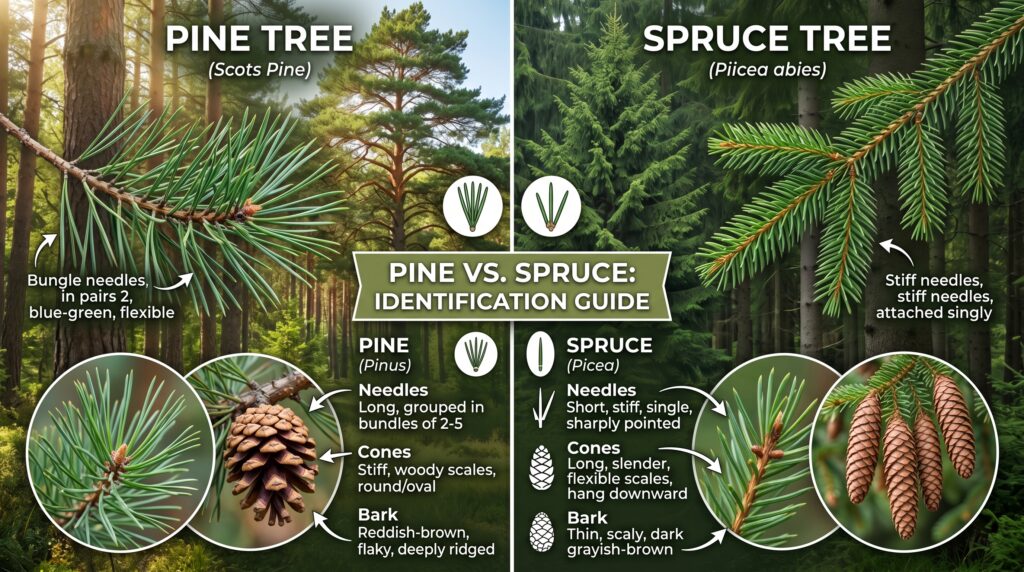
pine or spruce

Pine or Spruce? The Ultimate Guide to Choosing the Right Wood in 2026

Pine or Spruce: Which Wood Is Better?

If you’re planning a woodworking, furniture, or construction project, you may be wondering whether to choose pine or spruce.

Both are popular softwoods widely used in construction, furniture making, and DIY projects. Because they share similar colors and come from evergreen trees, many people assume they are virtually identical.

Although they have some similarities, pine and spruce differ in strength, appearance, durability, and ideal applications. Choosing the right one can improve both the quality and longevity of your project.

This guide explains everything you need to know about pine and spruce, helping you make the best decision for your needs.

Quick Answer : Pine or Spruce

Pine is generally more affordable, easier to work with, and popular for furniture and interior projects.

Spruce is typically stronger for its weight and is widely used in construction, framing, and musical instruments.

Choose pine for decorative projects and easy workability. Choose spruce when strength and structural performance are higher priorities.
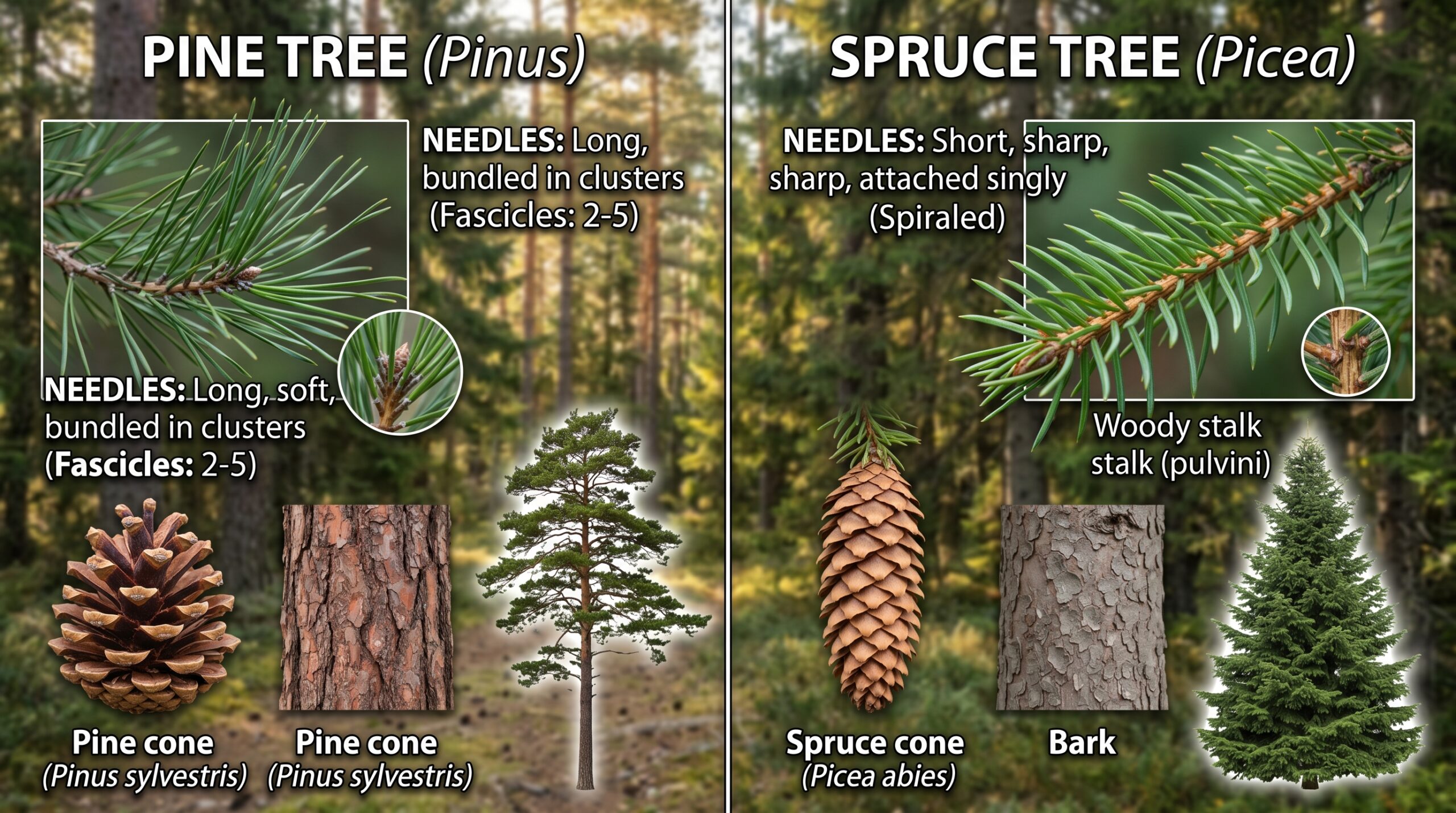
pine or spruce


What Is Pine?

Definition

Pine is a softwood obtained from trees in the Pinus genus. It is one of the most widely used woods in the world due to its availability and affordability.

Key Characteristics

  • Light color
  • Distinct grain patterns
  • Easy to cut and shape
  • Affordable
  • Widely available

Best Uses

  • Furniture
  • Shelving
  • Interior trim
  • DIY projects
  • Decorative woodworking

Examples

Example 1

A homeowner builds bookshelves using pine boards.

Example 2

A carpenter uses pine for interior molding.

Example 3

A DIY enthusiast creates a coffee table from pine lumber.

Key Insight

Pine is valued for its affordability and ease of use.


What Is Spruce?

Definition

Spruce is a softwood obtained from trees in the Picea genus and is commonly used in construction and specialty woodworking applications.

Key Characteristics

  • Straight grain
  • High strength-to-weight ratio
  • Uniform texture
  • Lightweight
  • Good structural performance

Best Uses

  • House framing
  • Roof trusses
  • Aircraft components
  • Musical instruments
  • Structural applications

Examples

Example 1

Builders use spruce in residential framing.

Example 2

A guitar manufacturer selects spruce for the instrument’s soundboard.

Example 3

Spruce lumber is used in roof construction.

Key Insight

Spruce is known for combining light weight with impressive strength.


Pine vs Spruce: Key Differences

Main Differences

  • Pine often has more visible knots.
  • Spruce typically has a straighter grain.
  • Pine is easier to stain.
  • Spruce is often stronger for structural use.
  • Pine is common in furniture making.
  • Spruce is common in framing and construction.

Comparison Table of Pine or Spruce

FeaturePineSpruce
Wood TypeSoftwoodSoftwood
CostUsually lowerModerate
AppearanceMore knots and grain variationStraighter grain
StrengthGoodVery good
WorkabilityExcellentGood
Structural UseModerateExcellent
Furniture UseExcellentGood
WeightLightVery light
Best ForFurniture and DIY projectsConstruction and structural work

Real-World Usage Scenarios

Scenario 1

DIY Builder: “I want inexpensive wood for shelves.”

Expert: “Pine is often a great choice.”

🎯 Lesson: Pine is budget-friendly and easy to work with.


Scenario 2

Contractor: “I need lumber for framing.”

Supplier: “Spruce is commonly used for structural applications.”

🎯 Lesson: Strength matters in construction.


Scenario 3

Musician: “What wood is often used for guitar tops?”

Luthier: “Spruce is a popular choice.”

🎯 Lesson: Spruce has unique acoustic properties.


Scenario 4

Homeowner: “I want rustic-looking furniture.”

Woodworker: “Pine’s natural knots can create that appearance.”

🎯 Lesson: Pine offers distinctive visual character.


Scenario 5

Builder: “I need lightweight but strong lumber.”

Supplier: “Consider spruce.”

🎯 Lesson: Spruce provides an excellent strength-to-weight ratio.


Common Mistakes

Mistake 1: Assuming All Softwoods Are the Same

Why it happens:

People focus only on wood classification.

Correction:

Different softwoods have different strengths and characteristics.


Mistake 2: Choosing Based Only on Price

Why it happens:

Budget often drives decisions.

Correction:

Consider performance requirements as well.


Mistake 3: Ignoring Project Purpose

Why it happens:

Wood selection is based solely on appearance.

Correction:

Match the wood to the intended application.


Mistake 4: Overlooking Finishing Requirements

Why it happens:

Different woods absorb finishes differently.

Correction:

Test stains and finishes before completing the project.


Memory Tricks

Remember Pine

Pine = Practical, Popular, and Project-Friendly

Think furniture, DIY, and affordability.

Remember Spruce

Spruce = Strong, Straight, Structural

Think framing, strength, and performance.


Expert Insight

While both pine and spruce belong to the softwood category, they have developed different reputations within the woodworking and construction industries.

Pine became popular due to its abundance, affordability, and ease of machining. Spruce gained widespread use because of its favorable strength-to-weight ratio, making it valuable for structural projects and specialized applications such as musical instruments.

Professional builders and woodworkers often select between them based on project requirements rather than considering one universally superior.


Conclusion : Pine or Spruce

When comparing pine or spruce, neither wood is inherently better. The right choice depends on your project’s goals.

  • Choose pine for furniture, interior projects, decorative woodworking, and budget-friendly DIY work.
  • Choose spruce for framing, structural applications, and projects where strength-to-weight performance is important.
  • Consider appearance, durability needs, budget, and intended use before making your decision.

By matching the wood species to your project requirements, you’ll achieve better results and long-term satisfaction.

Scroll to Top