
unagi or anago

Unagi or Anago: 7 Amazing Differences Explained to Choose the Best Japanese Eel Dish

Unagi or Anago: 7 Amazing Differences Explained for Japanese Food Lovers

Choosing between unagi or anago can be confusing because both are Japanese eel dishes and often appear similar on menus. Many people think they are the same, but they come from different types of eel and offer different flavors, textures, and cooking styles.

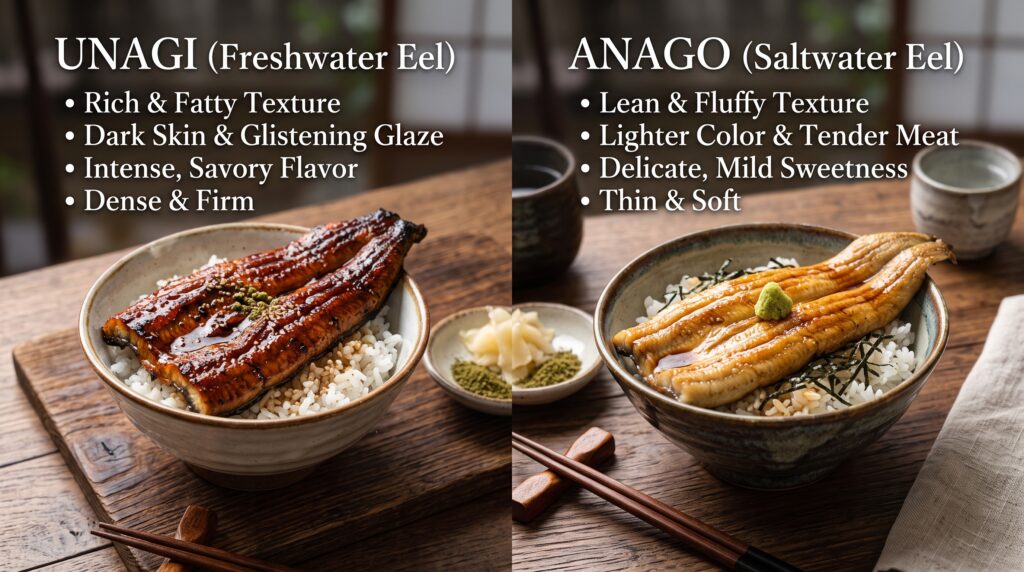
Although they look alike, unagi and anago have important differences. Unagi is known for its rich, fatty taste, while anago is lighter, softer, and more delicate.

This guide explains the difference between unagi vs anago, including taste, preparation, nutrition, popular dishes, and how to choose the right option.


Quick Answer: Unagi or Anago?

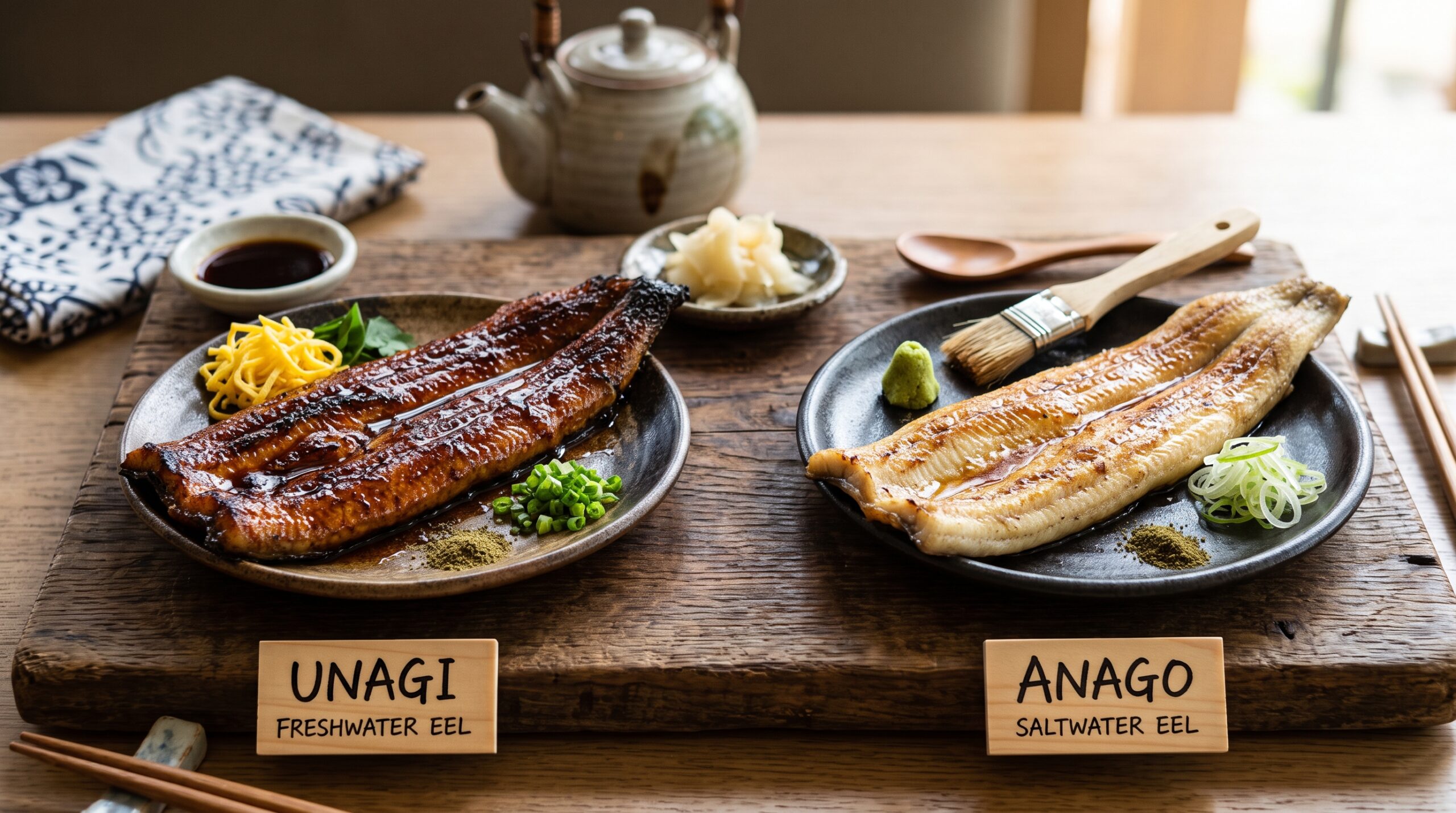
Unagi is freshwater eel with a richer, fattier flavor and is usually grilled with a sweet sauce. Anago is saltwater eel with a lighter taste and softer texture, often served in sushi and traditional Japanese dishes.

Choose unagi for a bold, savory flavor. Choose anago for a lighter and more delicate experience.
unagi or anago


What Is Unagi?

Unagi is a Japanese freshwater eel that is widely enjoyed in Japanese cuisine.

It is famous for its rich flavor and traditional preparation method called kabayaki, where the eel is grilled and coated with a sweet soy based sauce.

Popular unagi dishes include:

• Unadon (eel over rice)
• Unaju (eel served in a special box)
• Grilled eel dishes

Unagi Characteristics

Unagi is known for:

• Rich flavor
• Higher fat content
• Firm texture
• Smoky grilled taste

Key insight: Unagi is considered a premium dish because of its deep flavor and traditional preparation.


What Is Anago?

Anago is a saltwater eel commonly used in Japanese sushi and seafood dishes.

Unlike unagi, anago has a lighter flavor and softer texture.

Popular anago dishes include:

• Anago sushi
• Tempura anago
• Grilled anago

Anago Characteristics

Anago offers:

• Mild taste
• Softer texture
• Less oily flavor
• Light sweetness

Key insight: Anago is preferred by people who enjoy a more subtle seafood taste.


Unagi vs Anago: Main Differences

FeatureUnagiAnago
TypeFreshwater eelSaltwater eel
FlavorRich and strongMild and delicate
TextureFirm and fattySoft and tender
Cooking StyleUsually grilledOften simmered or used in sushi
SauceSweet soy based sauceLighter seasoning
Popular UseRice dishesSushi and lighter meals


Taste Comparison: Unagi or Anago?

Unagi Taste

Unagi has:

• A smoky flavor
• A buttery texture
• A sweet and savory taste

The fat content gives it a richer experience.

Anago Taste

Anago has:

• A softer texture
• A cleaner seafood flavor
• A lighter finish

It is less intense than unagi.


Real World Usage Scenarios

Example 1: First Time Trying Japanese Eel

Person:
“I want to try a famous Japanese eel dish.”

Better choice:
Unagi

🎯 Lesson: Unagi is the classic Japanese eel experience.


Example 2: Sushi Lover

Person:
“I prefer lighter sushi toppings.”

Better choice:
Anago

🎯 Lesson: Anago works well with delicate sushi flavors.


Example 3: Strong Flavor Preference

Person:
“I enjoy rich and savory foods.”

Better choice:
Unagi

🎯 Lesson: Unagi provides a deeper and stronger taste.


Example 4: Mild Seafood Preference

Person:
“I do not like strong seafood flavors.”

Better choice:
Anago

🎯 Lesson: Anago is softer and easier for beginners.


Common Mistakes When Comparing Unagi or Anago

Mistake 1: Thinking they are the same eel

Why it happens:
Both are called Japanese eel dishes.

Correction:
They come from different environments and have different characteristics.


Mistake 2: Expecting the same taste

Why it happens:
They look similar.

Correction:
Unagi is richer, while anago is lighter.


Mistake 3: Choosing only by appearance

Why it happens:
Both may be served with similar sauces.

Correction:
Consider flavor, texture, and preparation style.


Memory Trick: Unagi vs Anago

Remember:

Unagi = Ultimate rich flavor

Anago = Airy and light taste


Expert Insight: Cultural Difference in Japanese Cuisine

Unagi and anago represent different traditions in Japanese food culture.

Unagi is strongly connected with grilling techniques and rich sauces, making it a popular comfort food.

Anago is often valued for its gentle flavor and ability to blend well with other ingredients, especially in sushi.

The better choice depends on whether you prefer a powerful flavor or a lighter seafood experience.

Conclusion: Unagi or Anago?

The choice between unagi or anago depends on your taste preference.

Choose unagi if you want a rich, smoky, and savory Japanese eel dish.

Choose anago if you prefer a lighter, softer, and more delicate flavor.

Both are important parts of Japanese cuisine, and understanding their differences helps you choose the perfect eel dish.


Scroll to Top