
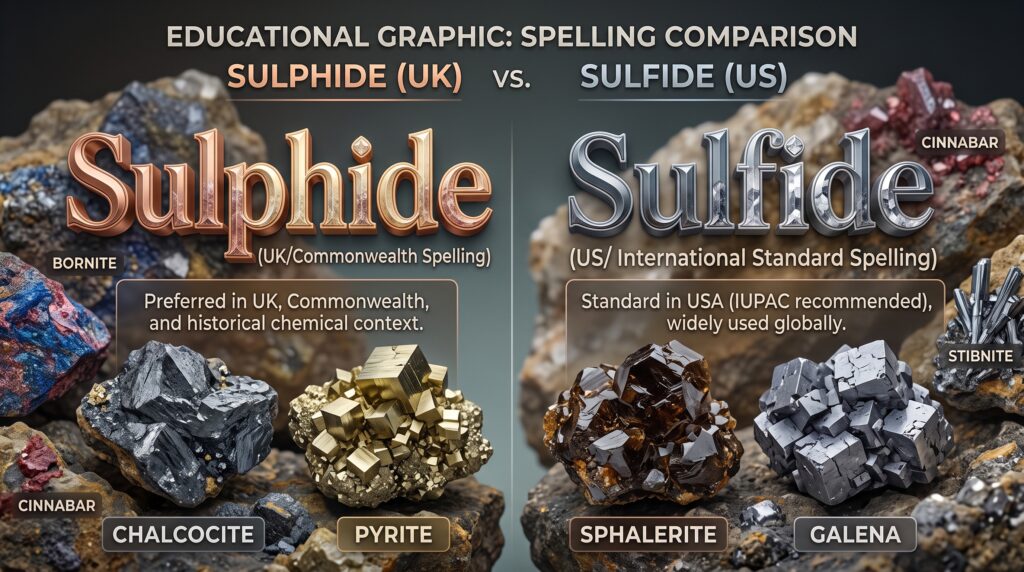
Sulphide or Sulfide: 7 Powerful Differences Explained for Correct Spelling and Usage
The difference between sulphide or sulfide often confuses students, writers, and science readers because both words refer to the same chemical term but use different spellings.
The confusion happens because English has regional spelling variations, especially between British and American English. In chemistry, both forms describe compounds containing sulfur and another element.
Although they look different, they have the same meaning. This guide explains sulphide vs sulfide, including spelling rules, chemical meaning, examples, and when to use each version.
Quick Answer: Sulphide or Sulfide?
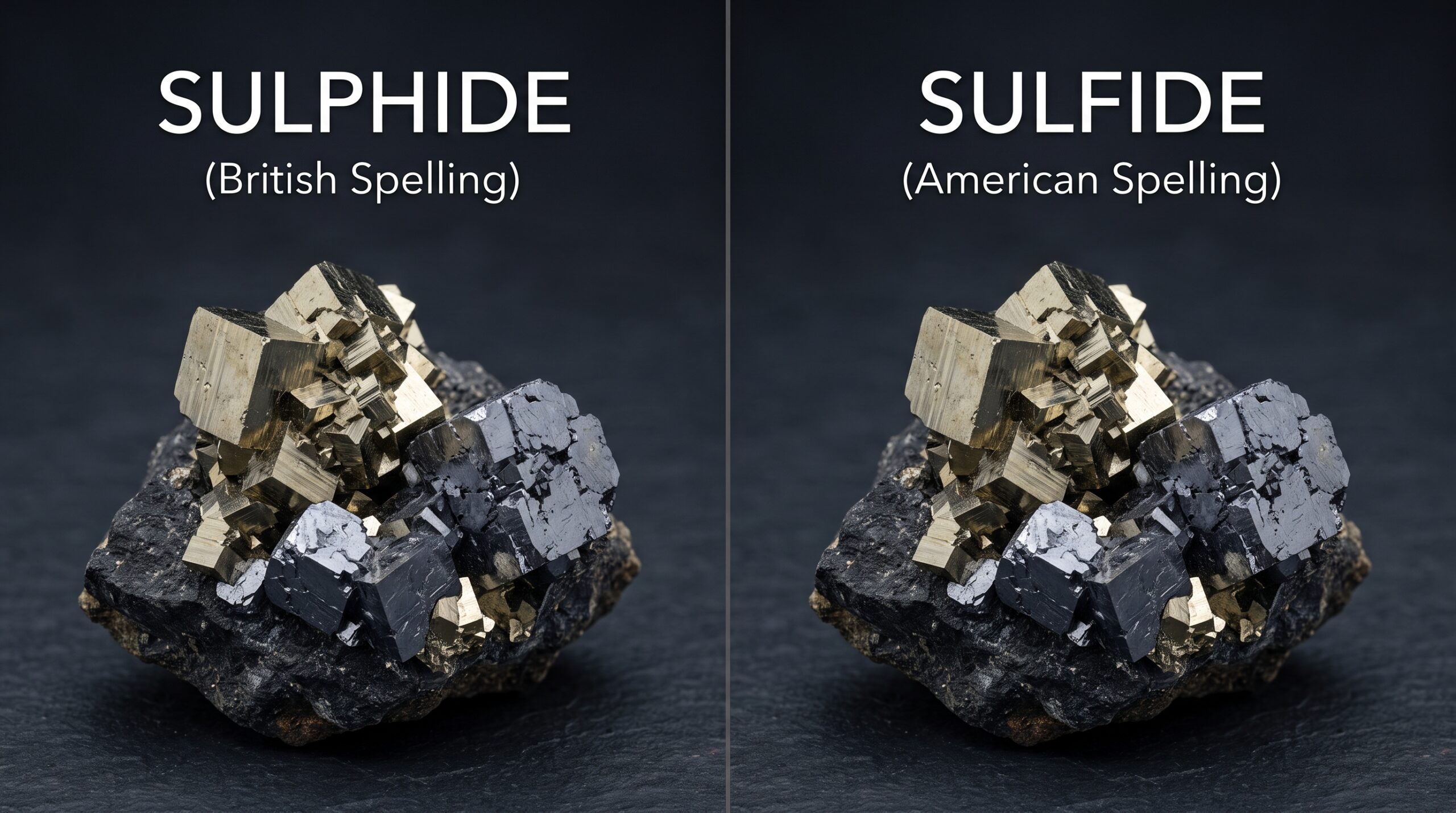
Sulphide and sulfide are the same word with different regional spellings. “Sulphide” is mainly used in British English, while “sulfide” is the preferred spelling in American English and modern scientific writing.
Examples:
• Hydrogen sulfide (US spelling)
• Hydrogen sulphide (UK spelling)
What Does Sulfide Mean?
Sulfide is a chemical term used for compounds that contain sulfur combined with another element.
In chemistry, sulfides contain the sulfur ion:
S²⁻
Sulfides can form compounds with metals and other elements.
These compounds can form when sulfur reacts with metals or other elements.
Examples:
• Iron sulfide
• Zinc sulfide
• Hydrogen sulfide
• Copper sulfide
Key insight: Sulfide is the modern international scientific spelling in many contexts.
What Does Sulphide Mean?
Sulphide has the same meaning as sulfide but uses the traditional British spelling with “ph.”
It is commonly found in:
• British textbooks
• Older scientific materials
• UK based writing
Examples:
• Copper sulphide
• Hydrogen sulphide
Key insight: Sulphide is not incorrect. It is a regional spelling variation.
Sulphide vs Sulfide: Main Differences
| Feature | Sulphide | Sulfide |
|---|---|---|
| Meaning | Chemical compound containing sulfur | Chemical compound containing sulfur |
| Spelling Style | British English | American English |
| Scientific Use | Traditional usage | Modern preferred usage |
| Pronunciation | Same | Same |
| Chemical Formula | Same | Same |
Why Are There Two Spellings?
The difference comes from English spelling traditions.
However, both spellings continue to appear depending on the country, publication style, and audience.
British English often keeps the older spelling:
Sulphur → Sulphide
American English simplified the spelling:
Sulfur → Sulfide
Many international scientific organizations now prefer the “f” spelling because it creates more consistency in chemical terminology.
Real World Usage Scenarios
Example 1: Chemistry Class
Sentence:
“Hydrogen sulfide is a gas with a strong odor.”
🎯 Lesson: Modern scientific writing often uses sulfide.
Example 2: British Textbook
Sentence:
“Metal sulphides are formed through chemical reactions.”
🎯 Lesson: Sulphide is acceptable in British English.
Example 3: Research Paper
Sentence:
“The study analyzed zinc sulfide properties.”
🎯 Lesson: Scientific publications often prefer sulfide.
Example 4: Historical Material
Sentence:
“The mineral contains copper sulphide.”
🎯 Lesson: Older sources may use sulphide.
Common Mistakes With Sulphide or Sulfide
Mistake 1: Thinking one spelling is chemically different
Why it happens:
The spelling looks different.
Correction:
Both refer to the same chemical concept.
Mistake 2: Mixing spelling styles
Why it happens:
English has regional variations.
Correction:
Choose one style and stay consistent.
Mistake 3: Using “sulphide” in modern scientific writing without checking style rules
Why it happens:
Traditional spelling is still common.
Correction:
“Sulfide” is usually safer for international scientific content.
Memory Trick: Sulphide vs Sulfide
Remember:
Sulfide = Scientific modern style
Sulphide = Traditional British style
Expert Insight: Chemical Naming and Modern Usage
The spelling difference reflects a larger change in English scientific terminology. Many chemical words changed from “ph” spellings to “f” spellings in modern usage.
Examples:
• Sulphur → Sulfur
• Sulphide → Sulfide
The chemical meaning remains the same. The choice mainly depends on audience, region, and writing style.For professional writing, choose the version that matches your audience. For global scientific content, sulfide is usually the safer option.
Conclusion: Sulphide or Sulfide?
The difference between sulphide or sulfide is only spelling, not meaning.
Use sulfide for American English and most modern scientific writing.
Use sulphide when following British English or traditional spelling styles.
Both forms are correct, but understanding the context helps you choose the most appropriate version.
