
Dissociated or Disassociated: 7 Powerful Differences Explained to Use the Correct Word
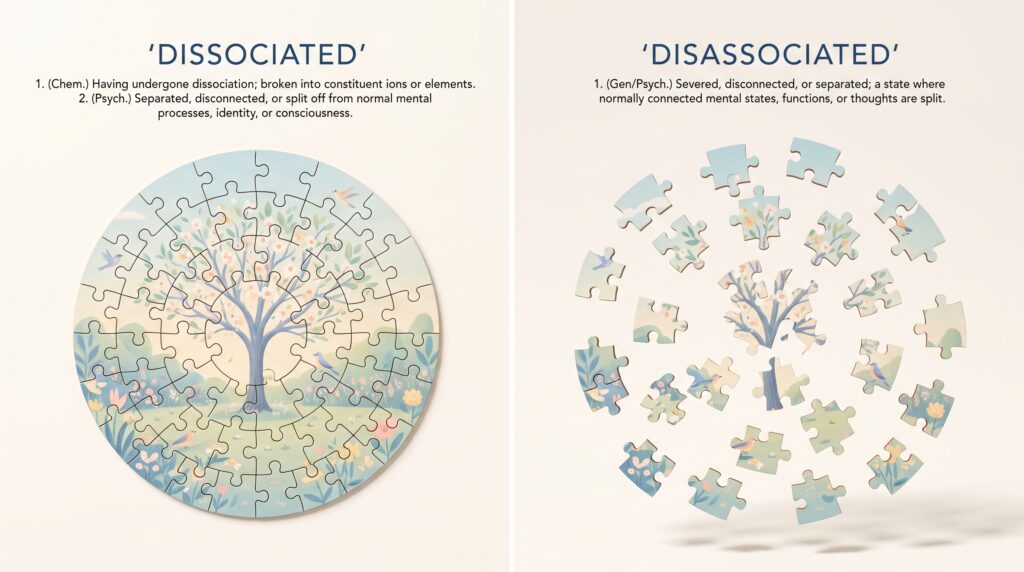
The difference between dissociated or disassociated often confuses English learners and writers because both words have similar meanings and are sometimes used interchangeably. They both describe separating, disconnecting, or removing a connection between people, ideas, or things.
Although they look and sound similar, there are subtle differences in usage and preference. In modern English, dissociated is generally the more common and widely accepted form, while disassociated is also correct but is used less frequently.
This guide explains dissociated vs disassociated, including definitions, grammar rules, examples, common mistakes, and memory tricks to help you choose the right word.
Quick Answer: Dissociated or Disassociated?
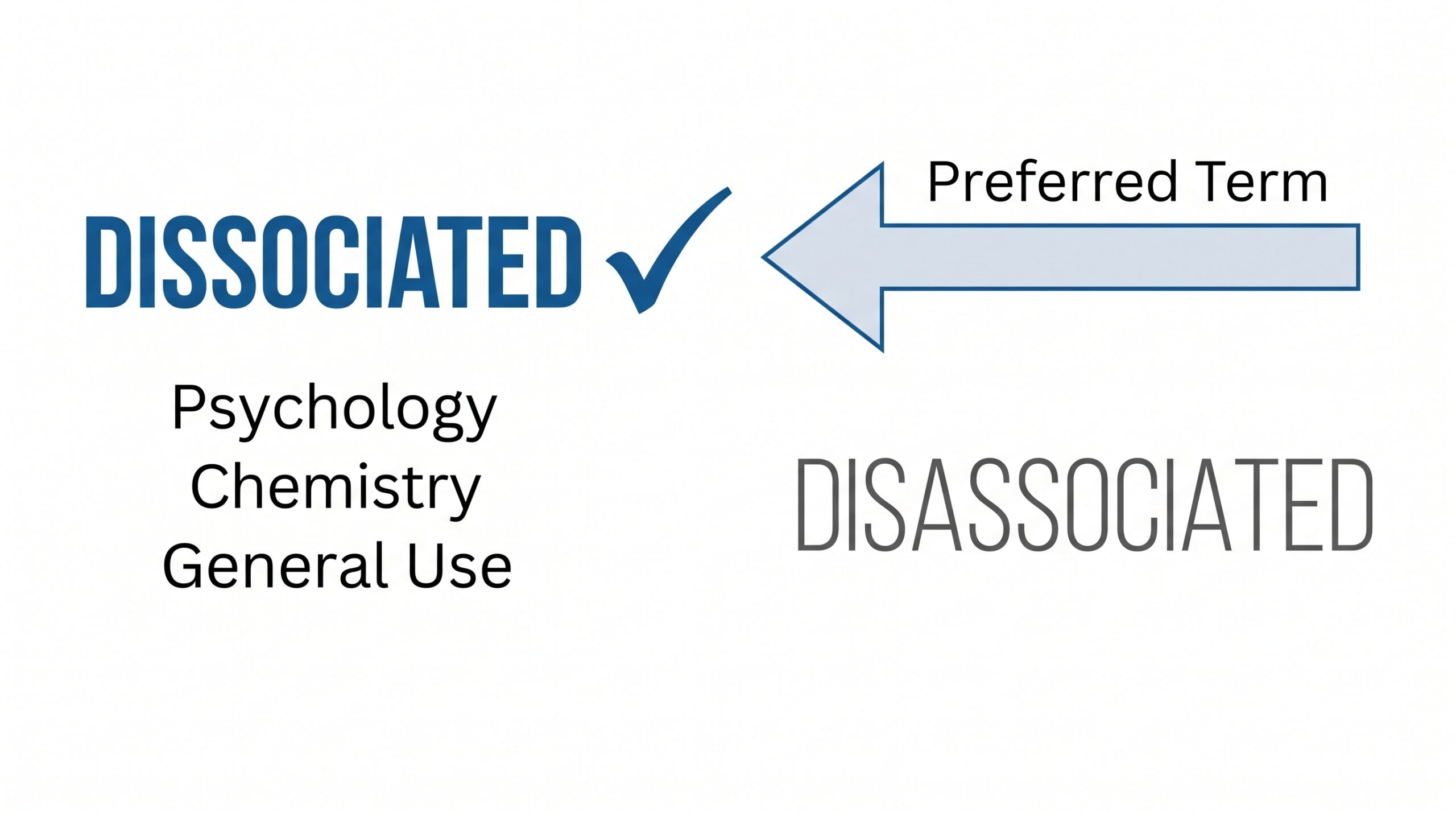
Both “dissociated” and “disassociated” are correct. However, “dissociated” is more common and is generally preferred in modern English. “Disassociated” is often used when emphasizing the act of separating oneself from a person, group, or idea.
Examples:
- She dissociated herself from the rumors.
- The organization disassociated itself from the controversial statement.
What Does Dissociated Mean?
Dissociated is the past tense and past participle of dissociate. It means to separate, disconnect, or break the connection between things, ideas, or people.
It is commonly used in:
- Psychology
- Academic writing
- Scientific research
- General English
Examples:
- The scientist dissociated the two variables.
- She dissociated herself from the negative comments.
- The symptoms became dissociated from the original illness.
Key insight: Dissociated is the preferred form in most dictionaries and style guides.
What Does Disassociated Mean?
Disassociated is the past tense and past participle of disassociate. It has nearly the same meaning as dissociated.
It often emphasizes intentionally removing a connection or publicly distancing oneself from something.
Examples:
- The company disassociated itself from the campaign.
- He disassociated himself from the group’s actions.
- Several members disassociated themselves from the proposal.
Key insight: Disassociated is less common but remains grammatically correct.
Dissociated vs Disassociated: Main Differences
| Feature | Dissociated | Disassociated |
|---|---|---|
| Meaning | Separated or disconnected | Separated or disconnected |
| Word Origin | Dissociate | Disassociate |
| Usage Frequency | More common | Less common |
| Preferred in Modern English | Yes | Sometimes |
| Common Context | Psychology, science, general writing | Formal statements, organizations, public distancing |
When to Use Dissociated
Use dissociated when referring to separation, disconnection, or independence between ideas, emotions, or concepts.
Common phrases include:
- Dissociated memories
- Dissociated symptoms
- Dissociated identity
- Dissociated variables
Examples:
- The study found dissociated brain responses.
- She felt emotionally dissociated from the event.
When to Use Disassociated
Use disassociated when emphasizing the act of distancing someone or something from another person, organization, or opinion.
Common phrases include:
- Disassociated from the organization
- Disassociated from the remarks
- Publicly disassociated
Examples:
- The charity disassociated itself from the misleading advertisement.
- He officially disassociated himself from the decision.
Real World Usage Scenarios
Example 1: Scientific Research
Sentence:
“The researchers dissociated the results from outside influences.”
🎯 Lesson: Dissociated is commonly used in scientific and academic writing.
Example 2: Public Statement
Sentence:
“The company disassociated itself from the former employee.”
🎯 Lesson: Disassociated often appears in official announcements.
Example 3: Psychology
Sentence:
“The patient reported feeling dissociated during the stressful event.”
🎯 Lesson: Psychology almost always prefers dissociated.
Example 4: Organizational Response
Sentence:
“The association disassociated itself from the controversial comments.”
🎯 Lesson: Disassociated emphasizes intentional distancing.
Common Mistakes With Dissociated or Disassociated
Mistake 1: Thinking one word is incorrect
Why it happens:
The spellings are very similar.
Correction:
Both words are accepted in standard English.
Mistake 2: Using Disassociated in Scientific Writing
Why it happens:
People assume the longer word is more formal.
Correction:
Most scientific and medical publications prefer dissociated.
Mistake 3: Mixing Both Forms in the Same Article
Why it happens:
Writers switch between spellings without noticing.
Correction:
Choose one form and remain consistent unless discussing both words directly.
Memory Trick: Dissociated vs Disassociated
Remember:
Dissociated = Default modern choice
Disassociated = Deliberate distancing
A simple rule:
If you’re unsure, dissociated is usually the safer option.
Expert Insight: Why Do Both Words Exist?
Both words developed from the verb associate, meaning “to connect.”
English later formed two accepted verbs:
- Dissociate, meaning to separate or disconnect.
- Disassociate, meaning to remove or distance an association.
Over time, language experts and dictionaries recognized both forms. However, dissociate became the preferred spelling in academic, psychological, and scientific writing because it is shorter and more widely adopted.
Today, both forms remain correct, but dissociated appears more frequently in books, research papers, newspapers, and professional writing.
Conclusion: Dissociated or Disassociated?
The choice between dissociated or disassociated depends on context and writing style.
Use dissociated when writing for academic, scientific, medical, or general audiences because it is the more common and widely preferred form.
Use disassociated when emphasizing intentional separation, especially in formal statements or organizational contexts.
Understanding the difference helps you write more naturally, maintain consistency, and choose the word that best fits your audience.
