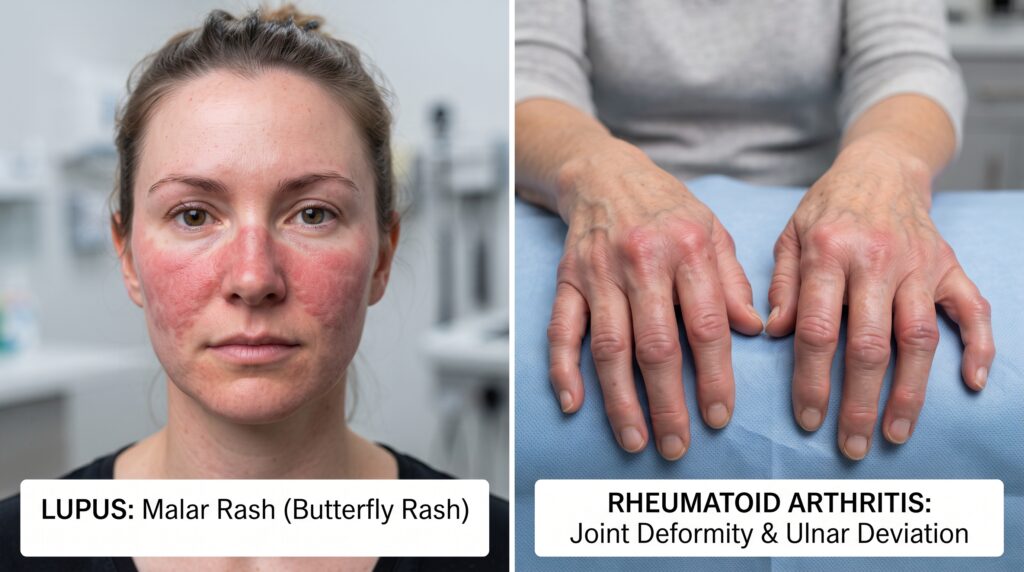
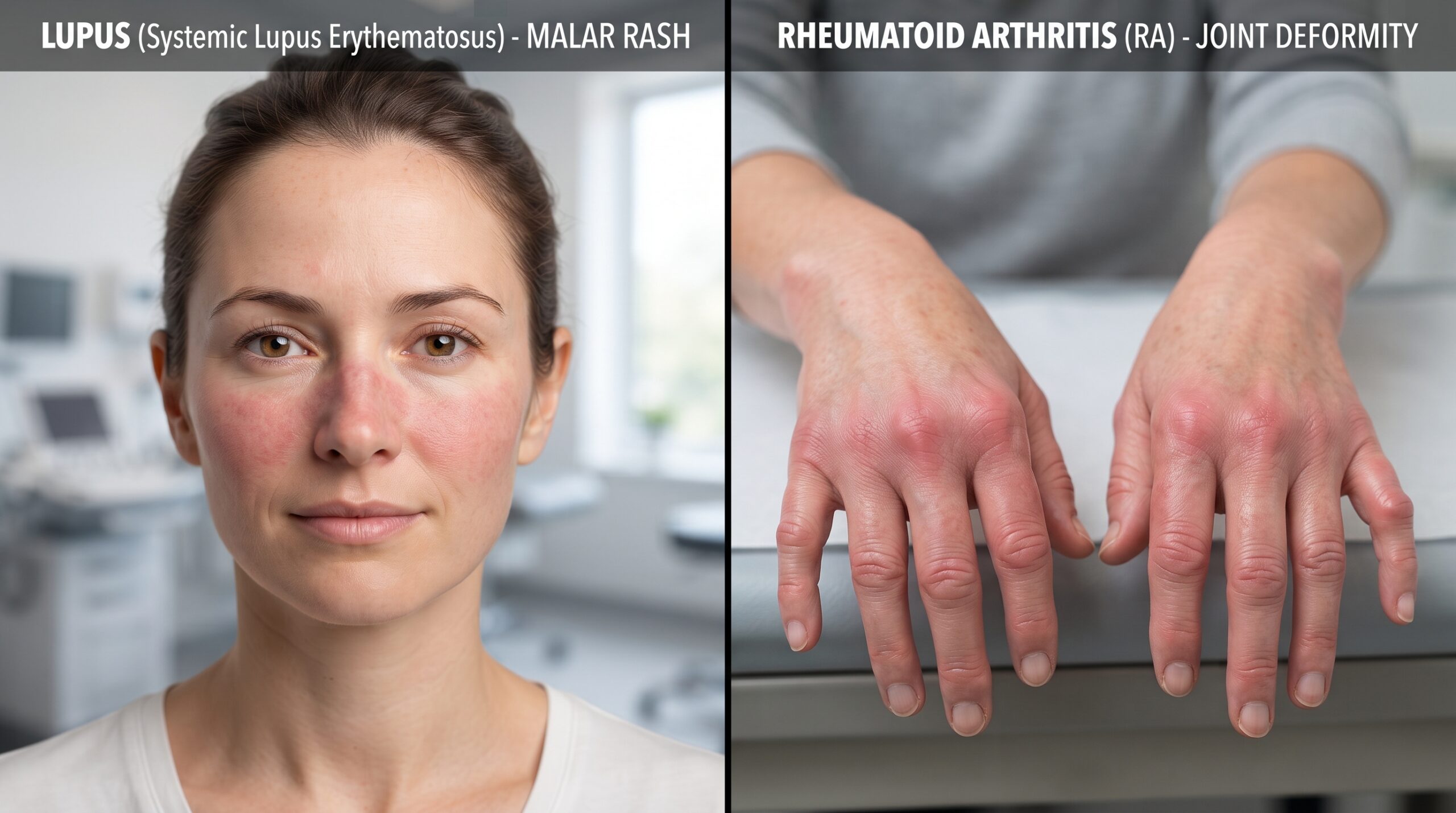
Symptoms Comparison
Lupus
People with lupus may experience:
- Joint pain
- Butterfly shaped facial rash
- Fatigue
- Fever
- Kidney problems
- Chest pain
- Sun sensitivity
RA
People with RA commonly experience:
- Persistent joint pain
- Joint swelling
- Morning stiffness lasting an hour or more
- Warm, tender joints
- Difficulty with daily activities due to joint inflammation
Causes and Risk Factors
The exact cause of both diseases remains unknown, but researchers believe they result from a combination of:
- Genetics
- Immune system dysfunction
- Environmental factors
- Hormonal influences
Having a family history of autoimmune disease may increase risk, but it does not guarantee that someone will develop lupus or RA.
Diagnosis
Healthcare providers may use several tools to diagnose these conditions, including:
- Medical history
- Physical examination
- Blood tests
- Imaging studies such as X rays or ultrasound
- Additional laboratory tests based on symptoms
Because symptoms often overlap with other conditions, diagnosis may take time and sometimes requires evaluation by a rheumatologist.
Treatment Options
Treatment plans are individualized and may include:
- Anti inflammatory medications
- Disease modifying medications
- Biologic therapies for appropriate patients
- Physical therapy
- Lifestyle modifications
- Regular medical monitoring
Treatment goals focus on reducing inflammation, controlling symptoms, preventing complications, and maintaining quality of life.
Real World Usage Scenarios
Example 1: Joint Pain With Skin Rash
A person develops painful joints along with a facial rash that worsens after sun exposure.
🎯 Lesson: A healthcare provider may evaluate for lupus among other possible causes.
Example 2: Persistent Morning Stiffness
Someone experiences swelling and stiffness in both hands every morning.
🎯 Lesson: Symmetrical joint symptoms may prompt evaluation for RA.
Example 3: Ongoing Fatigue
A patient has persistent fatigue together with joint discomfort.
🎯 Lesson: Fatigue can occur in many conditions, including autoimmune diseases, and requires medical assessment.
Example 4: Family History
An individual with a family history of autoimmune disease develops joint symptoms.
🎯 Lesson: Family history may contribute to risk but is only one factor considered during diagnosis.
Common Misunderstandings
Mistake 1: Thinking Lupus and RA Are the Same Disease
Why it happens:
Both cause joint pain and inflammation.
Correction:
Lupus is a systemic autoimmune disease, while RA primarily affects the joints.
Mistake 2: Assuming Symptoms Are Identical
Why it happens:
Many symptoms overlap.
Correction:
Lupus often affects multiple organs, whereas RA mainly targets joints.
Mistake 3: Delaying Medical Evaluation
Why it happens:
Early symptoms can seem mild.
Correction:
Persistent joint pain, swelling, or unexplained symptoms should be evaluated by a healthcare professional.
Memory Trick: Lupus vs RA
Remember:
Lupus = Many organs
RA = Mainly joints
This simple rule helps distinguish the primary pattern of each condition.
Expert Insight : Lupus or Ra
Lupus and rheumatoid arthritis are both autoimmune diseases, but they differ in how they affect the body.
RA primarily causes chronic inflammation of the joints and can lead to progressive joint damage if not treated. Lupus has a broader range of manifestations because it can involve multiple organ systems, making diagnosis and management more complex.
Advances in medical research have improved treatment options for both conditions, allowing many people to manage symptoms effectively and maintain an active lifestyle. Early diagnosis, regular follow up, and adherence to a treatment plan remain important for long term outcomes.
Frequently Asked Questions
Is lupus more serious than RA?
Both conditions can be serious. Lupus may affect multiple organs, while RA can cause significant joint damage and disability if left untreated. The severity varies from person to person.
Can someone have both lupus and RA?
Yes. Although uncommon, some people may have features of both conditions. A rheumatologist can determine the correct diagnosis and treatment plan.
Are lupus and RA curable?
There is currently no cure for either condition. However, modern treatments can help control symptoms, reduce inflammation, and improve quality of life.
Which specialist treats lupus and RA?
Both conditions are commonly diagnosed and managed by a rheumatologist, a physician who specializes in autoimmune and inflammatory diseases.