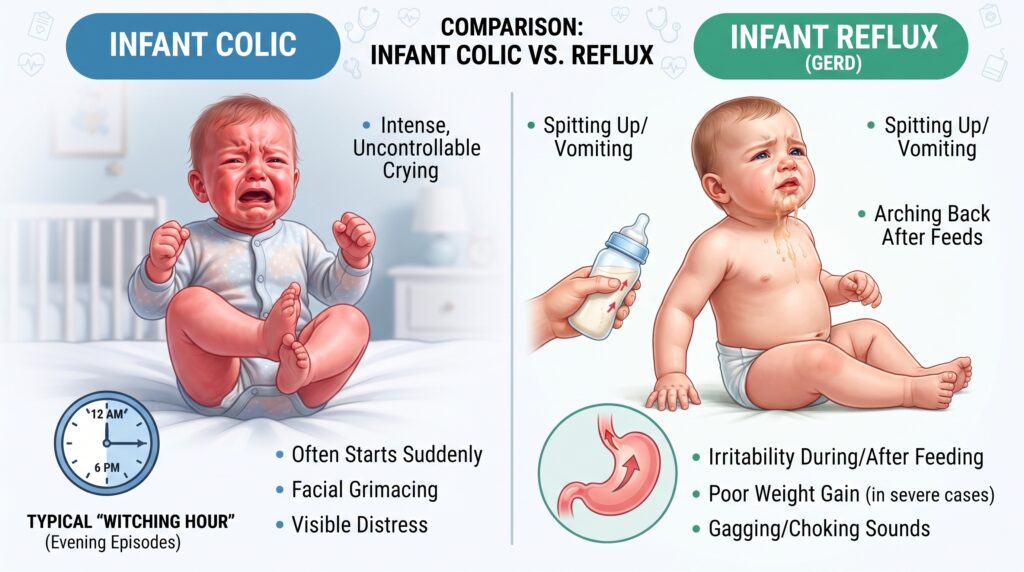
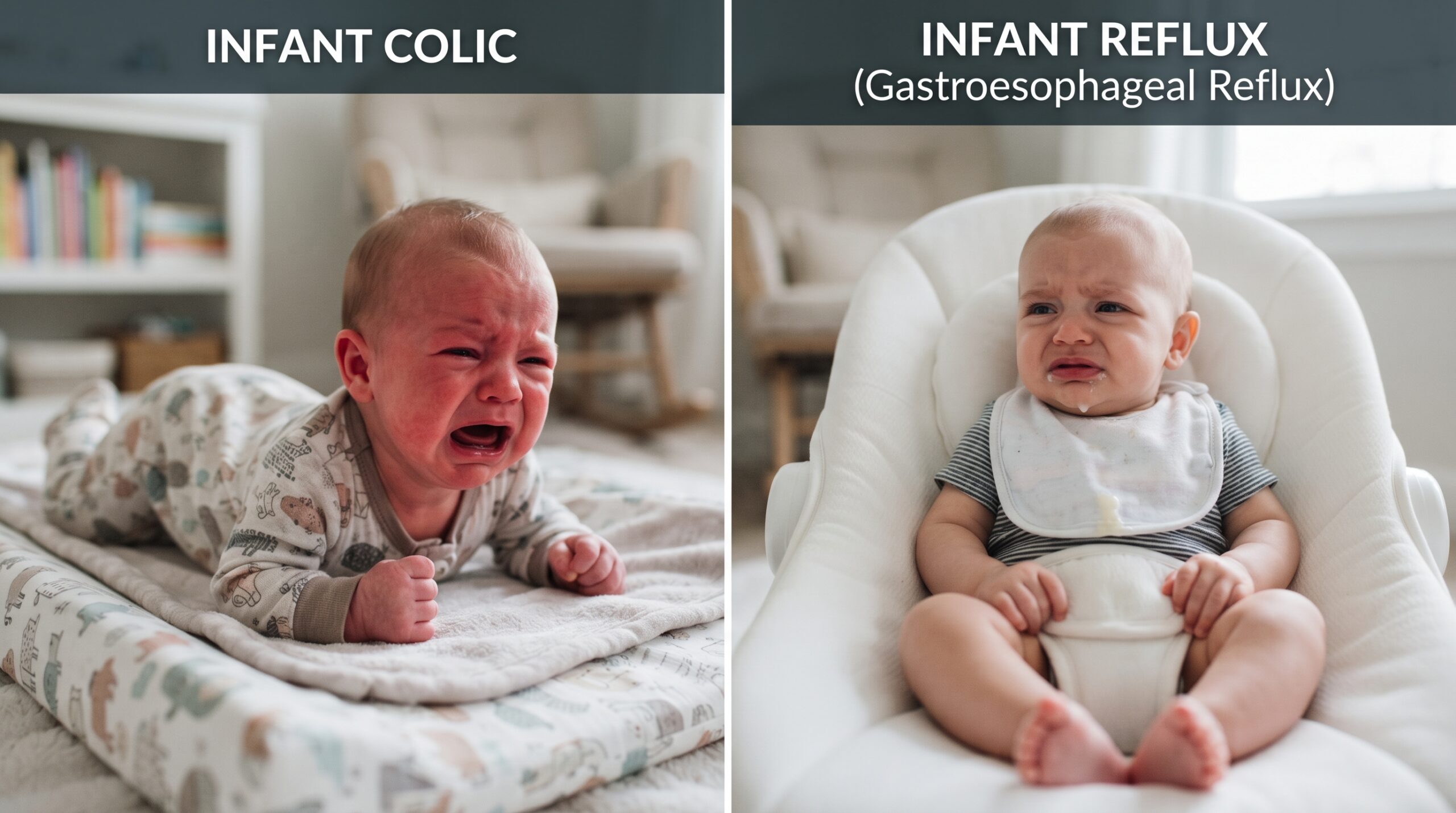
Symptoms Comparison
Colic Symptoms
Common signs include:
- Intense crying
- Fussiness
- Difficulty calming
- Evening crying episodes
- Tensing of the body
Reflux Symptoms
Possible signs include:
- Frequent spit up
- Irritability after feeds
- Coughing after feeding
- Poor feeding in some babies
- Back arching
Some babies experience reflux without significant distress.
Causes
Causes of Colic
The exact cause is unknown, but researchers have proposed several possibilities, including:
- Immature nervous system
- Developing digestive system
- Increased sensitivity to stimulation
- Normal infant development
Causes of Reflux
Common contributing factors include:
- Immature lower esophageal sphincter
- Liquid diet
- Spending much of the day lying down
- Small stomach capacity
Most infants improve as the digestive system matures.
Diagnosis
Healthcare professionals diagnose colic or reflux based on:
- Medical history
- Feeding history
- Growth and weight patterns
- Physical examination
- Additional testing only when necessary
Diagnosis focuses on ruling out other medical conditions that may cause similar symptoms.
Soothing and Management
Helping a Baby With Colic
Parents may find these approaches helpful:
- Gentle rocking
- White noise
- Swaddling when appropriate
- Taking breaks if feeling overwhelmed
- Maintaining a calm feeding environment
Helping a Baby With Reflux
A healthcare professional may recommend strategies such as:
- Keeping the baby upright for a short period after feeds
- Offering smaller, more frequent feeds if appropriate
- Burping during and after feeding
- Following individualized medical advice when symptoms are persistent
Management depends on the baby’s symptoms and overall health.
Real World Usage Scenarios
Example 1: Evening Crying
A baby cries for several hours most evenings but feeds well and is growing normally.
🎯 Lesson: This pattern may be consistent with colic, though a healthcare provider should evaluate persistent crying.
Example 2: Frequent Spitting Up
A baby spits up after many feedings and becomes fussy afterward.
🎯 Lesson: Reflux may be considered among the possible causes.
Example 3: Feeding Refusal
A baby cries and pulls away during feeding.
🎯 Lesson: Feeding related discomfort should be assessed by a healthcare professional.
Example 4: Persistent Symptoms
Parents notice ongoing crying, poor weight gain, and difficulty feeding.
🎯 Lesson: Prompt medical evaluation is important to identify the cause and appropriate treatment.
Common Misunderstandings
Mistake 1: Assuming All Crying Means Colic
Why it happens:
Crying is a normal part of infancy.
Correction:
Persistent crying has many possible causes, including hunger, illness, reflux, or other conditions.
Mistake 2: Thinking Every Baby Who Spits Up Has Reflux Disease
Why it happens:
Spitting up is common in infants.
Correction:
Many healthy babies spit up occasionally without needing medical treatment.
Mistake 3: Delaying Medical Advice
Why it happens:
Parents may hope symptoms resolve on their own.
Correction:
Seek medical advice if symptoms are severe, persistent, or accompanied by poor feeding, dehydration, breathing problems, fever, or poor weight gain.
Memory Trick: Colic vs Reflux
Remember:
Colic = Crying
Reflux = Returning stomach contents
This simple association can help distinguish the two conditions.
Expert Insight : Colic or Reflux
Colic and reflux can produce overlapping symptoms, making them difficult to distinguish based on crying alone.
Colic is primarily defined by a pattern of excessive crying in an otherwise healthy infant, whereas reflux involves stomach contents moving back into the esophagus and may be associated with feeding discomfort or frequent spit up.
Because symptoms vary from one baby to another, healthcare professionals evaluate feeding patterns, growth, medical history, and overall health before determining the most likely cause. Parents should avoid self diagnosing and seek medical advice whenever symptoms are persistent or concerning.
Frequently Asked Questions
Can a baby have both colic and reflux?
Yes. Some infants may experience features of both conditions, which can make diagnosis more challenging.
Does reflux always require medication?
No. Many infants improve with time and supportive measures. Medication is only appropriate in selected cases based on a healthcare professional’s assessment.
When does colic usually improve?
Colic often improves as babies grow, commonly by three to four months of age, although the timeline varies.
When should I call a doctor?
Contact a healthcare professional if your baby has persistent crying, poor weight gain, feeding difficulties, blood in vomit or stool, breathing problems, fever, or signs of dehydration.
.