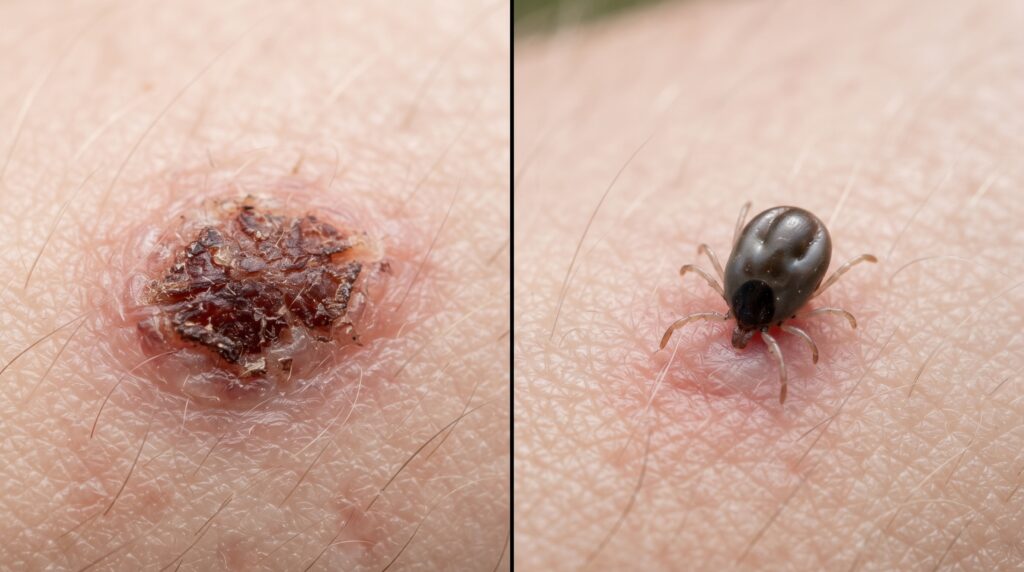
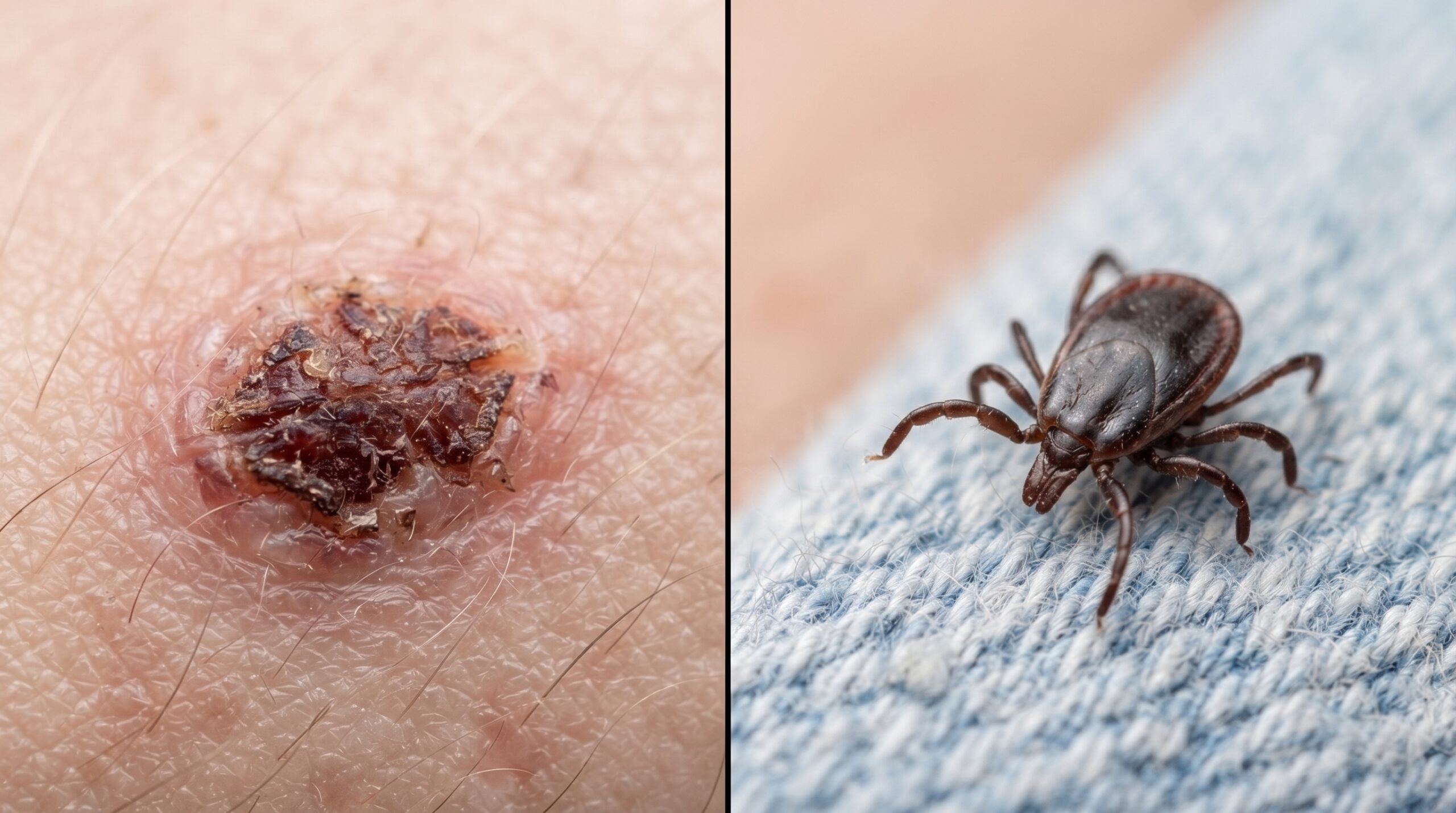
Appearance Comparison
Scab
A scab often appears:
- Flat or slightly raised
- Dry
- Dark red, brown, or black
- Irregular in shape
Tick
A tick may appear:
- Rounded or oval
- Smooth
- Brown, black, gray, or reddish
- Slightly raised above the skin
A magnifying glass may help reveal the tick’s legs.
Symptoms
Scab
A healing scab may cause:
- Mild itching
- Tenderness around the wound
- Gradual improvement over time
Tick
A tick bite may cause:
- Mild redness
- Small bump at the bite site
- Itching in some cases
Some people develop no immediate symptoms. However, certain ticks can transmit diseases, so monitoring for fever, rash, or other symptoms after a bite is important.
Removal
Removing a Scab
Generally:
- Allow it to fall off naturally.
- Keep the area clean.
- Avoid picking or scratching.
Removing a scab too early may delay healing or increase the risk of infection.
Removing a Tick
If you find an attached tick:
- Use fine tipped tweezers if available.
- Grasp the tick as close to the skin as possible.
- Pull upward slowly and steadily without twisting.
- Clean the bite area afterward.
If you are unable to remove the tick completely or develop concerning symptoms, seek medical care.
Real World Usage Scenarios
Example 1: After a Fall
You scrape your knee, and a dark crust forms a few days later.
🎯 Lesson: This is likely a healing scab.
Example 2: After Hiking
You notice a small dark object attached to your leg after walking through tall grass.
🎯 Lesson: Check carefully for a tick and remove it properly if present.
Example 3: Itchy Spot
You are unsure whether the raised spot is dried blood or a parasite.
🎯 Lesson: Examine it closely for legs or seek medical advice if uncertain.
Example 4: Healing Wound
A scab begins to loosen after several days.
🎯 Lesson: Let it fall off naturally rather than picking at it.
Common Mistakes
Mistake 1: Picking Every Dark Spot
Why it happens:
Scabs and ticks can appear similar.
Correction:
Inspect carefully before attempting removal.
Mistake 2: Removing a Tick Incorrectly
Why it happens:
People may squeeze or twist the tick.
Correction:
Use proper removal techniques to reduce the chance of leaving mouthparts in the skin.
Mistake 3: Ignoring Symptoms After a Tick Bite
Why it happens:
The bite may seem minor.
Correction:
Watch for fever, expanding rash, fatigue, or other unusual symptoms and contact a healthcare professional if they occur.
Memory Trick: Scab vs Tick
Remember:
Scab = Skin Healing
Tick = Tiny Parasite
This simple phrase helps distinguish the two quickly.
Expert Insight : Scab or Tick
Scabs are a normal and beneficial part of the body’s healing process. They protect damaged skin while new tissue forms underneath.
Ticks, in contrast, are external parasites that feed on blood and may carry infectious diseases in some regions. Because the health risks vary depending on the tick species and geographic location, proper removal and monitoring after a tick bite are important.
If you cannot confidently identify whether a skin lesion is a scab or a tick, a healthcare professional can provide an accurate assessment.
Frequently Asked Questions
How can I tell if it’s a scab or a tick?
A scab is dry and forms over a wound, while a tick is a living organism with legs attached to the skin. Looking closely may help reveal the difference.
Should I remove a scab?
No. In most cases, it is best to let a scab fall off naturally as the wound heals.
Can a tick look like a scab?
Yes. Small or partially fed ticks may resemble dark scabs, which is why careful inspection is important.
When should I see a doctor after a tick bite?
Seek medical care if you cannot remove the tick completely or if you develop symptoms such as fever, a spreading rash, severe headache, muscle aches, or other unusual signs after the bite.