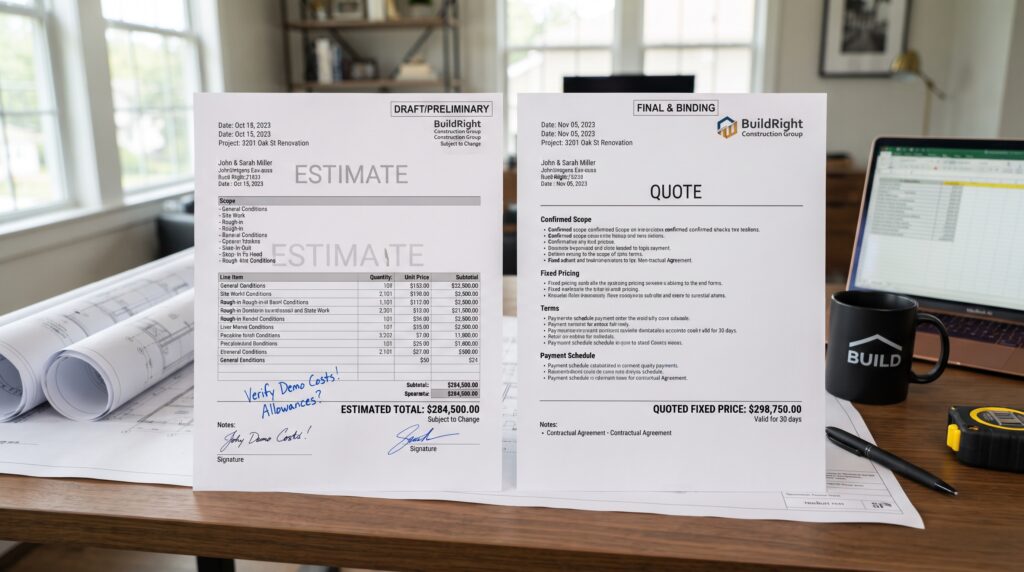
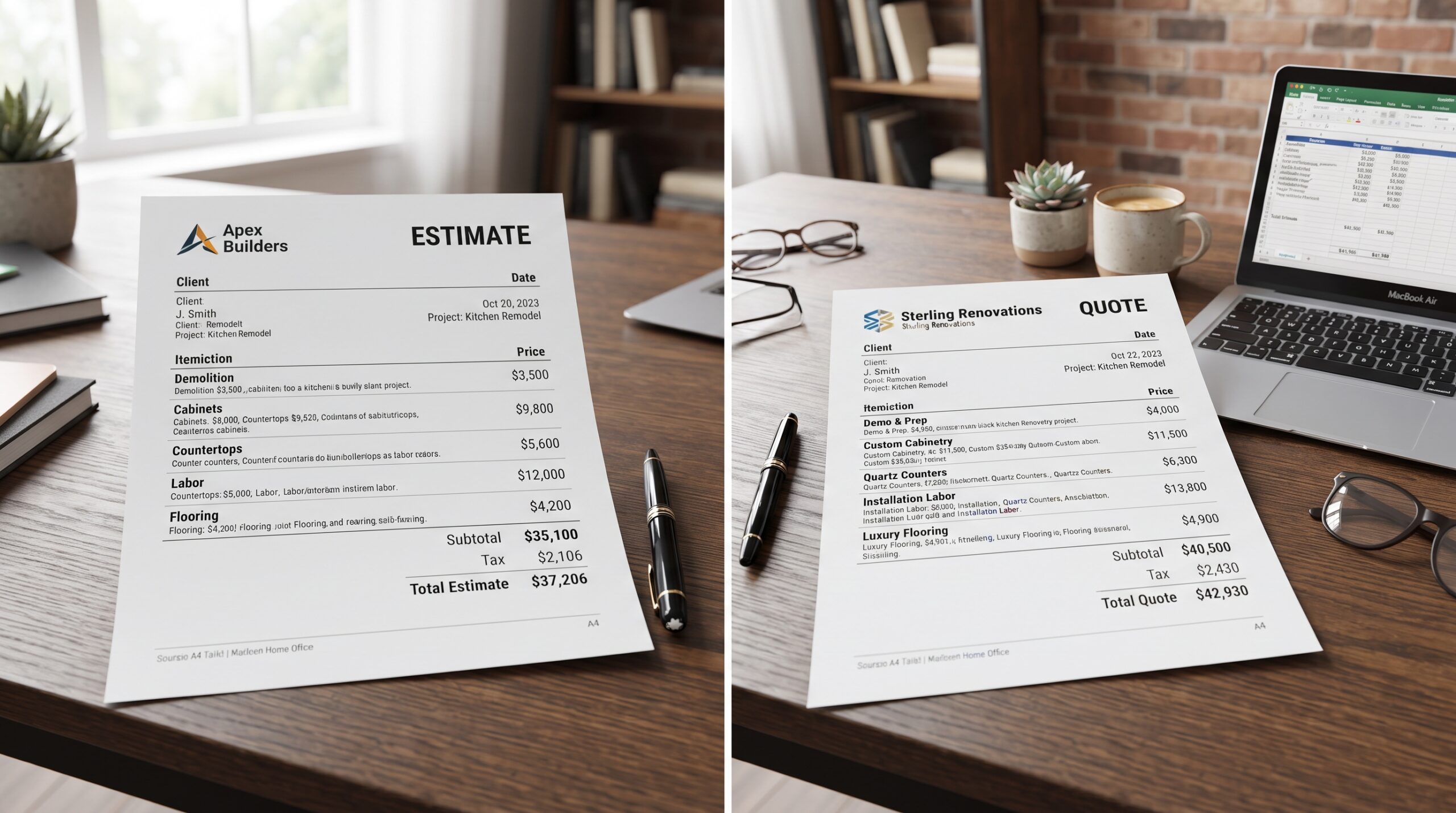
When Should You Use an Estimate?
Estimates are useful when:
- Project details are incomplete.
- Material prices may fluctuate.
- The scope of work is uncertain.
- Early budgeting is needed.
Common Examples
- Home renovations
- Landscaping projects
- Construction work
- Custom software development
- Vehicle repairs before inspection
When Should You Use a Quote?
Quotes are appropriate when:
- Project requirements are clearly defined.
- Costs can be calculated accurately.
- Both parties want pricing certainty.
- A purchasing decision is ready to be made.
Common Examples
- Office furniture purchases
- Website design packages
- Appliance installation
- Printing services
- Standard maintenance contracts
Advantages of Estimates
An estimate offers:
- Budget planning
- Flexibility
- Early project planning
- Room for adjustments
- Faster initial pricing
Advantages of Quotes
A quote provides:
- Fixed pricing
- Better financial planning
- Clear expectations
- Easier comparison between suppliers
- Reduced pricing disputes
Real World Usage Scenarios
Example 1: Home Renovation
A contractor visits your home before work begins.
They provide an estimate because hidden structural issues may affect the final cost.
🎯 Lesson: Estimates are useful when the full scope is unknown.
Example 2: Office Furniture Purchase
A supplier offers desks for $4,500, including delivery.
🎯 Lesson: This is a quote because the products and price are clearly defined.
Example 3: Car Repair
A mechanic gives an estimated repair cost before opening the engine.
🎯 Lesson: The final price may change if additional problems are discovered.
Example 4: Graphic Design Project
A designer agrees to create a company logo for $600 with a written quotation.
🎯 Lesson: A quote provides a fixed price for a defined service.
Common Mistakes of Estimate or Quote
Mistake 1: Assuming an Estimate Is a Final Price
Why it happens:
People often overlook that estimates are approximate.
Correction:
Expect some variation if the project changes or unexpected issues arise.
Mistake 2: Using the Terms Interchangeably
Why it happens:
Both involve pricing information.
Correction:
Remember that an estimate is approximate, while a quote is generally fixed.
Mistake 3: Ignoring the Fine Print
Why it happens:
Customers focus only on the total price.
Correction:
Review exclusions, validity dates, payment terms, and conditions before accepting a quote.
Memory Trick
Remember:
Estimate = Expected Cost
Quote = Confirmed Price
This simple phrase helps distinguish the two business terms.
Expert Insight
Businesses often begin with an estimate during the planning stage because project requirements or market prices may still change. Once all specifications are confirmed, many businesses issue a formal quote that outlines a fixed price and detailed terms.
Understanding this difference helps customers compare offers more effectively, manage budgets, and reduce misunderstandings. Before approving any work, it is wise to confirm whether you have received an estimate or a binding quote.
FAQs
Is an estimate legally binding?
Generally, no. An estimate is an approximate price and may change depending on the project. However, legal obligations can vary by contract and local laws.
Is a quote always a fixed price?
In most cases, yes. A quote usually provides a fixed price for a clearly defined product or service, unless the agreed scope changes.
Which is better, an estimate or a quote?
Neither is universally better. An estimate is useful during planning, while a quote is better when you need pricing certainty before making a purchase.
Can a business provide both?
Yes. Many businesses first provide an estimate and later issue a formal quote once all project details have been finalized.