Design Comparison
Arbor
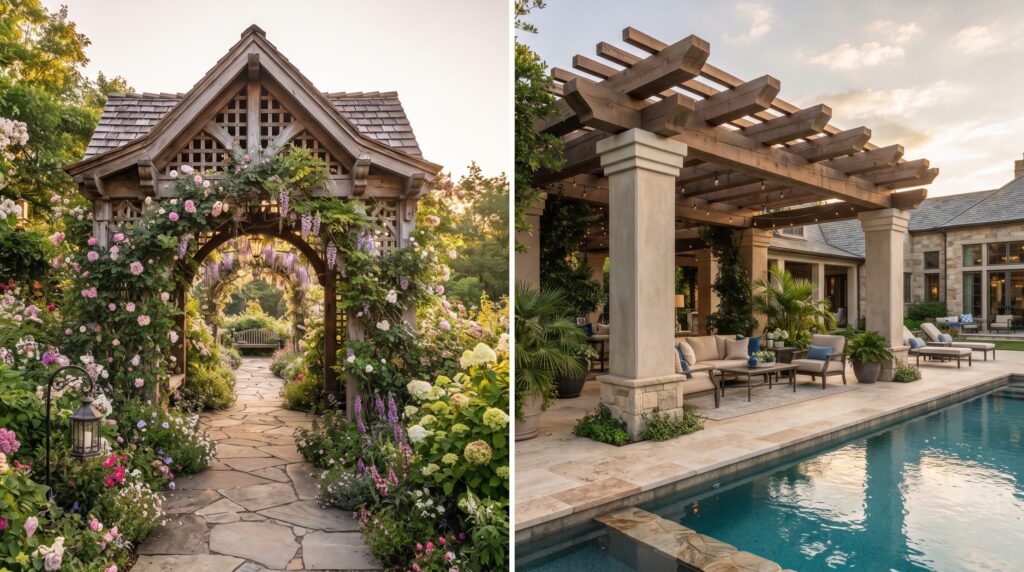
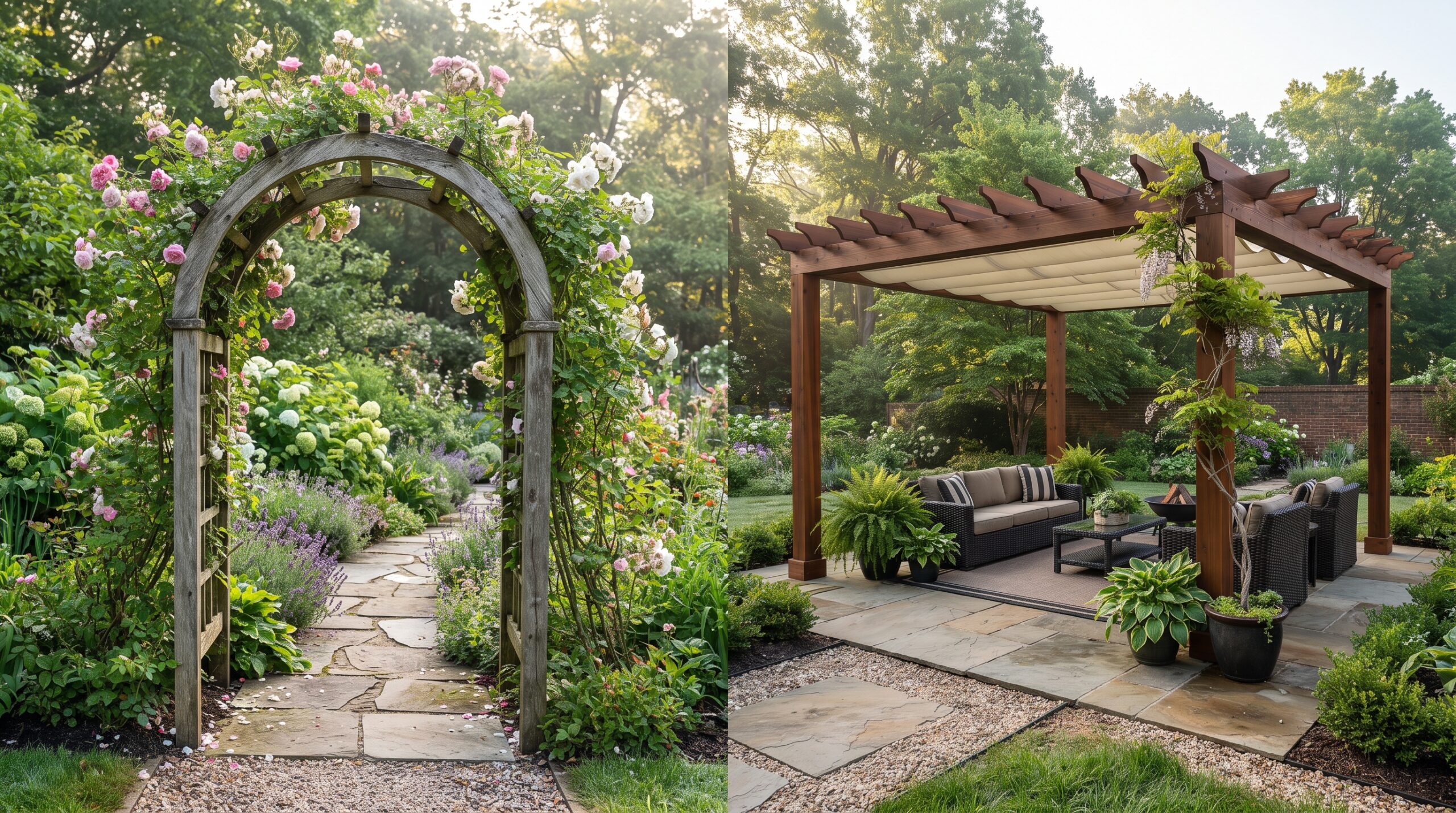
An arbor often features:
- Decorative arches
- Lattice sides
- Compact dimensions
- Climbing plants
Its elegant design makes it a focal point in flower gardens.
Pergola
A pergola usually includes:
- Large support posts
- Horizontal rafters
- Modern or traditional styles
- Space for outdoor furniture
Many homeowners also add retractable canopies, lighting, or curtains.
Materials
Both structures are available in materials such as:
- Wood
- Vinyl
- Aluminum
- Steel
- Composite materials
The best material depends on your budget, climate, and maintenance preferences.
Cost Comparison
Arbor
Generally:
- Lower material costs
- Easier installation
- Suitable for smaller budgets
Pergola
Generally:
- Higher construction costs
- Larger material requirements
- Greater installation complexity
Custom pergolas may cost significantly more than standard kits.
Maintenance
Arbor
Maintenance may include:
- Cleaning
- Painting or staining
- Inspecting climbing plants
- Tightening hardware
Pergola
Maintenance often involves:
- Washing the structure
- Sealing or staining wood
- Checking structural stability
- Maintaining shade covers if installed
Real World Usage Scenarios
Example 1: Cottage Garden
You want a charming entrance covered with climbing roses.
Better choice: Arbor.
🎯 Lesson: Its compact design creates a beautiful garden focal point.
Example 2: Backyard Dining Area
You need shade over an outdoor dining table.
Better choice: Pergola.
🎯 Lesson: A pergola provides enough space for seating and entertaining.
Example 3: Small Yard
You have limited outdoor space.
Better choice: Arbor.
🎯 Lesson: It enhances the landscape without overwhelming the garden.
Example 4: Outdoor Entertainment
You plan to host family gatherings.
Better choice: Pergola.
🎯 Lesson: Its larger structure creates a comfortable outdoor living area.
Common Mistakes
Mistake 1: Thinking an Arbor and Pergola Are the Same
Why it happens:
Both have open frameworks and support climbing plants.
Correction:
An arbor is smaller and decorative, while a pergola is larger and designed for functional outdoor spaces.
Mistake 2: Choosing Based Only on Appearance
Why it happens:
Both structures are visually appealing.
Correction:
Consider your available space, intended use, and long term maintenance before making a decision.
Mistake 3: Ignoring Plant Growth
Why it happens:
Climbing plants are often added later.
Correction:
Select a structure strong enough to support mature vines and seasonal growth.
Memory Trick: Arbor vs Pergola
Remember:
Arbor = Archway
Pergola = Patio
This simple phrase helps distinguish their primary purposes.
Expert Insight : Arbor or Pergola
Although both arbors and pergolas enhance outdoor landscapes, they serve different functions. An arbor is best viewed as a decorative feature that welcomes visitors and supports climbing plants. A pergola, by contrast, extends your living space outdoors, creating a comfortable area for dining, relaxing, or entertaining.
Before choosing either structure, evaluate the available space, local climate, maintenance requirements, and how you intend to use the area. A thoughtful choice can improve both the beauty and functionality of your landscape for years to come.
Frequently Asked Questions
Is an arbor smaller than a pergola?
Yes. An arbor is typically much smaller and is often placed over a walkway or garden entrance, while a pergola covers a larger outdoor area.
Which structure provides more shade?
A pergola generally provides more shade because of its larger roof structure. Additional covers or climbing plants can increase shade further.
Can climbing plants grow on both?
Yes. Both arbors and pergolas can support climbing plants such as roses, wisteria, clematis, and grapevines.
Which is more affordable?
Arbors are usually less expensive because they require fewer materials and simpler installation than pergolas.