Causes
GERD
Common contributing factors include:
- Weak lower esophageal sphincter
- Obesity
- Hiatal hernia
- Large meals
- Certain foods and beverages
- Smoking
Gastritis
Common causes include:
- Helicobacter pylori infection
- Long term use of NSAID pain relievers
- Excessive alcohol consumption
- Severe illness or stress
- Autoimmune disorders
Diagnosis
A healthcare professional may recommend different tests depending on symptoms.
GERD
Possible diagnostic methods include:
- Medical history
- Physical examination
- Upper endoscopy
- Esophageal pH monitoring
- Esophageal manometry
Gastritis
Possible diagnostic methods include:
- Medical history
- Upper endoscopy
- Biopsy if needed
- Testing for H. pylori
- Blood or stool tests in some cases
Treatment
GERD Treatment
Treatment may involve:
- Lifestyle changes
- Weight management if appropriate
- Avoiding trigger foods
- Eating smaller meals
- Prescription or over the counter medications as recommended by a healthcare professional
Gastritis Treatment
Treatment depends on the cause and may include:
- Treating H. pylori infection if present
- Stopping irritating medications when medically appropriate
- Avoiding alcohol
- Dietary adjustments
- Acid reducing medications when prescribed
Real World Usage Scenarios
Example 1: Burning After Meals
You frequently experience burning behind your breastbone after eating.
More likely: GERD.
🎯 Lesson: Recurrent heartburn is a hallmark symptom of acid reflux.
Example 2: Upper Stomach Pain
You develop aching pain in the upper abdomen along with nausea.
More likely: Gastritis.
🎯 Lesson: Stomach lining inflammation commonly causes these symptoms.
Example 3: Nighttime Symptoms
Your symptoms worsen when lying flat after dinner.
More likely: GERD.
🎯 Lesson: Gravity normally helps reduce acid reflux while upright.
Example 4: Pain After Taking NSAIDs
You develop stomach discomfort after prolonged use of certain pain relievers.
More likely: Gastritis.
🎯 Lesson: NSAIDs can irritate the stomach lining in some people.
Common Mistakes
Mistake 1: Assuming All Heartburn Is Gastritis
Why it happens:
Both conditions affect the upper digestive tract.
Correction:
Heartburn is more commonly associated with GERD than gastritis.
Mistake 2: Self Diagnosing Based on One Symptom
Why it happens:
Symptoms can overlap.
Correction:
A healthcare professional may need additional tests to determine the exact cause.
Mistake 3: Ignoring Persistent Symptoms
Why it happens:
Some people expect symptoms to disappear on their own.
Correction:
Persistent, severe, or recurring symptoms should be evaluated by a healthcare provider.
Memory Trick: GERD vs Gastritis
Remember:
GERD = Esophagus and Reflux
Gastritis = Stomach and Inflammation
This simple phrase helps distinguish the two conditions.
Expert Insight : Gerd or Gastritis
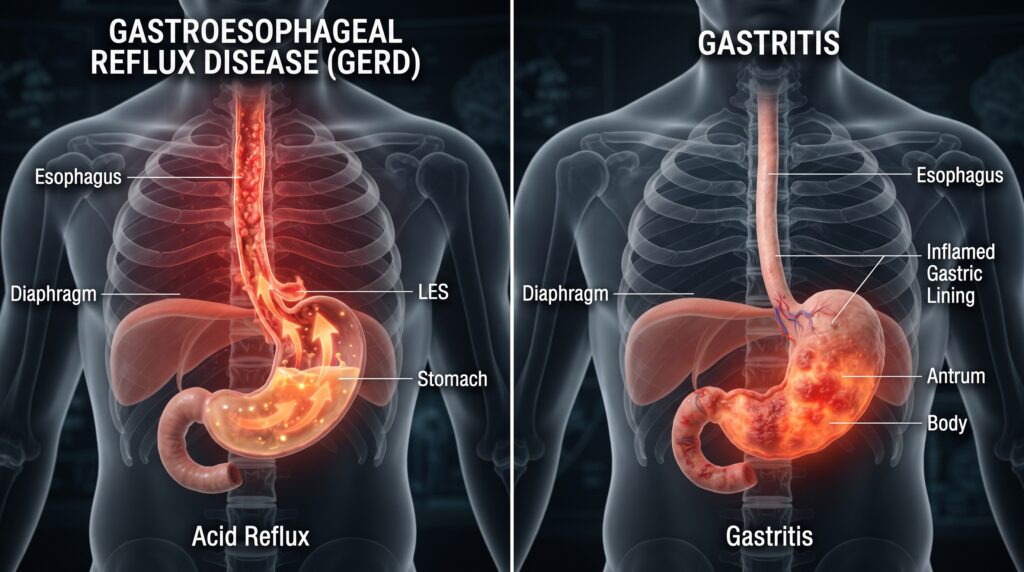
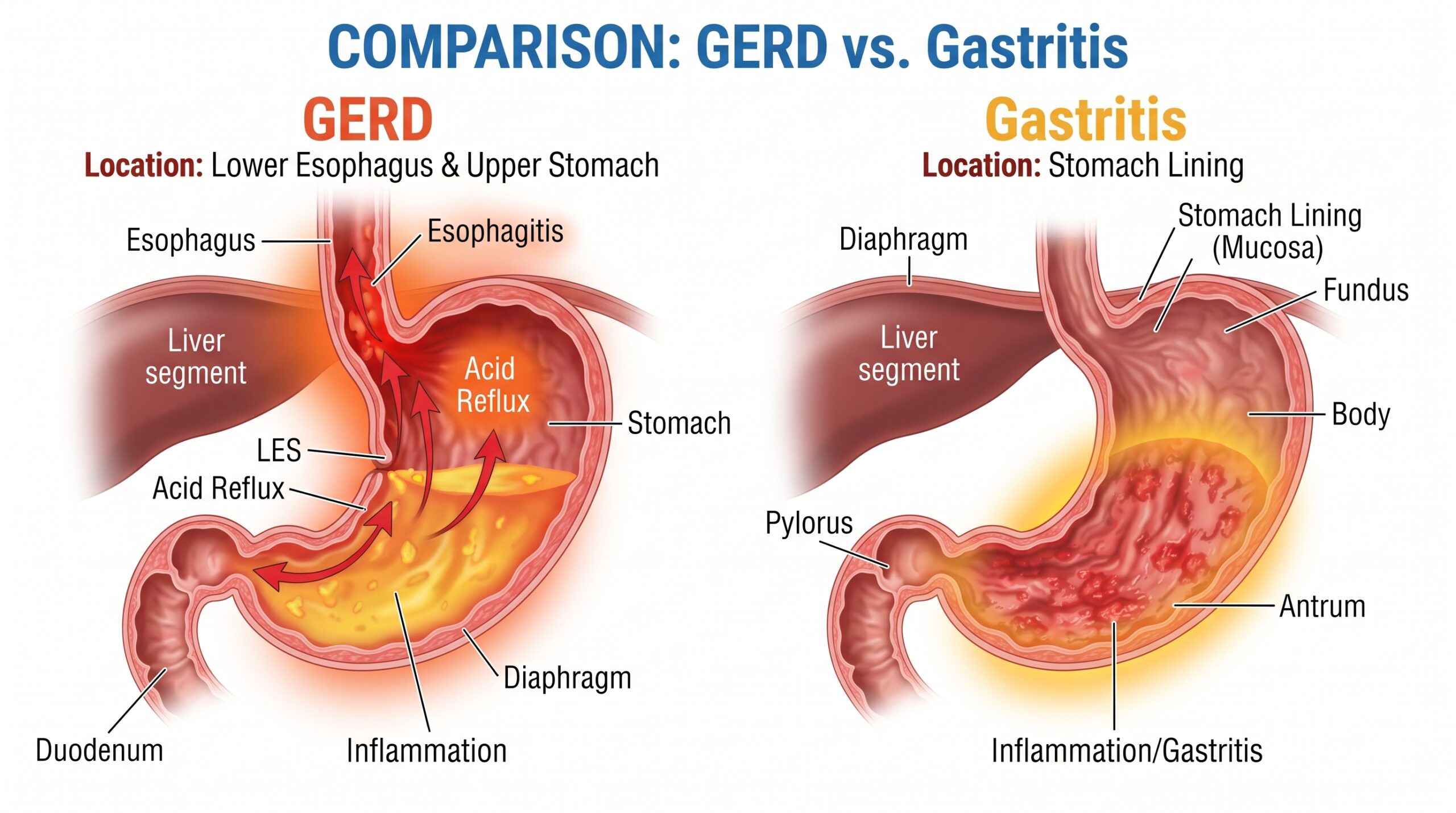
GERD and gastritis may produce similar digestive complaints, but they involve different organs and mechanisms. GERD primarily affects the esophagus because stomach acid flows upward, while gastritis involves inflammation within the stomach lining itself.
Proper diagnosis is important because treatment depends on the underlying cause. Lifestyle modifications, medications, or treatment for infections such as H. pylori may all play a role depending on the condition. Persistent digestive symptoms should always be discussed with a qualified healthcare professional.
Frequently Asked Questions
Can GERD and gastritis occur at the same time?
Yes. Some people may have both conditions simultaneously, making diagnosis more complex.
Which condition causes heartburn?
GERD is the most common cause of frequent heartburn.
Does gastritis always cause stomach pain?
No. Some people with gastritis have few or no symptoms, while others experience significant discomfort.
When should I see a doctor?
Seek medical attention if symptoms are severe, persist for several weeks, interfere with eating, or are accompanied by vomiting blood, black stools, unexplained weight loss, difficulty swallowing, chest pain, or signs of dehydration.