
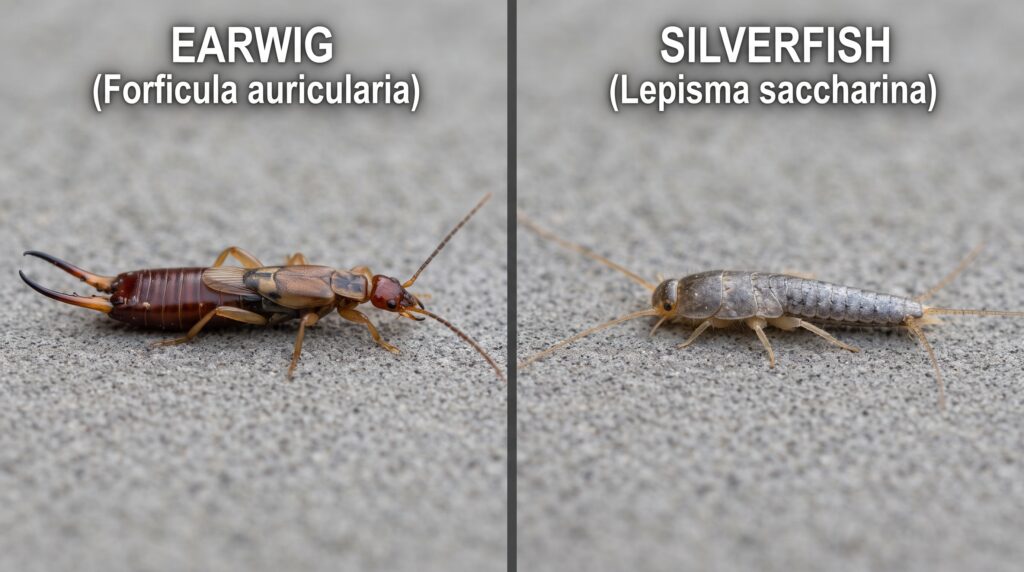
The question of earwig or silverfish often comes up when a small insect suddenly appears in a bathroom, basement, garden, or other damp area. These two insects can both be found in dark, moist environments, but they have very different appearances, habits, diets, and preferred locations.
An earwig is usually recognized by the pair of pincers at the end of its abdomen. Silverfish have a silvery or gray body, long antennae, and three thin tail like appendages. These features make identification much easier once you know what to look for.
Neither insect is generally considered dangerous to people. However, silverfish can damage paper and other household materials, while earwigs can sometimes damage garden plants.
Knowing whether you have an earwig or silverfish can also help you choose the right prevention strategy.
Quick Answer
The easiest way to tell an earwig or silverfish apart is to look at the rear of the insect.
Earwigs have two noticeable pincers, while silverfish have three thin, tail like filaments and no pincers.
Earwigs are usually brown, reddish brown, or black and are more commonly associated with outdoor areas such as gardens, mulch, leaf litter, stones, and decaying plant material.
Silverfish are usually silver gray and have flattened, tapered bodies. They often prefer damp, dark areas and can be found indoors in places such as bathrooms, basements, closets, and storage areas.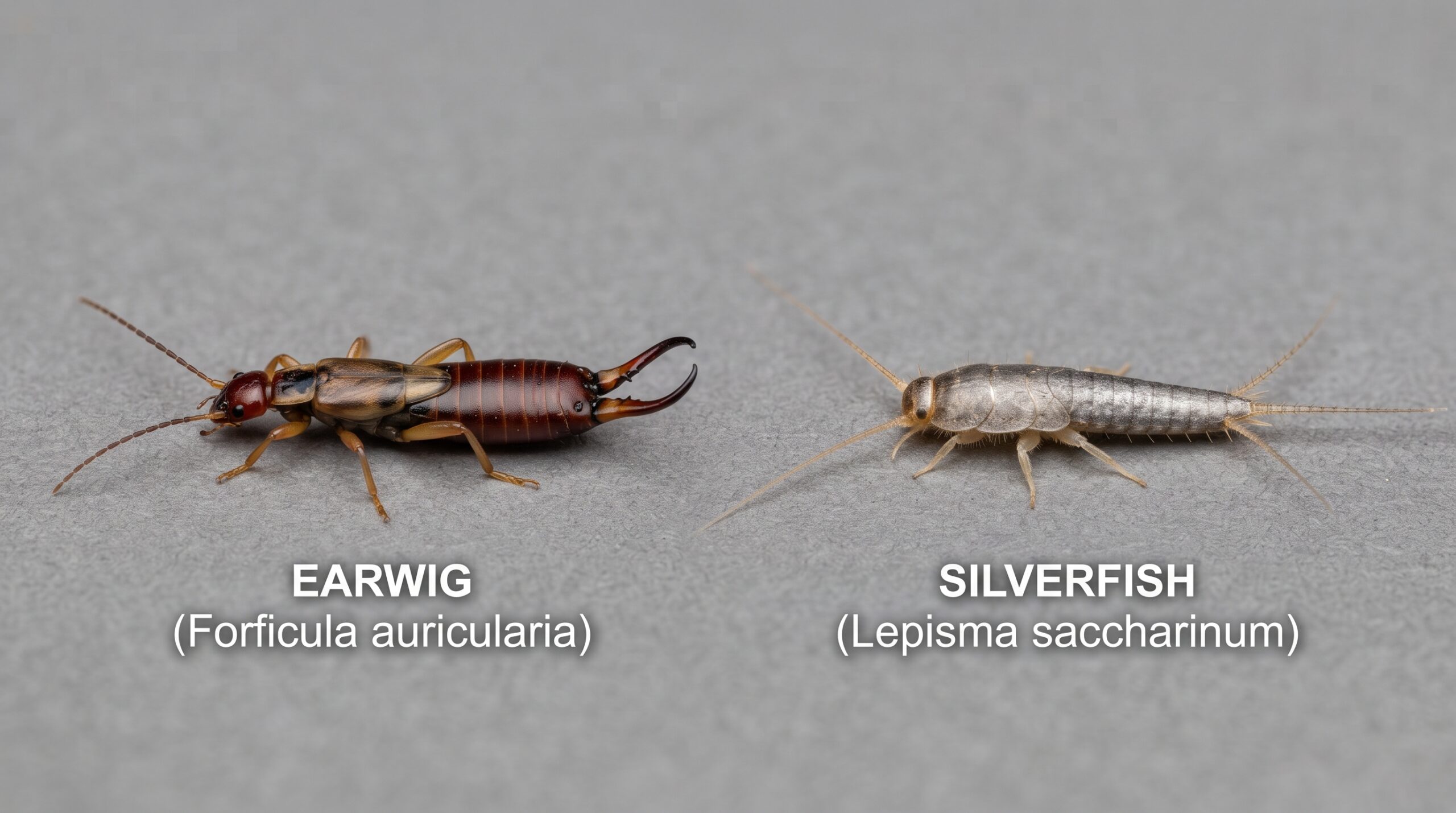
What Is an Earwig?
An earwig is a small elongated insect belonging to the order Dermaptera.
Its most recognizable feature is the pair of forceps like structures at the end of its abdomen. These structures are used for defense and other behaviors. Despite their intimidating appearance, earwig pincers generally do not pose a serious threat to people.
Earwigs are commonly found outdoors in moist, protected areas.
Typical locations include:
- Gardens
- Mulch
- Leaf piles
- Under stones
- Decaying wood
- Compost
- Around plant material
Many earwigs are active at night. Some species can enter homes when searching for moisture or shelter.
What Is a Silverfish?
A silverfish is a small, wingless insect with a distinctive silver gray appearance.
Silverfish have:
- A flattened body
- Long antennae
- Three tail like filaments
- Six legs
- No wings
- A tapered body shape
They are usually about half an inch to one inch long. Silverfish are fast moving and are often active at night.
They can live in damp areas indoors and may feed on materials containing starches, carbohydrates, paper, glue, fabrics, and other household materials.
Earwig vs Silverfish: Key Differences
| Feature | Earwig | Silverfish |
|---|---|---|
| Color | Brown, reddish brown, or black | Silver gray or metallic gray |
| Body shape | Elongated and flattened | Flat and tapered |
| Tail | Two pincers | Three thin filaments |
| Wings | Some species have wings | Wingless |
| Antennae | Long and segmented | Very long and thin |
| Typical habitat | Mostly outdoors | Often indoors |
| Preferred environment | Damp gardens and organic debris | Damp, dark indoor areas |
| Diet | Plants, decaying matter, insects | Starches, paper, glue, fabrics and other materials |
| Activity | Often active at night | Often active at night |
| Human danger | Generally harmless | Generally harmless |
| Main concern | Garden damage and nuisance | Damage to stored materials |
| Moisture preference | Moist environments | Humid environments |
| Best prevention | Remove outdoor hiding places | Reduce indoor moisture |
1. Appearance
Appearance is the easiest way to distinguish an earwig from a silverfish.
Earwigs usually have a darker body and prominent forceps at the rear.
Silverfish have a silvery gray body with a tapered shape and three thin appendages extending from the rear.
If the insect has obvious pincers, you are likely looking at an earwig.
If it has three thin tail like structures and a silvery body, it is more likely a silverfish.
2. Body Shape
Earwigs have elongated, flattened bodies with a clearly segmented appearance.
Silverfish have a distinctive tapered body that becomes narrower toward the rear.
The silverfish body shape is one reason the insect is sometimes described as fish like.
3. Tail and Pincers
The tail is the most useful feature when comparing an earwig or silverfish.
Earwigs have two forceps like structures called cerci.
Silverfish have three tail like filaments.
This difference is usually more reliable than color because lighting can make insect colors difficult to judge.
4. Size
Earwigs can reach approximately one inch or slightly more depending on the species. Some species are smaller.
Silverfish are commonly around half an inch to one inch long.
Because their sizes can overlap, size alone is not enough for accurate identification.
5. Habitat
Habitat is another important difference.
Earwigs are primarily outdoor insects. They often hide under mulch, stones, leaves, wood, and other damp materials.
Silverfish can establish themselves indoors, particularly in dark and humid areas.
Common silverfish locations include:
- Bathrooms
- Basements
- Closets
- Storage rooms
- Attics
- Kitchens
- Areas around plumbing
6. Diet
Earwigs commonly feed on plant material, decaying organic matter, and sometimes small insects and other arthropods.
Silverfish have a broader indoor diet and can feed on starches and carbohydrate rich materials. They may consume paper, glue, wallpaper paste, fabrics, and stored food materials.
This difference explains why silverfish can become a concern for books, documents, wallpaper, and stored household items.
7. Activity
Both insects can be active at night.
Earwigs often remain hidden during the day and become more active after dark.
Silverfish are also fast moving nocturnal insects and may suddenly appear when lights are switched on.
Seeing either insect during the daytime does not automatically rule it out, particularly if its hiding place has been disturbed.
8. Indoor Infestations
Silverfish are generally more associated with established indoor infestations.
They can hide in cracks, storage spaces, boxes, bathrooms, and other humid areas.
Earwigs are more commonly outdoor insects that occasionally enter homes while seeking moisture or shelter.
If you repeatedly find small silver insects inside your bathroom, basement, or storage area, silverfish may be the more likely identification.
9. Garden Damage
Earwigs can feed on plants, seedlings, soft fruit, and other plant material.
Large populations may damage young plants and ornamental vegetation.
Silverfish generally create more concern inside homes because they can feed on paper, glue, fabrics, and other materials.
10. Damage to Household Items
Silverfish can damage materials containing starches and carbohydrates.
Potentially affected items include:
- Books
- Paper
- Wallpaper
- Cardboard
- Glue
- Some fabrics
- Stored food
Not every silverfish infestation causes significant damage, but repeated activity around stored materials should be addressed.
Earwigs generally do not cause the same type of household material damage.
11. Are They Dangerous?
Neither earwigs nor silverfish are generally considered dangerous household pests.
Earwigs may use their forceps when handled or threatened, but their pincers are primarily defensive structures. University of Virginia Extension notes that earwig forceps cannot harm people.
Silverfish do not have pincers and are not known for biting people.
The main concern with either insect is usually nuisance, property damage in the case of silverfish, or garden damage in the case of earwigs.
12. Moisture
Moisture is an important factor for both insects.
Earwigs commonly prefer damp outdoor environments.
Silverfish prefer humid, protected areas and may become more noticeable when indoor moisture levels are high.
Reducing unnecessary moisture can therefore be an important part of prevention.
13. Prevention and Control
The best approach depends on whether you have an earwig or silverfish.
Earwig Prevention
To reduce earwigs:
- Remove leaf piles
- Reduce excessive mulch near foundations
- Clear decaying plant material
- Remove unnecessary outdoor debris
- Keep vegetation from directly touching walls
- Seal obvious entry points
- Reduce unnecessary moisture near foundations
University of Nevada Extension recommends reducing damp hiding places and removing refuge sites around gardens.
Silverfish Prevention
To reduce silverfish:
- Reduce indoor humidity
- Fix leaking pipes
- Improve bathroom ventilation
- Repair moisture problems
- Seal cracks and gaps
- Reduce clutter
- Store paper products carefully
- Vacuum hidden areas regularly
Reducing humidity and removing hiding places can make indoor areas less attractive to silverfish.
Earwig or Silverfish: Which One Is Worse?
Neither insect is automatically worse.
The answer depends on where they are found and what problems they are causing.
Earwigs can become a garden nuisance and may damage seedlings, flowers, vegetables, and soft fruit when populations become large.
Silverfish can be more concerning indoors because they may feed on paper products, glue, fabrics, and other household materials.
For a garden, earwigs may be the bigger concern.
For stored books and paper indoors, silverfish may be more troublesome.
How to Get Rid of Earwigs
Start with environmental changes.
Remove hiding places such as:
- Leaf litter
- Thick mulch
- Boards
- Stones
- Decaying plant material
- Excessive ground cover
You can also inspect the exterior of your home and seal obvious gaps where insects may enter.
For garden infestations, monitoring at night can help identify where earwigs are concentrated. University of Nevada Extension describes simple traps and habitat reduction as control options.
How to Get Rid of Silverfish
Silverfish control should focus heavily on moisture.
Start by checking:
- Bathroom leaks
- Plumbing
- Basement moisture
- Poor ventilation
- Damp storage areas
- Condensation
- Humidity
After addressing moisture, clean clutter and seal cracks where insects may hide.
If the infestation continues despite these measures, consider professional pest control.
Common Mistakes When Comparing Earwig and Silverfish
Mistake 1: Looking Only at Color
Color can vary.
The rear of the insect provides a much more useful identification clue.
Mistake 2: Assuming Every Small Indoor Bug Is a Silverfish
Many insects can enter homes.
Look for the characteristic three tail like filaments and silver gray body before identifying it as a silverfish.
Mistake 3: Assuming Earwigs Crawl Into People’s Ears
The idea that earwigs deliberately crawl into human ears is a long standing myth. There is no evidence that this is their normal behavior.
Mistake 4: Ignoring Moisture Problems
Repeated sightings of either insect may indicate favorable damp conditions.
Fixing moisture problems can help reduce pest activity.
Mistake 5: Using the Same Control Strategy for Both
Earwigs and silverfish have different habits.
Earwig control often focuses on outdoor habitat.
Silverfish control focuses more heavily on indoor moisture, hiding places, and food sources.
FAQs
Is an earwig the same as a silverfish?
No. Earwigs and silverfish are completely different insects. Earwigs have pincers at the rear, while silverfish have three thin tail like appendages.
Which is bigger, an earwig or silverfish?
Size varies by species, but earwigs can reach around one inch or slightly more, while silverfish are commonly around half an inch to one inch long.
Do silverfish have pincers?
No. Silverfish do not have the prominent pincers found on earwigs.
Do earwigs bite people?
Earwigs are generally harmless to people. Their forceps can pinch if they are handled or threatened, but they are primarily defensive structures.
Are silverfish dangerous?
Silverfish are generally harmless to people. Their main concern is potential damage to paper, books, wallpaper, glue, fabrics, and other household materials.
Why are earwigs in my house?
Earwigs may enter homes while looking for moisture, shelter, or cooler conditions. Damp areas around the home can make entry more likely.
Why are silverfish in my bathroom?
Bathrooms can provide the moisture and darkness silverfish prefer. Leaks, condensation, poor ventilation, and high humidity can make the environment more attractive.
Which is harder to get rid of, earwigs or silverfish?
It depends on the infestation. Silverfish can be persistent when indoor humidity and hiding places remain favorable. Earwigs may continue appearing when outdoor moisture, mulch, leaf litter, and other hiding places remain around the home.
What do earwigs eat?
Earwigs can eat plant material, decaying organic matter, soft fruit, and small insects or other arthropods depending on the species.
What do silverfish eat?
Silverfish can feed on starches and carbohydrate rich materials, including paper, glue, wallpaper paste, fabrics, and some stored foods.
How can I tell an earwig from a silverfish quickly?
Look at the tail. Two visible pincers usually indicate an earwig. Three thin tail like filaments and a silvery tapered body indicate a silverfish.
Conclusion
The difference between an earwig or silverfish becomes much easier to understand once you know their key identifying features.
An earwig usually has a dark body and two noticeable pincers at the rear. It is more commonly associated with outdoor environments such as gardens, mulch, leaf litter, and decaying plant material.
A silverfish usually has a silvery gray, tapered body, long antennae, and three tail like filaments. It is more commonly found in damp indoor areas and can damage paper, glue, fabrics, and other stored materials.
If you see either pest, identification should come before treatment. Once you know which insect you are dealing with, focus on the conditions attracting it.
For earwigs, reduce outdoor hiding places and excessive moisture.
For silverfish, reduce indoor humidity, fix moisture problems, clean clutter, and seal potential hiding places