
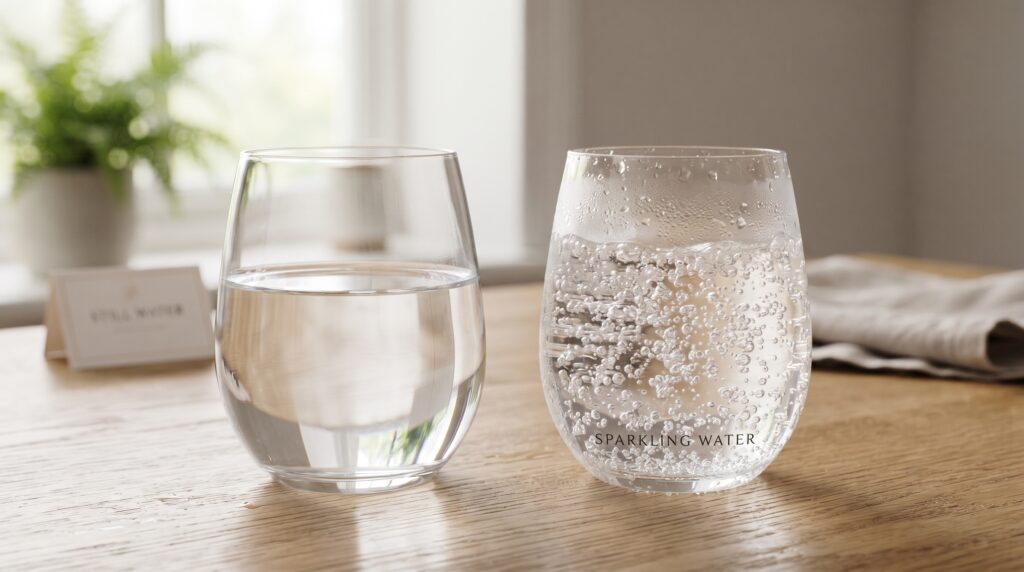
Are you wondering whether to choose still or sparkling water? Both can help you stay hydrated, but they differ in carbonation, taste, texture, mineral content, and how some people tolerate them.
Still water contains no added carbon dioxide, while sparkling water contains dissolved carbon dioxide that creates its characteristic bubbles. Research and expert guidance indicate that plain sparkling water can hydrate the body similarly to still water.
The better choice often comes down to personal preference, ingredients, and how your body responds. In this guide, you’ll discover the key differences between still or sparkling water, including hydration, digestion, dental health, calories, minerals, and everyday use.
Quick Answer
Still water is water without carbonation.
Sparkling water is water containing dissolved carbon dioxide, which creates bubbles and a fizzy sensation.
For most healthy people, plain sparkling water can contribute to hydration just like still water.
The important thing is to check the label. Some sparkling beverages contain added sugar, sweeteners, sodium, caffeine, or acidic flavoring ingredients, so they aren’t nutritionally identical to plain sparkling water.
What Is Still Water?
Still water is water without carbonation.
It can come from sources such as:
- Tap water
- Filtered water
- Bottled water
- Spring water
- Mineral water
Still water has a smooth texture and no fizz. It is often the simplest option for everyday hydration.
Because it doesn’t contain carbonation, it may also be more comfortable for people who experience bloating or discomfort from fizzy drinks.
What Is Sparkling Water?
Sparkling water is water containing dissolved carbon dioxide.
The carbon dioxide creates bubbles and gives the drink its distinctive fizzy texture.
Different types of sparkling water can vary considerably. Some contain naturally occurring minerals, while others have minerals added during processing. Some flavored varieties may also contain acids, sweeteners, or other ingredients.
For a simple everyday option, look for sparkling water with no added sugar.
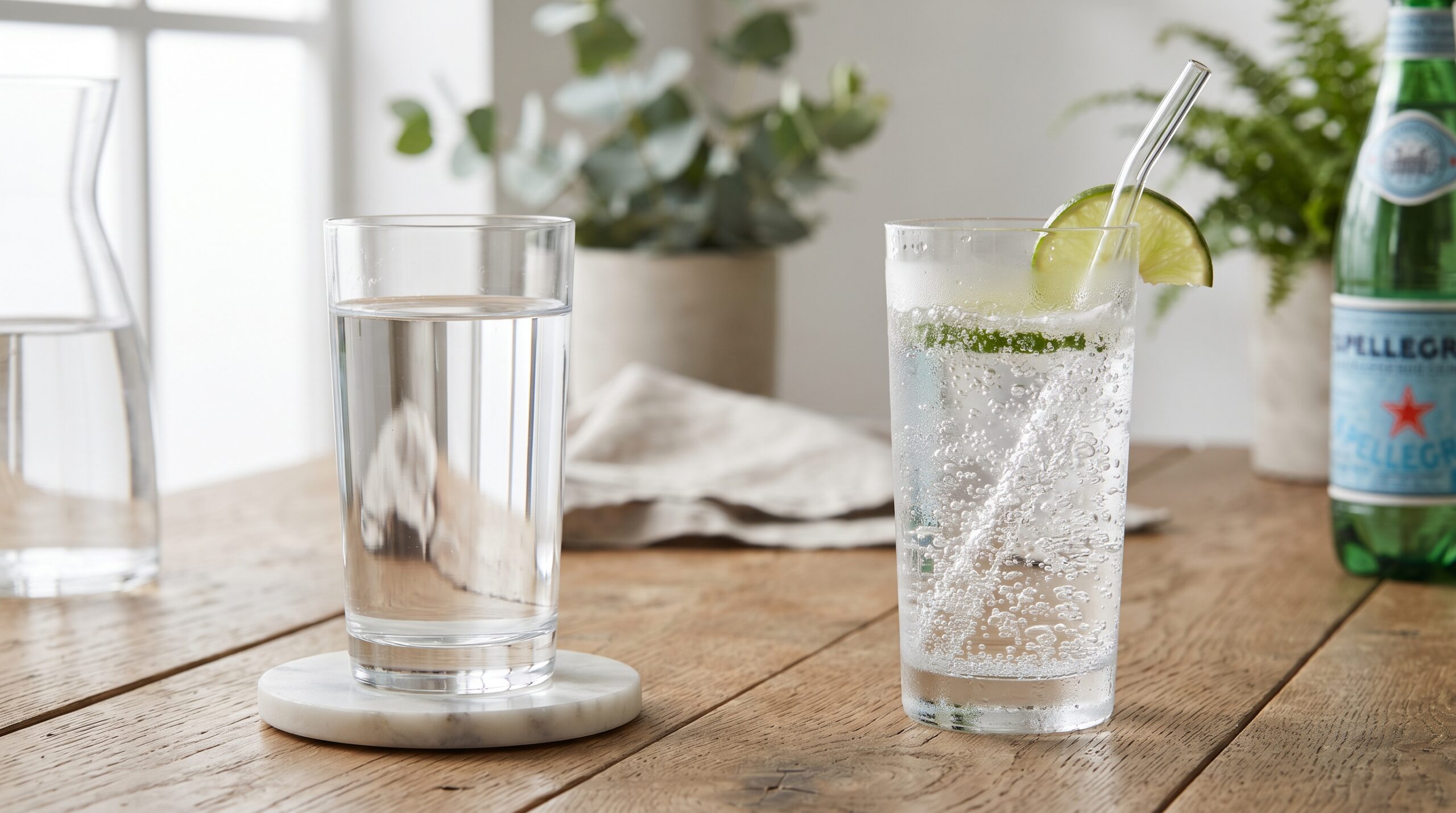
Still or Sparkling: Key Differences
| Feature | Still Water | Sparkling Water |
|---|---|---|
| Carbonation | No | Yes |
| Bubbles | No | Yes |
| Hydration | Excellent | Excellent |
| Taste | Smooth and neutral | Fizzy and refreshing |
| Calories | Usually zero | Usually zero if unsweetened |
| Digestion | Generally gentle | May cause gas or bloating in some people |
| Acidity | Usually closer to neutral | More acidic because of carbonic acid |
| Mineral content | Depends on source | Depends on brand and type |
| Dental considerations | Generally low concern | Plain versions have low erosive potential, but acidic flavored versions need more care |
| Best for | Simple everyday hydration | People who enjoy carbonation or want an alternative to sugary drinks |
| Added ingredients | Usually minimal | Can vary by product |
1. Still or Sparkling: Which Hydrates Better?
For most people, there is no major hydration advantage to choosing one over the other.
Plain sparkling water contains water and dissolved carbon dioxide, so it can contribute to daily fluid intake just like still water. The American Heart Association notes that sparkling water can be a useful hydration option, particularly for people who prefer its taste and therefore may drink more of it.
If sparkling water helps you drink more fluids, it can be a practical choice.
If you prefer still water, there’s no need to switch.
Best choice for hydration: The one you enjoy and can drink consistently.
2. Still or Sparkling: Which Tastes Better?
Taste is highly personal.
Still water has a smooth and neutral mouthfeel.
Sparkling water has bubbles that create a light, fizzy sensation.
Some people find carbonation makes water more interesting, while others prefer the simplicity of still water.
If you don’t enjoy plain water, unsweetened sparkling water may make hydration more appealing.
3. Still or Sparkling: What About Calories?
Plain still water contains no calories.
Plain sparkling water also generally contains no calories.
The difference comes when manufacturers add ingredients such as sugar or other calorie containing ingredients.
For example, unsweetened sparkling water is very different from a sugary carbonated beverage.
Always check the nutrition label before assuming a sparkling drink is simply water.
4. Still or Sparkling: Which Is Better for Digestion?
This depends on the individual.
Some people tolerate sparkling water without any problems. Others may experience:
- Burping
- Gas
- Bloating
- Abdominal discomfort
Carbonation can make some digestive symptoms more noticeable. Cleveland Clinic notes that people who experience stomach discomfort from sparkling water may prefer still water instead.
If sparkling water makes you uncomfortable, still water may be the better option.
5. Still or Sparkling: What About Dental Health?
Plain sparkling water is more acidic than still water because dissolved carbon dioxide forms carbonic acid.
However, plain sparkling water generally has much lower erosive potential than sugary or acidic soft drinks. Research comparing mineral waters found relatively low erosive effects, while flavored sparkling waters containing additional acids can be considerably more acidic.
The bigger concern is often what has been added to the sparkling water.
Flavored varieties containing citric acid or other acids may expose teeth to greater acidity.
For everyday dental health, choose plain or minimally acidic sparkling water when possible and maintain good oral hygiene.
6. Still or Sparkling: What About Minerals?
Mineral content can vary significantly between products.
Some still and sparkling mineral waters naturally contain minerals such as:
- Calcium
- Magnesium
- Sodium
- Potassium
The exact amount depends on the water source and brand.
Some sparkling waters can contain meaningful amounts of minerals, but they shouldn’t be treated as a replacement for a balanced diet. The American Heart Association notes that mineral content varies widely between sparkling water products.
If you’re watching sodium intake, check the nutrition label carefully.
7. Still or Sparkling: Which Is Better for Weight Management?
Both still water and unsweetened sparkling water can fit into a healthy eating pattern because they can provide hydration without added calories.
Sparkling water may also feel more satisfying or interesting to some people because of its carbonation.
However, sparkling water isn’t a magic weight loss drink.
For weight management, the bigger advantage is often replacing sugary beverages with unsweetened water.
The American Heart Association notes that sparkling water can be a useful alternative for people who otherwise struggle to drink enough water.
8. Still or Sparkling: Which Is Better With Meals?
Both options can work well with meals.
Still water has a neutral taste and doesn’t add carbonation.
Sparkling water can provide a refreshing contrast to food and is often served at restaurants.
If carbonation causes you to feel overly full or bloated during meals, still water may be more comfortable.
If you enjoy the fizz and experience no discomfort, sparkling water can be a perfectly reasonable choice.
9. Still or Sparkling: Which Is Better for People Who Avoid Soda?
Unsweetened sparkling water can be an excellent alternative to sugary soft drinks.
It provides carbonation without necessarily providing added sugar or significant calories.
However, not every carbonated beverage is the same.
Sparkling water: Usually water plus carbonation.
Club soda: Carbonated water that may contain added minerals.
Tonic water: A different beverage that typically contains sweeteners and quinine.
Flavored sparkling water: May contain additional acids, flavors, sweeteners, or other ingredients.
Reading the label is important.
10. Still or Sparkling: Which Is More Convenient?
Convenience depends on your lifestyle.
Still water is widely available and can be stored in bottles, pitchers, or reusable containers.
Sparkling water may require bottles, cans, or a home carbonation system.
If you frequently travel, exercise, or spend time outdoors, still water may be easier to carry and consume.
At home or during meals, sparkling water can be a pleasant alternative.
11. Still or Sparkling: Which One Should You Choose?
There is no universal winner.
Choose still water if you:
- Prefer a smooth texture
- Experience bloating from carbonation
- Want a simple hydration option
- Prefer water without bubbles
- Need to monitor ingredients closely
Choose sparkling water if you:
- Enjoy carbonation
- Find plain water boring
- Want an unsweetened alternative to soda
- Prefer a fizzy drink with meals
- Drink more water because you enjoy the taste
For most people, both can be part of a healthy hydration routine.
Still vs Sparkling Water: Simple Comparison
| Question | Still Water | Sparkling Water |
| Does it hydrate? | Yes | Yes |
| Does it contain carbonation? | No | Yes |
| Is plain water calorie free? | Yes | Yes |
| Can it cause bloating? | Less likely | More likely for some people |
| Does it have minerals? | Depends on source | Depends on source |
| Is it suitable for daily hydration? | Yes | Yes, if tolerated |
| Is it a soda replacement? | Yes | Yes, especially unsweetened varieties |
| Does it have bubbles? | No | Yes |
| Does it have carbonic acid? | No | Yes |
| Is one universally healthier? | No | No |
Types of Sparkling Water
Not all sparkling water products are identical.
Seltzer Water
Seltzer is typically water that has been artificially carbonated.
Some products contain natural flavors.
Mineral Water
Mineral water comes from a natural source and may contain naturally occurring minerals.
The exact mineral composition varies between products.
Club Soda
Club soda is carbonated water that may contain added mineral salts.
Some varieties contain more sodium than plain sparkling water.
Flavored Sparkling Water
Flavored sparkling water may contain natural or artificial flavors.
Some products also contain acids or sweeteners.
Always check the ingredient list.
How to Choose the Best Sparkling Water
If you’re choosing sparkling water for everyday hydration, consider these factors:
1. Check Added Sugar
Choose unsweetened varieties when possible.
Sugary beverages can contribute substantial amounts of added sugar to the diet.
2. Check Sodium
Some mineral waters and carbonated beverages contain considerable sodium.
If you’re limiting sodium, compare labels before choosing a product.
3. Check Acidity
Flavored sparkling waters may contain additional acids.
Plain sparkling water is generally a simpler choice.
4. Check Caffeine
Some products marketed as sparkling beverages contain caffeine.
If you want ordinary hydration, choose a caffeine free product.
5. Read the Ingredient List
Don’t assume every bubbly beverage is simply water.
Look for products with simple ingredients.
Common Mistakes When Choosing Still or Sparkling
Mistake 1: Thinking Sparkling Water Is the Same as Soda
Plain sparkling water is different from sugary soda.
Check the label for sugar, sweeteners, caffeine, and other ingredients.
Mistake 2: Assuming All Sparkling Water Has the Same Minerals
Mineral content can vary significantly between brands and water sources.
Mistake 3: Ignoring Digestive Symptoms
If carbonation causes bloating, gas, or discomfort, switch to still water.
Mistake 4: Choosing Flavored Water Without Checking Ingredients
Some flavored sparkling waters contain acids that may increase dental erosion risk.
Mistake 5: Thinking Sparkling Water Is More Hydrating
Plain sparkling water can hydrate effectively, but it isn’t automatically more hydrating than still water.
Still or Sparkling: Easy Decision Guide
Use this simple guide:
Want simple hydration? Choose still water.
Enjoy bubbles? Choose sparkling water.
Avoiding sugary soda? Choose unsweetened sparkling water.
Experience bloating from carbonation? Choose still water.
Watching sodium? Check the label.
Concerned about teeth? Prefer plain sparkling water over acidic flavored varieties and maintain good oral hygiene.
Need more water during the day? Choose whichever type helps you drink enough.
FAQs
Is sparkling water as hydrating as still water?
Yes. Plain sparkling water can hydrate the body similarly to still water.
Is still water healthier than sparkling water?
Not necessarily. For most healthy people, both can be healthy hydration choices. The ingredients in flavored or sweetened products can make a difference.
Can sparkling water cause bloating?
Yes. Carbonation can cause burping, gas, or bloating in some people.
Is sparkling water bad for your teeth?
Plain sparkling water has relatively low erosive potential compared with many acidic soft drinks. However, flavored sparkling waters containing additional acids may be more erosive.
Does sparkling water contain calories?
Plain unsweetened sparkling water generally contains zero calories. Check the label because some sparkling beverages contain sugar or other calorie containing ingredients.
Can sparkling water replace soda?
Yes. Unsweetened sparkling water can be a useful alternative to sugary soft drinks.
Does sparkling water help with weight loss?
Sparkling water isn’t a weight loss treatment. However, replacing sugary drinks with unsweetened sparkling water can reduce calorie and added sugar intake.
Is sparkling water good for digestion?
Some people tolerate it well, while others experience gas or bloating. Your individual response matters.
Does sparkling water have minerals?
Some varieties do. Mineral content depends on the water source and product.
Is club soda the same as sparkling water?
Not exactly. Club soda is carbonated water that may contain added mineral salts. Sparkling water is a broader category that includes several types of carbonated water.
Is tonic water the same as sparkling water?
No. Tonic water is a different beverage and commonly contains sweeteners and quinine.
Which is better, still or sparkling water?
Neither is universally better. Choose still water if you prefer it or if carbonation causes discomfort. Choose sparkling water if you enjoy carbonation and it helps you drink more water.
Conclusion
When choosing still or sparkling water, the good news is that you don’t necessarily have to choose based on hydration alone. Plain sparkling water can hydrate similarly to still water, so personal preference can play an important role.
Still water is simple, smooth, and easy to drink. Sparkling water adds carbonation and can be an enjoyable alternative to sugary beverages.
The most important factor is the product you choose. Look for unsweetened options, check sodium and other ingredients, and pay attention to how your body responds to carbonation.
For most people, the best choice is the water they enjoy drinking regularly.