
staining or cavity

Staining or Cavity: 7 Ultimate Differences Explained for the Best Dental Care Choice

Staining or Cavity: How Can You Tell the Difference?

If you notice a dark, brown, or black spot on your tooth, you may wonder whether it is staining or a cavity.

At first glance, they can look very similar. Both may cause discoloration, and both can appear as dark spots on the teeth. However, they are completely different dental conditions.

Although they may look alike, a stain affects the appearance of a tooth, while a cavity damages the tooth structure itself.

Understanding the difference can help you decide whether you need cosmetic cleaning or professional dental treatment.

Quick Answer : Staining or Cavity

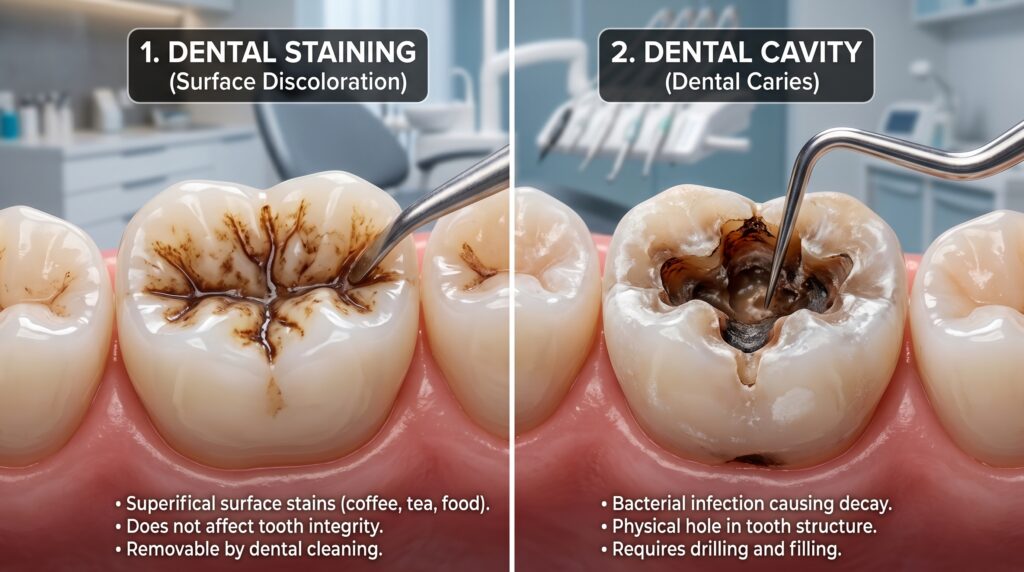
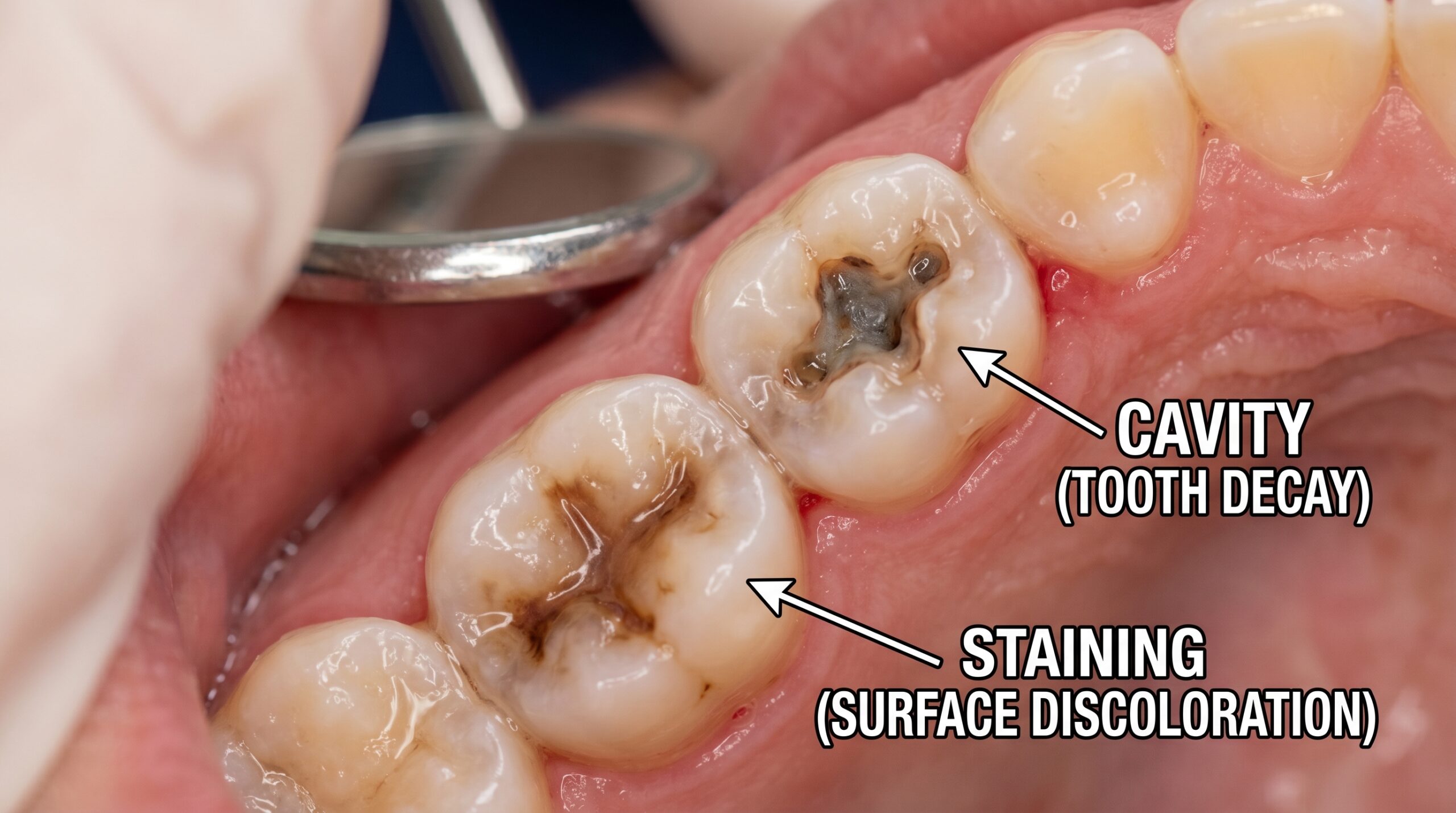
Staining is discoloration on the surface of a tooth and is usually cosmetic.

A cavity is tooth decay that damages the tooth structure and requires dental treatment.

If the spot is only changing the color of your tooth, it may be staining. If it is causing damage, sensitivity, or pain, it may be a cavity.
staining or cavity


What Is Tooth Staining?

Definition

Tooth staining is discoloration that affects the surface or internal color of a tooth.

Common Causes

  • Coffee
  • Tea
  • Red wine
  • Tobacco use
  • Poor oral hygiene
  • Certain medications
  • Aging

Signs of Staining

  • Yellow, brown, or dark spots
  • Smooth tooth surface
  • No pain
  • No sensitivity in most cases
  • Cosmetic concern only

Examples

  • Coffee stains on front teeth
  • Yellowing from smoking
  • Surface discoloration near the gum line

Key Insight

Stains change how a tooth looks but usually do not damage the tooth itself.


What Is a Cavity?

Definition

A cavity is a permanently damaged area of a tooth caused by decay from bacteria and acids.

Common Causes

  • Poor brushing habits
  • Excess sugar consumption
  • Plaque buildup
  • Inadequate fluoride exposure
  • Dry mouth

Signs of a Cavity

  • Dark or black spots
  • Tooth sensitivity
  • Pain when eating sweets
  • Pain when drinking hot or cold beverages
  • Visible holes or pits

Examples

  • A small hole in a molar
  • Sensitivity when eating chocolate
  • Pain while drinking cold water

Key Insight

A cavity is a disease process that damages tooth structure and requires treatment.


Staining vs Cavity: Key Differences

Main Differences

  • Staining affects appearance, cavities affect tooth health
  • Stains are usually painless, cavities often cause discomfort
  • Stains sit on or within the tooth color, cavities destroy tooth material
  • Stains may be removed with cleaning, cavities require treatment
  • Stains are cosmetic, cavities are medical issues

Comparison Table of Staining or Cavity

FeatureStainingCavity
DefinitionTooth discolorationTooth decay
Main CausePigments and discolorationBacterial damage
PainUsually noneOften present
SensitivityRareCommon
Tooth DamageNoYes
AppearanceColored spotsDark spots, holes, or pits
TreatmentCleaning or whiteningFillings or other dental treatment
UrgencyLowHigh

Real World Usage Scenarios

Scenario 1

Person: “I have a yellow spot on my tooth but no pain.”

Dentist: “It is likely staining.”

🎯 Lesson: Discoloration without symptoms is often a stain.


Scenario 2

Person: “My tooth hurts when I drink cold water.”

Dentist: “That could be a cavity.”

🎯 Lesson: Sensitivity often points to decay.


Scenario 3

Person: “The dark mark disappeared after cleaning.”

Dentist: “It was probably staining.”

🎯 Lesson: Surface stains can often be removed.


Scenario 4

Person: “I can see a small hole in my tooth.”

Dentist: “That is likely a cavity.”

🎯 Lesson: Holes usually indicate decay rather than staining.


Scenario 5

Person: “My tooth looks darker and hurts when I chew.”

Dentist: “You should have it examined immediately.”

🎯 Lesson: Pain and discoloration together require professional evaluation.


Common Mistakes

Mistake 1: Assuming Every Dark Spot Is a Cavity

Why it happens:

Many stains are dark brown or black.

Correction:

Not all discoloration indicates decay.


Mistake 2: Ignoring a Dark Spot Because It Looks Like a Stain

Why it happens:

Early cavities can resemble stains.

Correction:

Have suspicious spots examined by a dentist.


Mistake 3: Using Whitening Products on a Cavity

Why it happens:

People think discoloration is always cosmetic.

Correction:

Whitening does not treat decay.


Mistake 4: Waiting for Pain Before Seeking Help

Why it happens:

Some cavities cause no symptoms initially.

Correction:

Regular dental checkups can detect early decay.


Memory Tricks

Remember Staining

Staining = Surface Color Change

Think appearance rather than damage.

Remember Cavity

Cavity = Creation of a Hole

Think decay and structural damage.


Expert Insight

Dentists distinguish stains from cavities through visual examination, dental instruments, and sometimes X rays.

A stain generally affects the color of the tooth without softening or weakening it. A cavity, however, results from bacterial acids that gradually dissolve enamel and dentin.

One important point is that early cavities can sometimes resemble stains. Because of this, self diagnosis is not always reliable. Professional evaluation is the safest way to determine whether discoloration is harmless or a sign of decay.

Conclusion : Staining or Cavity

When comparing staining or cavity, the difference comes down to appearance versus damage.

  • Staining is discoloration that affects how a tooth looks.
  • A cavity is tooth decay that damages the tooth structure.
  • Stains are usually cosmetic, while cavities require dental treatment.
  • Pain, sensitivity, or visible holes are stronger signs of a cavity.

If you notice a dark spot and are unsure whether it is staining or a cavity, a dental examination is the best way to get an accurate diagnosis and protect your oral health.

Scroll to Top