
Whiskey or Tequila: Which Is Better?
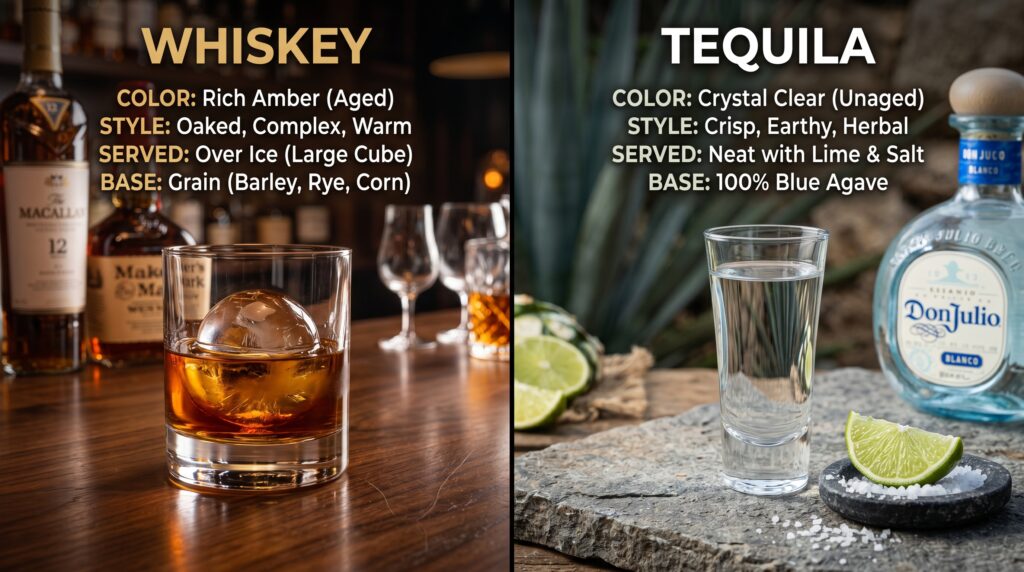
When comparing whiskey or tequila, you’re looking at two of the world’s most popular distilled spirits.
Both are enjoyed worldwide, but they are made from different ingredients, come from different traditions, and offer very different flavor experiences.
There is no universal winner. The better choice depends on your taste preferences and how you plan to enjoy the drink.
Quick Answer: Whiskey or Tequila?
Whiskey is typically rich, warm, and often features notes of oak, vanilla, caramel, spice, or smoke.
Tequila is usually brighter, earthier, and can feature flavors of agave, citrus, pepper, and herbs.
Choose whiskey if you enjoy deep, aged flavors. Choose tequila if you prefer a fresher and more vibrant taste.
What Is Whiskey?
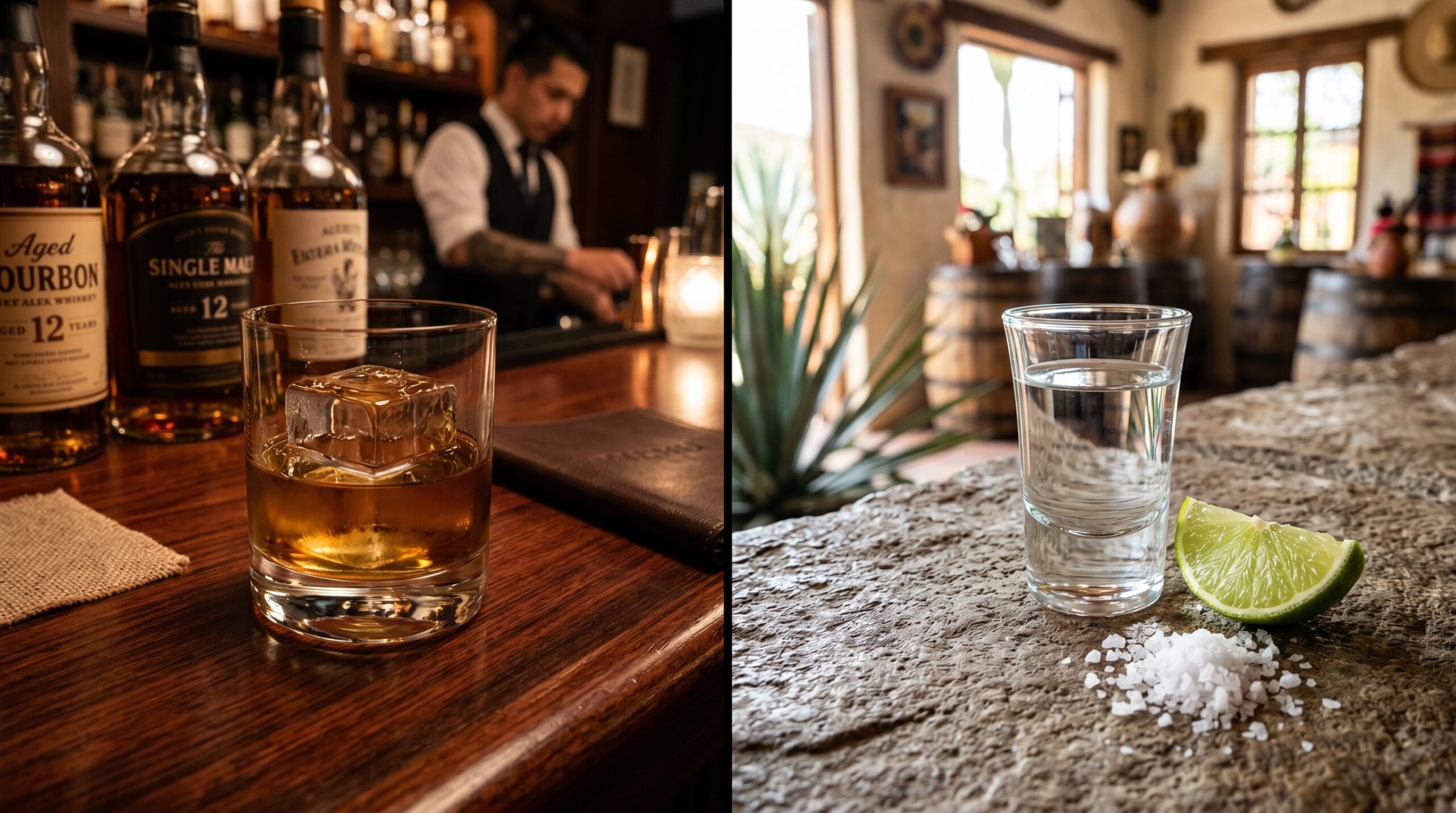
Whiskey is a distilled spirit made from fermented grains such as barley, corn, rye, or wheat.
Most whiskies are aged in wooden barrels, which contribute much of their flavor and color.
Key Features
- Made from grains
- Usually aged in barrels
- Rich and complex flavor
- Popular in many countries
- Often enjoyed neat, on ice, or in cocktails
Common Flavor Notes
- Vanilla
- Caramel
- Oak
- Spice
- Smoke (in some styles)
Best For
- Slow sipping
- Cold weather
- Classic cocktails
- Exploring aged spirits
Key Insight
Whiskey’s character often comes from barrel aging and grain selection.
What Is Tequila?
Tequila is a distilled spirit made primarily from blue agave plants grown in specific regions of Mexico.
Some tequilas are aged, while others are bottled shortly after distillation.
Key Features
- Made from blue agave
- Originates in Mexico
- Can be unaged or aged
- Bright and distinctive flavor
- Popular in cocktails and mixed drinks
Common Flavor Notes
- Agave
- Citrus
- Pepper
- Herbal notes
- Earthiness
Best For
- Cocktails
- Warm weather gatherings
- Social occasions
- Agave spirit enthusiasts
Key Insight
Tequila’s identity comes from the agave plant rather than grains.
Whiskey vs Tequila: Key Differences
Main Differences
- Whiskey is made from grains, tequila from agave
- Whiskey is often heavily influenced by barrel aging
- Tequila typically has a brighter and more vegetal flavor profile
- Whiskey traditions span multiple countries
- Tequila is strongly associated with Mexico
- Flavor profiles differ significantly even at similar alcohol levels
Comparison Table
| Feature | Whiskey | Tequila |
|---|---|---|
| Main Ingredient | Grains | Blue Agave |
| Origin | Multiple countries | Mexico |
| Flavor Profile | Rich, warm, oaky | Bright, earthy, citrusy |
| Aging Importance | Very important | Optional depending on style |
| Common Use | Sipping and cocktails | Cocktails and sipping |
| Typical Character | Deep and complex | Fresh and vibrant |
Real World Usage Scenarios
Scenario 1
Person: “I enjoy rich and warming flavors.”
Suggestion: Whiskey may suit your taste.
🎯 Lesson: Whiskey often emphasizes depth and barrel character.
Scenario 2
Person: “I like bright and refreshing flavors.”
Suggestion: Tequila may be a better fit.
🎯 Lesson: Tequila often highlights agave and citrus notes.
Scenario 3
Cocktail Lover: “I enjoy margaritas.”
Suggestion: Tequila is the traditional choice.
🎯 Lesson: Many famous cocktails rely on tequila.
Scenario 4
Spirit Enthusiast: “I like exploring aged beverages.”
Suggestion: Whiskey offers many aged expressions.
🎯 Lesson: Barrel aging plays a major role in whiskey.
Scenario 5
Traveler: “I want to experience traditional Mexican spirits.”
Suggestion: Tequila is an iconic choice.
🎯 Lesson: Tequila is deeply connected to Mexican heritage.
Common Mistakes
Mistake 1: Assuming All Tequila Is Meant for Shots
Why it happens:
Popular culture often portrays tequila this way.
Correction:
Many premium tequilas are designed for slow sipping.
Mistake 2: Thinking All Whiskey Tastes the Same
Why it happens:
Different styles are often grouped together.
Correction:
Flavor varies widely depending on grains, aging, and production methods.
Mistake 3: Judging a Spirit by One Brand
Why it happens:
Limited experience.
Correction:
Different producers create very different flavor profiles.
Mistake 4: Ignoring Production Methods
Why it happens:
Focus on alcohol content alone.
Correction:
Ingredients and aging dramatically affect flavor.
Memory Tricks
Remember Whiskey
Whiskey = Wood and Warmth
Think grains, barrels, and rich flavors.
Remember Tequila
Tequila = Agave and Brightness
Think fresh, earthy, and vibrant notes.
Expert Insight
The difference between Whiskey or Tequila comes from their ingredients and traditions.
Whiskey reflects the craft of grain fermentation and barrel aging, where time plays an important role in developing flavor.
Tequila reflects the unique characteristics of the agave plant and Mexican production methods.
Both spirits have strong cultural identities and offer different experiences for people who enjoy exploring flavors.
Why Understanding the Difference Matters
Understanding Whiskey or Tequila helps you choose a drink based on taste, occasion, and personal preference.
Instead of choosing only by appearance or popularity, knowing their differences allows you to appreciate their unique qualities.
Conclusion
When comparing whiskey or tequila, the best choice depends on what flavors you enjoy.
- Choose whiskey if you like rich, warm, oaky, and aged flavors.
- Choose tequila if you prefer bright, earthy, citrusy, and agave driven flavors.
- Whiskey is grain based, while tequila is agave based.
- Both have strong traditions and devoted fans around the world.
If you enjoy deep and complex sipping experiences, whiskey may be the better choice. If you prefer fresh and lively flavors, tequila may be the better fit.
