
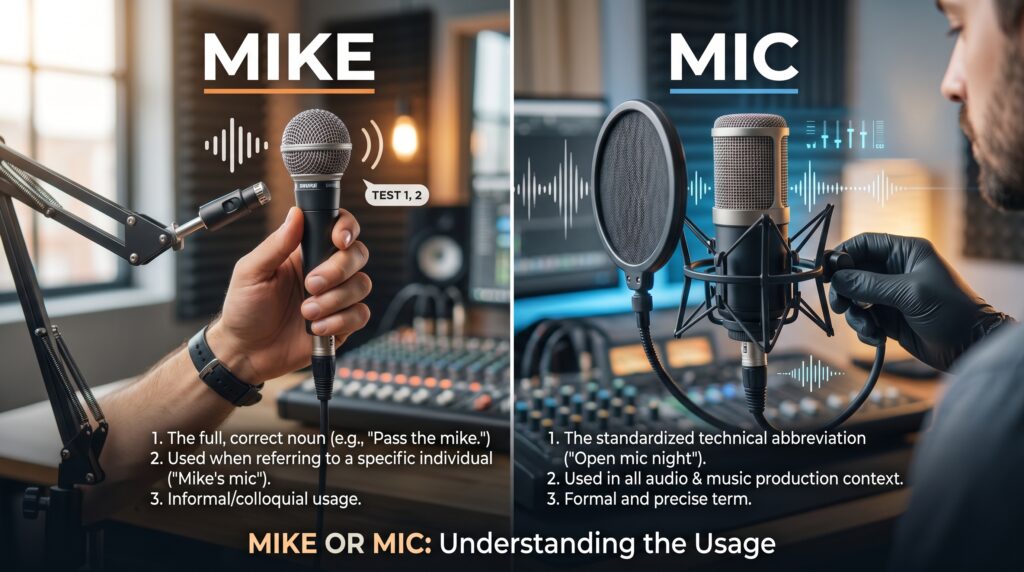
mike or mic

Mike or Mic: 7 Ultimate Differences Explained for the Best Word Choice

Mike or Mic: Which Spelling Is Correct?

If you’ve ever written about audio equipment, podcasts, music production, or public speaking, you’ve probably wondered: mike or mic?

The confusion is understandable because both words refer to the same thing and are pronounced exactly the same way. Many people assume one spelling is incorrect, while others believe there is a significant difference between them.

Although they look different, they generally serve the same purpose in modern English. However, there are some important distinctions in usage, style, and industry preference.

This guide explains everything you need to know about mike and mic, helping you choose the right spelling for your audience and context.

Quick Answer : Mike or Mic

Mike and mic are both accepted abbreviations of the word “microphone.” They mean the same thing and are pronounced identically.

Today, mic is generally the preferred spelling in professional audio, broadcasting, podcasting, and technology industries, while mike remains common in general writing and informal communication.
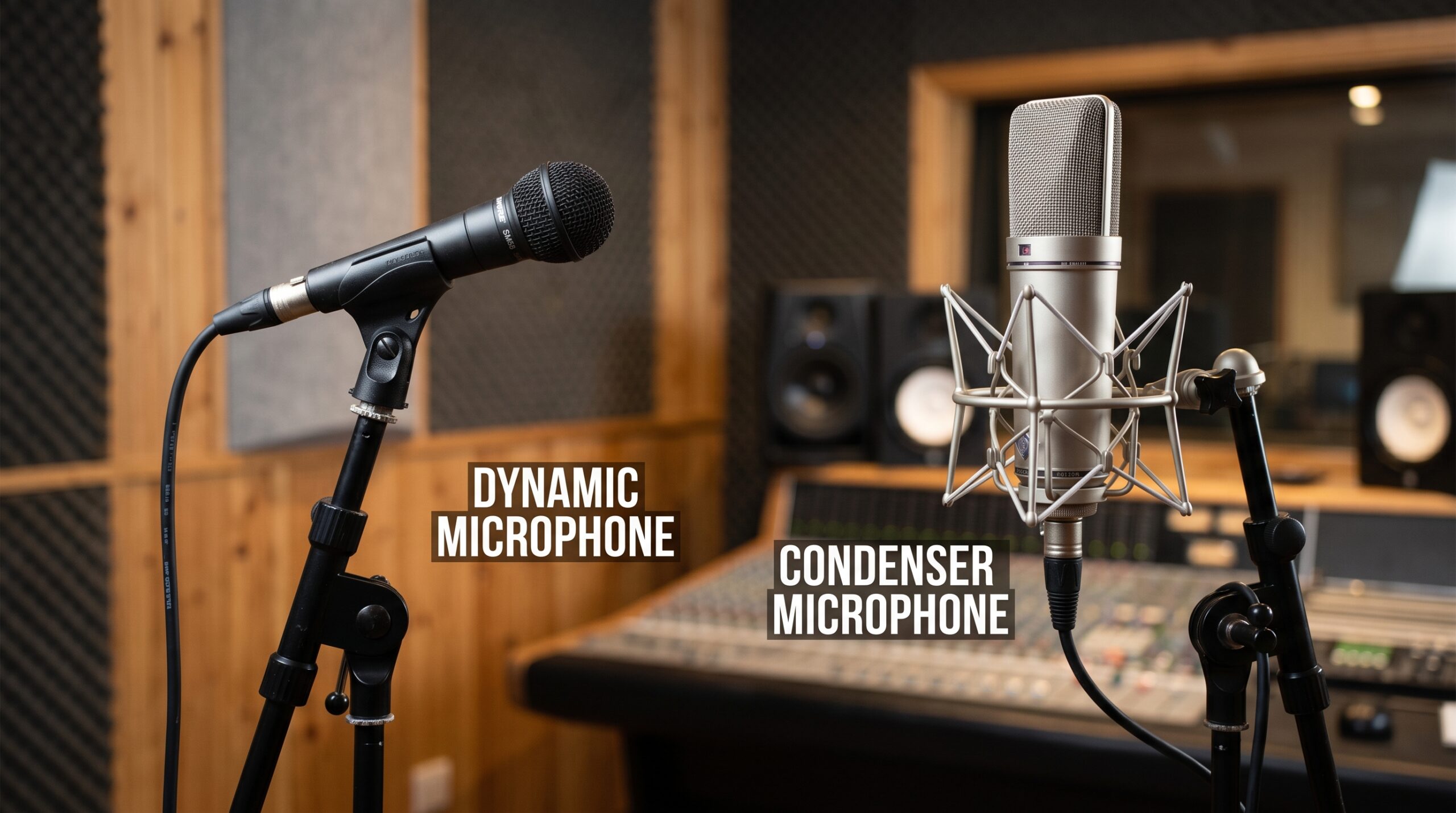

What Does “Mike” Mean?

Definition

Mike is an abbreviated form of the word microphone.

Usage Rules

Use mike when referring to:

  • A microphone
  • Casual writing
  • Informal communication
  • General audience content

Examples

Example 1

The singer grabbed the mike before stepping onto the stage.

Example 2

Please pass me the mike.

Example 3

The speaker adjusted the mike before beginning the presentation.

Key Insight

Mike is a traditional phonetic spelling that reflects how “mic” is pronounced.


What Does “Mic” Mean?

Definition

Mic is also an abbreviation of microphone and has the same meaning as mike.

Usage Rules

Use mic when referring to:

  • Audio equipment
  • Podcasting
  • Recording studios
  • Broadcasting
  • Technical documentation

Examples

Example 1

The podcast host tested the mic before recording.

Example 2

This USB mic provides excellent sound quality.

Example 3

The engineer positioned the mic closer to the speaker.

Key Insight

Mic is the dominant spelling in modern audio and technology industries.


Mike vs Mic: Key Differences

Main Differences

  • Both mean microphone.
  • Both are pronounced the same way.
  • Mic is more common in technical industries.
  • Mike appears more often in casual writing.
  • Neither spelling changes the meaning.
  • Mic is generally preferred in modern professional content.

Comparison Table of Mike or Mic

FeatureMikeMic
MeaningMicrophoneMicrophone
PronunciationSame as micSame as mike
FormalityInformal to neutralNeutral to professional
Audio Industry UsageLess commonMore common
Technical WritingRareCommon
Meaning DifferenceNoneNone

Real-World Usage Scenarios

Scenario 1

Person A: “What should I buy for podcasting?”

Person B: “A quality USB mic is a good start.”

🎯 Lesson: Mic is commonly used in audio technology discussions.


Scenario 2

Person A: “Who has the mike?”

Person B: “The host is using it.”

🎯 Lesson: Mike often appears in everyday conversation and journalism.


Scenario 3

Person A: “I’m reviewing recording equipment.”

Person B: “Use the term mic for industry consistency.”

🎯 Lesson: Professional audio content usually favors mic.


Scenario 4

Person A: “Do mike and mic mean different things?”

Person B: “No, they both mean microphone.”

🎯 Lesson: The difference is primarily stylistic.


Scenario 5

Person A: “Which spelling ranks better in search engines?”

Person B: “Mic generally matches modern industry terminology.”

🎯 Lesson: Search intent often favors mic-related content.


Common Mistakes

Mistake 1: Thinking One Spelling Is Wrong

Why it happens:

People see different spellings in different contexts.

Correction:

Both spellings are widely accepted.


Mistake 2: Assuming They Refer to Different Devices

Why it happens:

The visual difference suggests different meanings.

Correction:

Both refer to a microphone.


Mistake 3: Using Mike in Technical Product Listings

Why it happens:

Writers use conversational spelling everywhere.

Correction:

Mic is usually preferred for product descriptions and technical content.


Mistake 4: Confusing Mike With the Personal Name

Why it happens:

Mike is also a common first name.

Correction:

Context usually makes the intended meaning clear.


Memory Tricks

Remember Mike

Mike = Microphone in Everyday Writing

Think casual conversation.

Remember Mic

Mic = Media, Industry, and Content Creation

Think podcasts, recording studios, and professional audio.


Expert Insight

Historically, “mike” became popular because English speakers wanted an abbreviation that clearly reflected the pronunciation of “microphone.”

As audio technology evolved, manufacturers, broadcasters, recording engineers, and content creators increasingly adopted mic because it is shorter, cleaner, and aligns more closely with the abbreviated form of the original word.

Today, product specifications, studio manuals, podcasting guides, and audio reviews overwhelmingly favor mic, making it the dominant spelling in professional environments.

Conclusion : Mike or Mic

When comparing mike or mic, the answer is simple:

  • Both words mean microphone.
  • Both are pronounced the same way.
  • Mic is generally preferred in modern professional and technical contexts.
  • Mike remains acceptable in casual and general writing.

If you’re writing about audio equipment, podcasting, music production, or broadcasting, mic is usually the best choice. For everyday conversation, either spelling will be understood correctly.

Scroll to Top