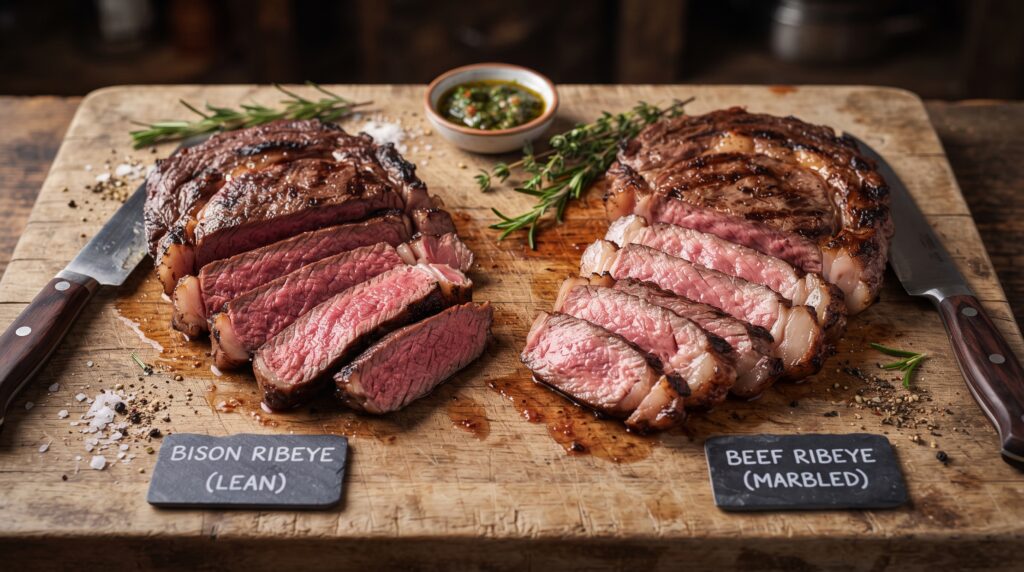
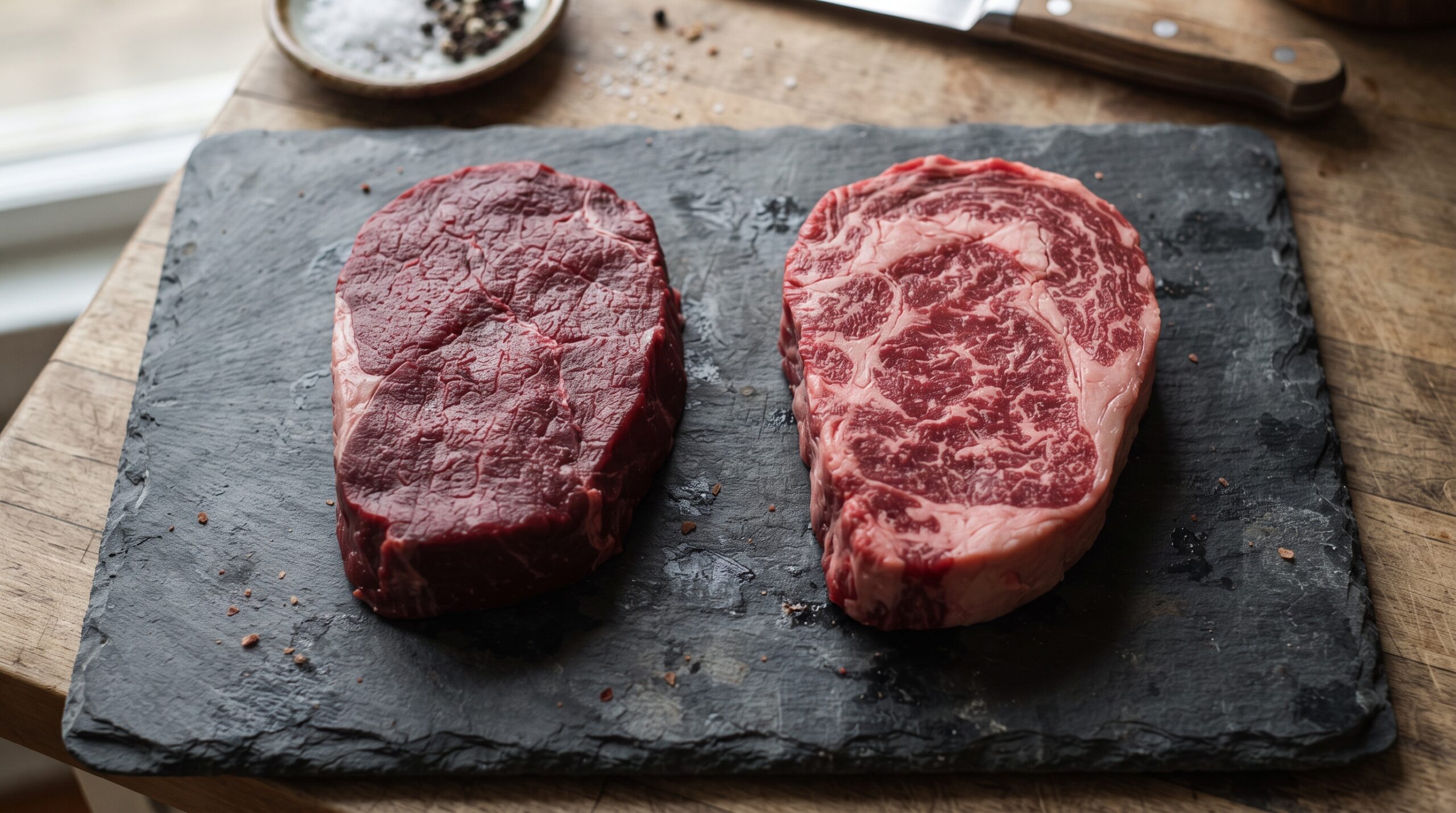
When comparing bison or beef, both meats can provide high quality protein, vitamins, and minerals. However, they differ in fat content, calories, flavor, texture, price, availability, and cooking requirements.
Bison meat comes from North American bison and is often described as lean, rich, and slightly sweet. Beef comes from cattle and is available in a much wider range of cuts, fat levels, and cooking styles.
For people choosing between bison and beef, the better option depends on personal taste, nutritional goals, budget, availability, and how the meat will be prepared.
This guide explains the key differences between bison or beef, including nutrition, taste, protein, fat, calories, cooking methods, cost, benefits, and common mistakes.
 Quick Answer
Neither bison nor beef is universally better.
Bison is often a good choice for people looking for a relatively lean red meat with a rich flavor and high protein content.
Beef offers greater variety, broader availability, more cuts, and a wide range of fat levels.
If your priority is a leaner meat, bison can be an excellent option. If you want affordability, variety, and easy availability, beef may be the more practical choice.
Your overall diet and portion size matter more than choosing one meat exclusively.

What Is Bison Meat?
Bison meat comes from North American bison, which are sometimes informally called buffalo.
Bison is a red meat that can be prepared in many of the same ways as beef.
Common bison cuts include:
- Ground bison
- Bison steak
- Bison roast
- Bison burgers
- Bison ribs
- Bison tenderloin
Because bison meat can be relatively lean, it can cook more quickly than some fattier beef cuts.
What Does Bison Taste Like?
Bison is often described as having a rich, slightly sweet, and clean flavor.
The exact taste depends on:
- Cut
- Fat content
- Cooking method
- Animal diet
- Preparation
- Degree of doneness
Bison can taste similar to beef while having its own distinctive flavor.
What Is Beef?
Beef is meat obtained from cattle.
It is one of the most widely consumed meats worldwide and is available in many different cuts and grades.
Popular beef cuts include:
- Ribeye
- Sirloin
- Tenderloin
- Strip steak
- Chuck
- Brisket
- Ground beef
- Beef roast
Beef can be grilled, roasted, fried, braised, slow cooked, or used in dishes such as burgers, stews, tacos, and curries.
What Does Beef Taste Like?
Beef has a broad flavor range because different cuts can contain very different amounts of fat and connective tissue.
Fatty cuts often have a richer and more buttery flavor, while lean cuts can taste lighter.
Bison vs Beef: Key Differences
| Feature | Bison | Beef |
|---|---|---|
| Meat type | Red meat | Red meat |
| Source | North American bison | Cattle |
| Flavor | Rich and slightly sweet | Rich and savory |
| Texture | Often lean and tender | Varies greatly by cut |
| Protein | High | High |
| Fat | Often lower in comparable cuts | Varies from low to high |
| Calories | Often lower in lean cuts | Varies by cut |
| Iron | Good source | Good source |
| Vitamin B12 | Good source | Good source |
| Availability | Less widely available | Widely available |
| Price | Often more expensive | Wide price range |
| Cooking | Can cook quickly | More forgiving in many cuts |
| Best for | Lean red meat and variety | Variety, availability, and different cooking styles |
Bison or Beef: Nutrition Comparison
The nutritional value of bison and beef depends heavily on the exact cut and fat content.
Lean bison can provide substantial protein while containing relatively little fat.
Beef can also be very lean, particularly when choosing lean cuts or lower fat ground beef.
Therefore, comparing bison with a specific lean beef cut is more useful than comparing bison with all beef generally.
Protein
Both bison and beef are excellent sources of complete protein.
Protein helps support:
- Muscle maintenance
- Tissue repair
- Normal body functions
- Satiety
- Overall nutritional needs
The exact protein content varies by cut and preparation.
Fat
One of the most commonly discussed differences between bison and beef is fat.
Many bison cuts are naturally lean, although the exact amount varies.
Beef can range from very lean to highly marbled depending on the cut.
If reducing dietary fat is important to you, compare specific cuts rather than assuming all bison is leaner than all beef.
Calories
Lean bison can be relatively low in calories compared with fattier beef.
However, calories depend on:
- Cut
- Fat content
- Portion size
- Cooking method
- Added oils
- Sauces
A lean beef cut can also fit well into a lower calorie diet.
Bison or Beef: Taste and Texture
Taste is highly personal.
Bison often has a rich flavor without the heavy taste associated with some fatty beef cuts.
Beef offers a wider range of flavors because of its many cuts and different levels of marbling.
Choose Bison If You Prefer:
- Rich flavor
- Leaner texture
- Slightly sweet notes
- A distinctive alternative to beef
Choose Beef If You Prefer:
- Traditional beef flavor
- More marbling
- Tender fatty cuts
- A wider range of textures
Cooking Differences
Cooking technique matters when preparing both meats.
How to Cook Bison
Because many bison cuts are lean, overcooking can make the meat dry.
Useful cooking methods include:
- Grilling
- Pan searing
- Roasting
- Broiling
- Slow cooking for suitable cuts
Avoid relying only on cooking time. Use the meat’s temperature and the characteristics of the cut to guide preparation.
How to Cook Beef
Beef is extremely versatile.
Different cuts can be:
- Grilled
- Pan fried
- Roasted
- Braised
- Slow cooked
- Smoked
- Ground
Fatty beef cuts can be more forgiving when cooked at higher temperatures, while lean beef also benefits from careful cooking.
Bison or Beef for Protein
If your main goal is increasing protein intake, both can work well.
Bison and beef contain complete proteins with all essential amino acids.
The better choice depends more on:
- Portion size
- Cut
- Overall diet
- Fat preference
- Calories
- Cooking method
You don’t need to choose only one source of protein.
Bison or Beef for Weight Management
Lean meats can fit into a balanced diet when portions and overall calorie intake are appropriate.
Lean bison may appeal to people who want a relatively lean red meat.
Lean beef can provide a similar benefit when you choose appropriate cuts.
The biggest difference may come from the specific cut rather than whether the meat is bison or beef.
Bison or Beef: Vitamins and Minerals
Both meats can provide important nutrients.
These include:
- Protein
- Iron
- Zinc
- Vitamin B12
- Selenium
- Other B vitamins
The exact nutritional profile varies depending on the animal, cut, serving size, and preparation.
Iron is particularly important because red meat can provide highly absorbable heme iron.
Bison or Beef: Cost Comparison
Price varies significantly by location, supplier, cut, and quality.
Bison Cost
Bison is often more expensive because it has a smaller production and distribution network than beef.
It may also be less readily available at ordinary supermarkets.
Beef Cost
Beef has a much broader price range.
Budget ground beef and economical cuts can be relatively affordable, while premium steaks can be expensive.
For shoppers focused on price, beef usually offers more choices.
Availability
Beef is generally much easier to find.
You can often purchase beef from:
- Supermarkets
- Butchers
- Restaurants
- Online meat suppliers
- Local markets
Bison can be less widely available, depending on your location.
Specialty stores and online suppliers may carry it more frequently than ordinary supermarkets.
Sustainability Considerations
Environmental impact is complicated and depends on farming practices, land use, feed, transportation, herd management, and production systems.
Bison can play an important ecological role in grassland systems, but that does not mean every bison product automatically has a lower environmental impact than every beef product.
If sustainability matters to you, consider the specific producer and how the animals are raised rather than relying only on the species name.

Pros and Cons
Bison
Pros
- High in protein
- Often relatively lean
- Rich flavor
- Good source of iron and vitamin B12
- Provides an alternative to beef
- Works well in burgers and steaks
Cons
- Can be more expensive
- Less widely available
- Lean cuts can become dry if overcooked
- Fewer cut options than beef
- Quality and nutrition vary by producer and cut
Beef
Pros
- Widely available
- Large variety of cuts
- Wide range of prices
- Excellent protein source
- Good source of iron and vitamin B12
- Highly versatile for cooking
Cons
- Some cuts are high in saturated fat
- Fat content varies considerably
- Premium cuts can be expensive
- Overconsumption of red and processed meat may not be ideal for overall health
Common Mistakes When Choosing Bison or Beef
Assuming All Bison Is Lean
Bison is often lean, but fat content still varies by cut and preparation.
Assuming All Beef Is High in Fat
Beef includes many lean cuts.
Look at the specific cut and nutrition information instead of judging all beef the same way.
Overcooking Bison
Lean meat can become dry when cooked too long.
Comparing Different Cuts
Comparing a lean bison steak with a heavily marbled beef steak doesn’t provide a fair nutritional comparison.
Compare similar cuts whenever possible.
Ignoring Portion Size
Even nutritious foods can contribute significant calories when portions are very large.
Focusing Only on Protein
Protein is important, but your overall diet should also include vegetables, fruits, whole grains, legumes, and other nutrient rich foods.
Bison or Beef: Which Is Better?
The answer depends on what you want from your meat.
Bison May Be Better If You Want:
- A lean red meat
- A distinctive flavor
- High protein
- A lower fat option among comparable cuts
- An alternative to traditional beef
Beef May Be Better If You Want:
- More choices
- Easier availability
- A wider range of prices
- More cooking options
- Traditional beef flavor
- Different levels of marbling
For many people, there is no reason to choose only one. Both can be included as part of a balanced eating pattern.
FAQs
Is bison healthier than beef?
Bison can be a relatively lean and nutrient rich red meat, but whether it is healthier depends on the specific cut, portion size, preparation, and overall diet. Lean beef can also be a nutritious choice.
Is bison leaner than beef?
Many bison cuts are leaner than comparable beef cuts, but this isn’t true for every cut. Always compare nutrition information for similar cuts.
Does bison taste better than beef?
Taste is subjective. Bison is often described as rich and slightly sweet, while beef has a broader flavor range depending on its cut and fat content.
Is bison more expensive than beef?
Bison is often more expensive because it is less widely produced and distributed. Beef has a much wider range of prices.
Does bison have more protein than beef?
Both are excellent protein sources. The exact protein content depends on the cut and preparation, so compare similar portions.
Is bison good for weight loss?
Lean bison can fit into a weight management diet because it can provide protein with relatively little fat in some cuts. Overall calorie intake and portion size still matter.
Can I substitute bison for beef?
Yes. Ground bison can often be used in burgers, meatballs, tacos, chili, and similar dishes. Cooking adjustments may be needed because lean bison can cook faster and dry out more easily.
Is bison red meat?
Yes. Bison is classified as red meat.
Which is better for burgers, bison or beef?
Both can make excellent burgers. Beef provides more options for fat content and traditional flavor, while bison can produce a flavorful, leaner burger. Because bison is lean, avoid overcooking it.
Is bison better for the environment than beef?
There is no universal answer. Environmental impact depends on production methods, land management, feed, transportation, and other factors.
Conclusion
When comparing bison or beef, both meats have clear advantages.
Bison is a flavorful, protein rich red meat that is often relatively lean. It can be a good option for people who want to try something different or prefer leaner cuts.
Beef is more widely available and offers a much larger selection of cuts, fat levels, prices, and cooking methods.
If your priority is lean meat and distinctive flavor, bison may be the better choice. If you want variety, affordability, and easy availability, beef is usually more practical.
The most important factors are the specific cut, portion size, cooking method, and your overall eating pattern.
You don’t have to choose between bison and beef permanently. Both can have a place in a balanced diet when consumed in appropriate portions and prepared in a sensible way.