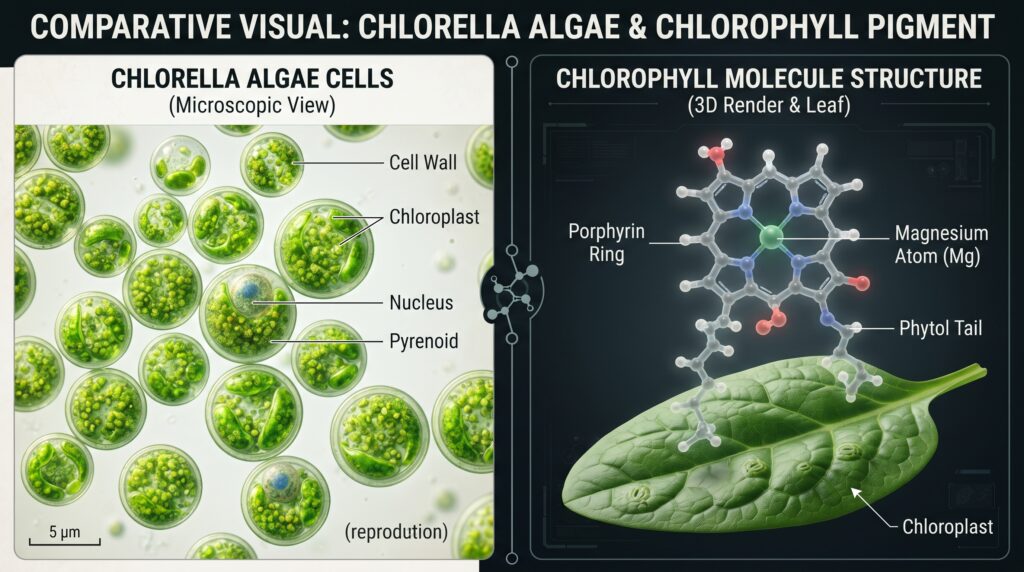
Chlorella or chlorophyll is a common comparison among people interested in green foods, nutrition, and dietary supplements. Although the two terms are closely connected, they refer to very different things. Chlorella is a type of freshwater green algae, while chlorophyll is the green pigment found in plants and algae.
The confusion often comes from the fact that chlorella naturally contains a significant amount of chlorophyll. However, chlorella also contains protein, minerals, carotenoids, and other naturally occurring compounds. Chlorophyll, by contrast, specifically refers to the pigment responsible for helping plants absorb light during photosynthesis.
Understanding the difference between chlorella and chlorophyll can make it easier to compare supplements, understand product labels, and choose foods that fit your nutritional goals.
Quick Answer
Chlorella is a nutrient containing freshwater algae, while chlorophyll is a green plant pigment.
Chlorella contains chlorophyll along with other nutrients and compounds. Chlorophyll is naturally found in green vegetables, algae, and other plants.
If you’re comparing chlorella or chlorophyll, the main difference is simple:
- Chlorella is a whole microorganism.
- Chlorophyll is a pigment.
- Chlorella naturally contains chlorophyll.
- Green vegetables naturally contain chlorophyll.
- Chlorella provides protein and other nutrients.
- Chlorophyll itself is not a complete nutritional food.
Neither option is automatically better. The right choice depends on whether you are looking for a broader nutritional supplement or simply want to increase your intake of chlorophyll containing foods.

What Is Chlorella?
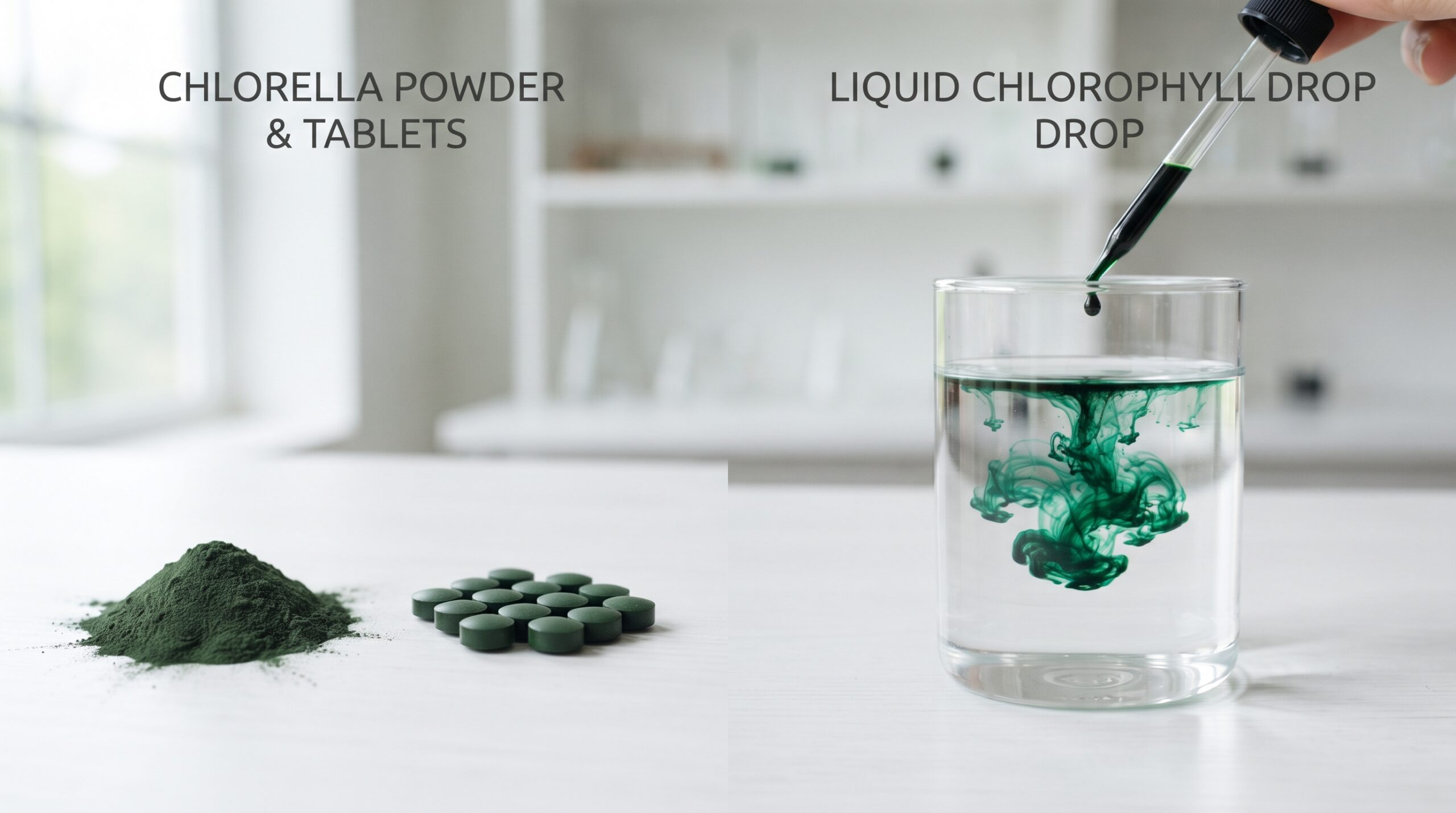
Chlorella is a single celled freshwater green alga. It is commonly available as a powder, tablet, or capsule and is often used as a dietary supplement.
Its green color comes largely from chlorophyll. However, chlorella contains more than chlorophyll. Its nutritional profile can include protein, iron, carotenoids, minerals, and other naturally occurring compounds.
Nutrients Found in Chlorella
Depending on the product, chlorella can provide:
- Protein
- Iron
- Minerals
- Chlorophyll
- Carotenoids
- Dietary fiber
- Other plant compounds
The exact nutritional content varies by species, growing conditions, processing methods, and serving size. Checking the product label is therefore important.
Common Uses of Chlorella
Chlorella is commonly used as a nutritional supplement. People may add chlorella powder to smoothies or purchase it in tablet and capsule form.
However, supplement claims should be evaluated carefully. Chlorella should not be considered a replacement for a balanced diet or medical treatment.
What Is Chlorophyll?
Chlorophyll is a natural green pigment found in plants, algae, and some other organisms. It plays an essential role in photosynthesis by helping plants absorb light energy.
The two major forms found in plants are chlorophyll a and chlorophyll b.
Natural Sources of Chlorophyll
Many green foods contain chlorophyll, including:
- Spinach
- Kale
- Parsley
- Broccoli
- Green beans
- Wheatgrass
- Green algae
Eating a variety of green vegetables provides chlorophyll together with fiber, vitamins, minerals, and other beneficial plant compounds.
Chlorella vs Chlorophyll: Key Differences
| Feature | Chlorella | Chlorophyll |
|---|---|---|
| What is it? | Freshwater green algae | Green plant pigment |
| Category | Whole microorganism | Natural pigment |
| Contains chlorophyll | Yes | It is chlorophyll |
| Protein | Contains protein | Not a significant protein source |
| Vitamins and minerals | Can contain several nutrients | Not a complete nutrient source |
| Natural source | Chlorella algae | Plants and algae |
| Common supplement form | Powder, tablets, capsules | Liquid products, capsules, or food sources |
| Main role | Nutritional supplement | Photosynthesis |
| Green color | Naturally green | Produces green color in plants |
| Main distinction | Whole algae | Specific pigment |
1. Chlorella Is a Whole Alga
The biggest difference between chlorella and chlorophyll is their basic nature.
Chlorella is an entire living microorganism. It contains multiple nutritional components, including chlorophyll.
Chlorophyll is only one pigment found inside plants and algae.
2. Chlorella Contains Chlorophyll
Chlorella naturally contains chlorophyll, which is one reason it has such an intense green color.
This means that taking chlorella can provide chlorophyll along with other nutrients found in the algae.
3. Chlorophyll Is Found in Green Vegetables
You do not need a supplement to obtain chlorophyll. Many green vegetables naturally contain it.
Spinach, kale, parsley, broccoli, and other green vegetables can contribute chlorophyll to your diet while also providing fiber and essential nutrients.
4. Chlorella Provides Protein
One important nutritional difference is that chlorella contains protein.
The amount varies depending on the product and serving size, but this makes chlorella different from chlorophyll, which is simply a pigment.
5. Their Uses Are Different
Chlorella is primarily consumed as a nutritional supplement.
Chlorophyll is primarily known for its biological role in photosynthesis and is also available in some dietary supplements.
6. Their Nutritional Profiles Are Different
Chlorella contains several nutritional components, while chlorophyll refers to one specific compound group.
Therefore, comparing them as if they were two equivalent supplements can be misleading.
7. They Come From Related Natural Sources
Both are associated with green plants and algae. Chlorella is itself an alga, while chlorophyll occurs naturally within algae and plants.
This relationship explains why the terms are often confused.
Chlorella Benefits and Nutritional Value
Chlorella can contribute several nutrients to the diet. Its nutritional value depends on the particular product and serving size.
Protein
Chlorella contains protein, making it an option for people interested in plant based nutritional sources.
Iron
Some chlorella products contain iron, although the amount varies by product.
Carotenoids
Chlorella contains naturally occurring pigments such as carotenoids.
Chlorophyll
Chlorella contains chlorophyll, which contributes to its characteristic green color.
It is important to remember that supplements vary considerably, so the nutrition label should be checked before use.
Chlorophyll Benefits and Natural Sources
Chlorophyll is naturally present in many green foods.
Eating chlorophyll containing vegetables can also provide other important nutrients.
Leafy Green Vegetables
Spinach, kale, and parsley are convenient food sources of chlorophyll.
Cruciferous Vegetables
Broccoli and other green vegetables also contain chlorophyll.
Green Algae
Algae can contain substantial amounts of chlorophyll, including chlorella.
A varied diet is generally a better nutritional foundation than relying on a single supplement.
Is Chlorella Better Than Chlorophyll?
There is no universal answer to whether chlorella or chlorophyll is better.
If you are interested in a broader nutritional supplement, chlorella provides several nutrients in addition to chlorophyll.
If you simply want to increase your intake of plant based foods containing chlorophyll, green vegetables are an excellent option.
The choice should depend on your nutritional needs rather than general health claims made about supplements.
Safety and Important Considerations
Chlorella and chlorophyll products can cause side effects in some individuals.
Chlorella may cause digestive symptoms such as gas, abdominal discomfort, or changes in bowel movements. Supplement quality can also vary between manufacturers.
People who are pregnant or breastfeeding, take regular medications, have allergies, or have an existing medical condition should speak with a healthcare professional before starting a new supplement.
Dietary supplements should not replace prescribed medical treatment or a varied diet.
Common Mistakes When Comparing Chlorella and Chlorophyll
Assuming They Are the Same
Chlorella and chlorophyll are related but not identical. Chlorella is an alga, while chlorophyll is a pigment.
Focusing Only on Marketing Claims
Some supplements are promoted with broad health claims that may not have strong scientific support. Always consider the actual ingredients and available evidence.
Ignoring the Nutrition Label
Different products can contain very different amounts of nutrients and additional ingredients.
Replacing Vegetables With Supplements
A supplement cannot fully replace the nutritional variety provided by vegetables, fruits, legumes, whole grains, and other whole foods.
Assuming More Is Always Better
Taking larger amounts of a supplement does not automatically provide greater benefits. Follow the product instructions and seek professional advice when necessary.

FAQs
Is chlorella the same as chlorophyll?
No. Chlorella is a freshwater green alga, while chlorophyll is a green pigment found in plants and algae. Chlorella naturally contains chlorophyll.
Does chlorella contain chlorophyll?
Yes. Chlorophyll is naturally present in chlorella and contributes to its green appearance.
Which is better, chlorella or chlorophyll?
Neither is universally better. Chlorella provides a broader nutritional profile because it is a whole alga, while chlorophyll refers specifically to a pigment.
Is chlorophyll found in vegetables?
Yes. Chlorophyll naturally occurs in many green vegetables, including spinach, kale, parsley, and broccoli.
Does chlorella contain protein?
Yes. Chlorella contains protein, although the amount depends on the specific product and serving size.
Can you take chlorella and chlorophyll together?
They can both be consumed, but there may not be a need to take both. Chlorella already contains chlorophyll. Anyone considering multiple supplements should check the ingredients and discuss them with a healthcare professional when appropriate.
Is chlorella a good source of nutrients?
Chlorella can provide protein, minerals, chlorophyll, carotenoids, and other compounds. However, its nutritional value varies between products, so it should be considered a supplement rather than a replacement for a balanced diet.
Conclusion
When comparing chlorella or chlorophyll, the most important point is that they are different substances. Chlorella is a freshwater green alga, while chlorophyll is a green pigment found in plants and algae.
Chlorella contains chlorophyll along with protein, minerals, carotenoids, and other naturally occurring compounds. Chlorophyll itself is mainly known for its role in photosynthesis and is naturally obtained through many green vegetables.
For general nutrition, a varied diet containing vegetables, fruits, whole grains, legumes, and other nutrient rich foods provides a strong foundation. If you’re considering chlorella or chlorophyll supplements, check the product label carefully and consider your individual nutritional needs.
Ultimately, there is no single winner in the chlorella or chlorophyll comparison. Understanding what each substance is, what it contains, and how it is commonly used allows you to make a more informed choice.