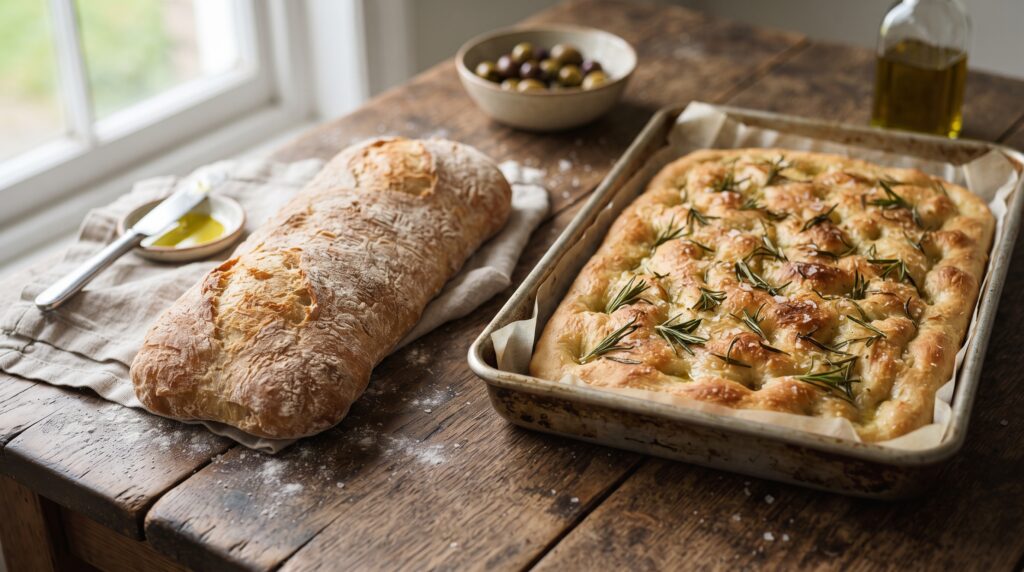
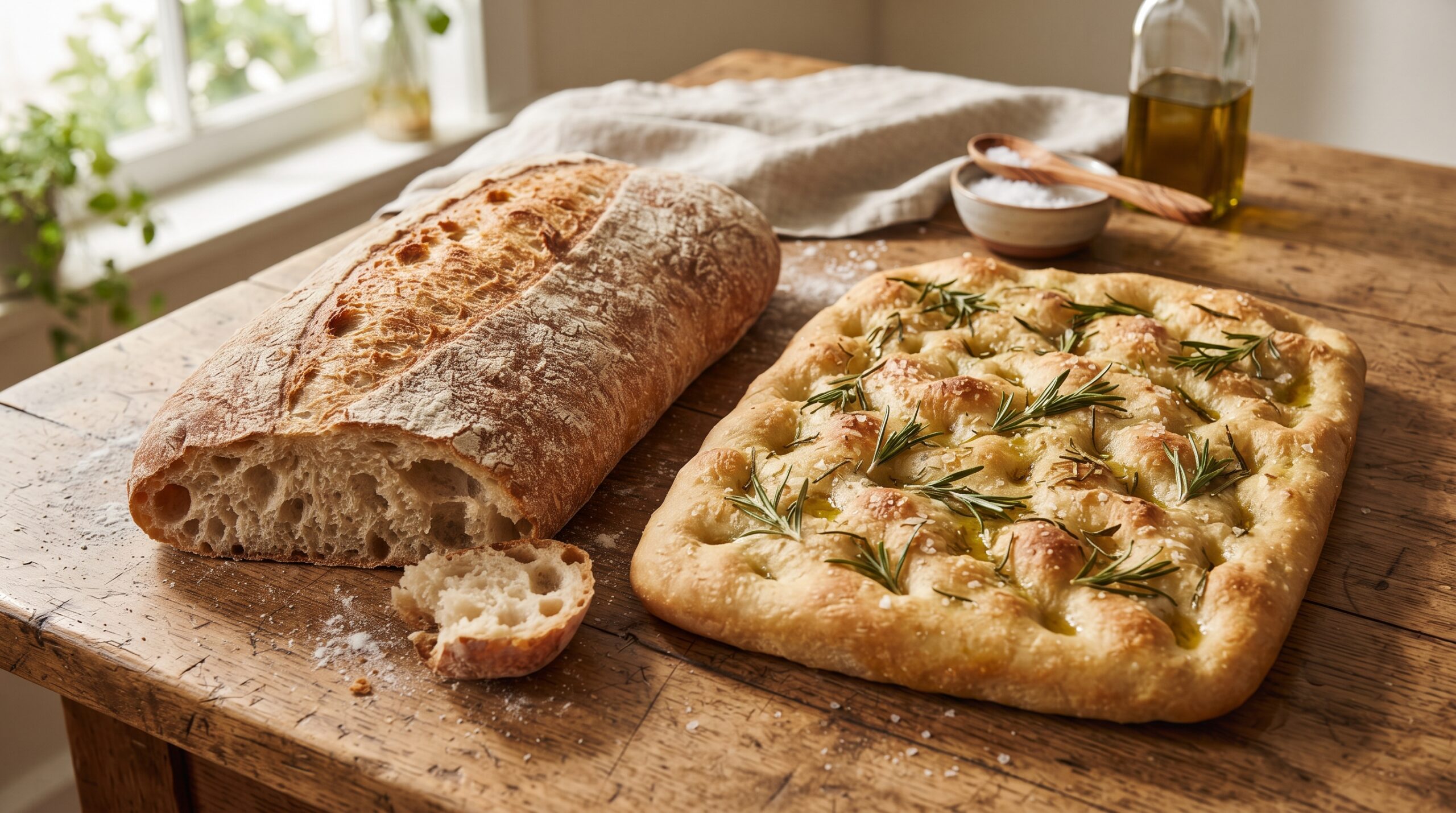
Ingredients Comparison
Both breads usually contain:
- Flour
- Water
- Yeast
- Salt
- Olive oil
The main difference is that focaccia uses considerably more olive oil, contributing to its rich flavor and softer texture.
Flavor Comparison
Ciabatta
Ciabatta offers:
- Mild taste
- Slightly nutty flavor
- Crisp crust
- Chewy bite
Focaccia
Focaccia delivers:
- Rich olive oil flavor
- Herb infused aroma
- Soft texture
- Savory taste
Winner: Flavor preference depends on whether you prefer a rustic or richer bread.
Nutrition Comparison
The nutritional value varies depending on ingredients and serving size.
Generally:
Ciabatta
- Lower in fat
- Moderate calories
- Good carbohydrate source
Focaccia
- Higher in fat due to olive oil
- Slightly higher calories
- Richer flavor profile
Choosing whole grain versions can increase fiber content.
Best Uses
Choose Ciabatta If You Need:
Sandwich bread
- Panini
- Toast
- Rustic dinner bread
- Crispy texture
Choose Focaccia If You Want:
- Appetizers
- Side bread
- Party platters
- Dipping bread
- Herb flavored snacks
Real World Usage Scenarios
Example 1: Lunch Sandwich
You’re making grilled chicken sandwiches.
Best choice: Ciabatta.
🎯 Lesson: Its chewy structure holds fillings without becoming soggy.
Example 2: Italian Dinner
You’re serving pasta with bread.
Best choice: Focaccia.
🎯 Lesson: Olive oil and herbs pair beautifully with Italian meals.
Example 3: Charcuterie Board
You need bread for cheese and cured meats.
Best choice: Focaccia.
🎯 Lesson: The soft texture and savory flavor complement a variety of toppings.
Example 4: Café Panini
You want a toasted sandwich with melted cheese.
Best choice: Ciabatta.
🎯 Lesson: Its crisp crust creates the classic panini texture.
Common Mistakes
Mistake 1: Thinking They’re the Same Bread
Why it happens:
Both are Italian breads made from similar ingredients.
Correction:
Ciabatta is chewy with a crisp crust, while focaccia is softer and richer because of its higher olive oil content.
Mistake 2: Using Focaccia for Heavy Sandwiches
Why it happens:
Its thickness suggests durability.
Correction:
Although it can be used for sandwiches, ciabatta generally provides better structural support for larger fillings.
Mistake 3: Assuming Focaccia Is Always Plain
Why it happens:
Some bakery versions have few toppings.
Correction:
Traditional focaccia is often topped with herbs, vegetables, cheese, or sea salt.
Memory Trick: Ciabatta vs Focaccia
Remember:
Ciabatta = Crispy and Chewy
Focaccia = Fluffy and Flavorful
This simple phrase makes it easy to remember the main difference.
Expert Insight : Ciabatta or Focaccia
Both ciabatta and focaccia are iconic Italian breads, but they were developed for different culinary purposes.
Ciabatta is valued for its crisp crust and sturdy texture, making it ideal for sandwiches and toasted preparations. Focaccia emphasizes softness, olive oil richness, and flavorful toppings, making it a versatile bread for appetizers, snacks, and side dishes.
Choosing between them depends on how you plan to serve the bread rather than which one is objectively better.
FAQs
Is ciabatta healthier than focaccia?
It depends on the recipe. Ciabatta is often lower in fat because it contains less olive oil, while focaccia may have more calories due to its richer preparation.
Can focaccia be used for sandwiches?
Yes. Focaccia can make excellent sandwiches, especially with lighter fillings, though ciabatta is often preferred for heavier ingredients.
Which bread is softer?
Focaccia is generally softer and fluffier than ciabatta.
Which bread is better for panini?
Ciabatta is usually the better choice because its chewy texture and crisp crust hold up well during grilling.