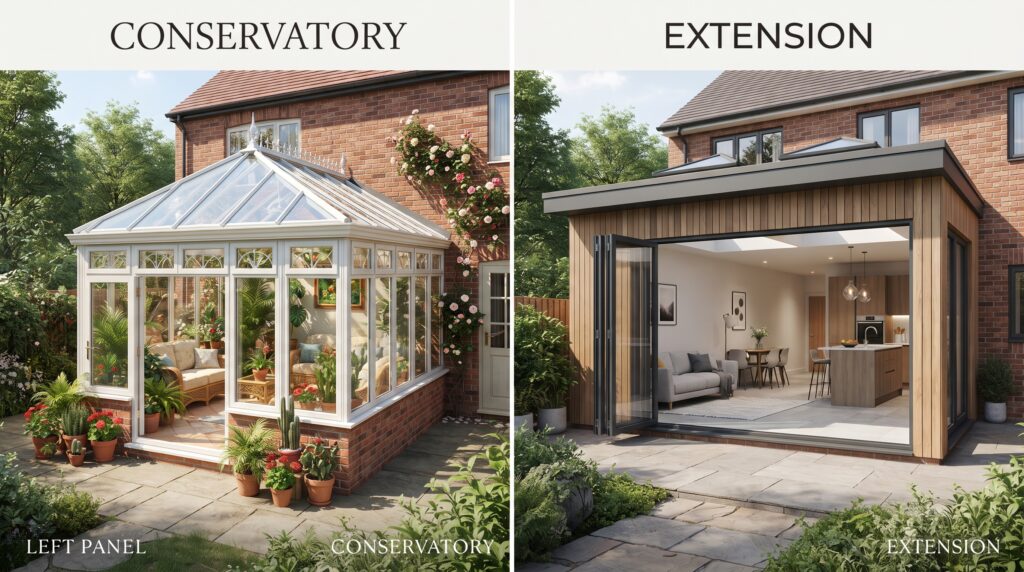
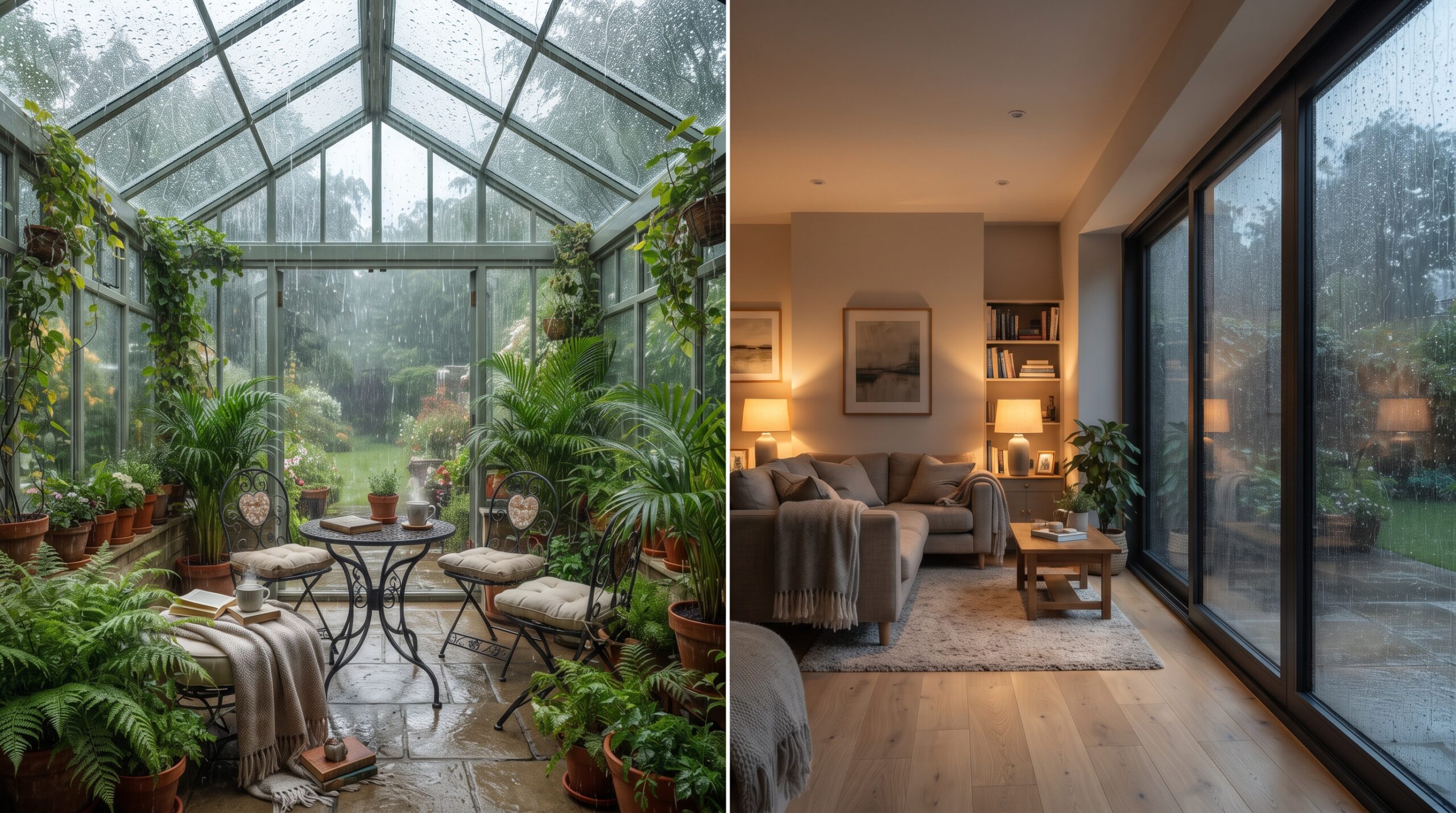
Conservatory or extension is one of the most common comparisons homeowners make when planning to increase their living space. Both are among the most popular home improvement projects because they add extra room, improve functionality, and can enhance the overall appeal of a property. Whether you want a bright garden room, a larger kitchen, or a spacious family area, both options offer practical ways to expand your home.
Homeowners often compare conservatories and extensions because each provides additional space but differs in construction, cost, installation time, energy efficiency, and long term value. A conservatory is typically quicker and more affordable to build, making it an attractive option for creating a light filled living area with views of the garden. An extension, however, becomes a permanent part of the house and offers greater flexibility for creating kitchens, bedrooms, home offices, or larger family rooms.
The best choice depends on several important factors, including your budget, property type, lifestyle, and long term goals. Some homeowners prioritize lower construction costs and faster installation, while others focus on maximizing property value, improving energy efficiency, or creating a fully integrated living space. Understanding the key differences between a conservatory and an extension will help you choose the solution that best meets your needs.
In this guide, we’ll compare conservatory vs extension by examining their costs, design, construction, planning requirements, insulation, maintenance, and overall value, helping you make a confident and informed home improvement decision.
Quick Answer
Conservatory or extension? There is no universal winner because each option serves different needs and budgets. The right choice depends on how you plan to use the space, your property’s layout, planning requirements, and your long term home improvement goals.
A conservatory is often the more affordable option and can usually be installed more quickly than a traditional extension. It is designed to maximize natural light with large glass panels and is ideal for creating a bright, relaxing living space such as a garden room, dining area, or sunroom. Modern conservatories with energy efficient glazing also offer improved comfort throughout the year.
An extension provides permanent living space that blends seamlessly with the existing home. It typically offers better insulation, greater energy efficiency, and more flexibility in design. Extensions can be used to enlarge kitchens, create additional bedrooms, build home offices, or add spacious family rooms, making them a practical long term investment for many homeowners.
Ultimately, the best option depends on your budget, planning requirements, intended use, and property value goals. If you want a cost effective, light filled space with minimal disruption, a conservatory may be the ideal solution. If you need extra year round living space that adds long term value and functionality, an extension is usually the better choice.
What Is a Conservatory?
A conservatory is a home addition that is primarily constructed with glass and supported by a frame made from materials such as uPVC, aluminum, or timber. It is designed to create a bright, comfortable living area while providing uninterrupted views of the garden and allowing plenty of natural light into the home.
Definition
A conservatory is an enclosed structure attached to a house that features extensive glazing on its walls and roof. It serves as a versatile living space while maintaining a strong connection to the outdoors.
Typical Construction Materials
Modern conservatories are commonly built using high quality materials that provide durability and energy efficiency, including:
uPVC frames
Aluminum frames
Timber frames
Double or triple glazed glass
Brick or stone dwarf walls
Polycarbonate or insulated glass roofing panels
The choice of materials affects the conservatory’s appearance, maintenance requirements, and thermal performance.
Common Roof Styles
Conservatories are available in a variety of roof designs to complement different architectural styles.
Popular roof styles include:
Lean to
Victorian
Edwardian
Gable front
P shaped
T shaped
Lantern roof
Solid roof conservatory
Each style offers different levels of natural light, ceiling height, and interior space.
Popular Uses
Homeowners use conservatories for many different purposes, including:
Sunroom
Dining room
Garden room
Reading room
Home office
Children’s playroom
Indoor plant room
Relaxation space
Their bright and open design makes them suitable for both everyday living and entertaining guests.
Main Advantages
A conservatory offers several benefits for homeowners:
Lower construction costs than most extensions.
Faster installation with less disruption.
Abundant natural light throughout the day.
Attractive views of gardens and outdoor spaces.
Wide range of styles to suit different homes.
Potential to enhance the overall appeal of a property.
What Is an Extension?
A home extension is a permanent addition that expands the existing floor area of a property. Unlike a conservatory, an extension is built using similar construction methods and materials as the original house, creating a seamless transition between old and new living spaces.
Definition
An extension adds one or more fully insulated rooms to a home. It becomes part of the property’s main structure and can significantly improve both functionality and long term value.
Types of Home Extensions
There are several types of home extensions designed to suit different properties and lifestyles.
Common options include:
Rear extensions
Side return extensions
Side extensions
Wraparound extensions
Double storey extensions
Single storey extensions
Loft extensions
Garage conversions
Each type offers different benefits depending on the available space and the homeowner’s requirements.
Construction Methods
Extensions are typically built using durable materials that match or complement the existing property.
Construction commonly includes:
Brick or block walls
Timber or steel structural frames
Concrete foundations
Insulated walls and roofs
Double or triple glazed windows
Traditional tiled or flat roofs
These construction methods create a permanent, energy efficient living space that can be comfortably used throughout the year.
- Popular uses
- Main advantages
Conservatory vs Extension: Key Differences
When deciding between a conservatory or extension, understanding the differences in construction, cost, energy efficiency, and long term value is essential. While both options increase living space, they serve different purposes and suit different budgets and lifestyles.
Conservatory vs Extension Comparison Table
| Feature | Conservatory | Extension |
|---|---|---|
| Definition | A glazed structure attached to a home that provides a light filled living space. | A permanent addition that increases the home’s internal floor area. |
| Construction | Primarily glass with framed walls and roof. | Built using traditional construction methods similar to the existing house. |
| Materials | uPVC, aluminum, timber, glass, polycarbonate, insulated roof panels. | Brick, block, timber, steel, concrete, insulation, tiles, and plaster. |
| Installation Time | Usually completed within a few weeks. | Typically takes several weeks to a few months, depending on size and complexity. |
| Cost | Generally lower construction costs. | Higher initial investment because of more extensive building work. |
| Planning Permission | Often falls under permitted development, although some projects require approval. | May require planning permission depending on size, design, and local regulations. |
| Building Regulations | Some conservatories may be exempt, while others must comply with building regulations. | Building regulations normally apply to ensure structural safety and energy performance. |
| Insulation | Modern designs provide improved insulation, but performance varies. | Excellent insulation that matches the main house. |
| Energy Efficiency | Good with modern glazing and insulated roofs. | Usually superior because walls, roof, and floors are fully insulated. |
| Maintenance | Requires regular cleaning of glass and frames. | Similar maintenance requirements to the rest of the home. |
| Property Value | Can improve appeal and add value in many cases. | Often adds greater long term value because it increases permanent living space. |
| Durability | Durable when properly maintained. | Designed as a permanent part of the property with a long lifespan. |
| Best For | Garden rooms, dining areas, sunrooms, and relaxing spaces. | Kitchens, bedrooms, family rooms, offices, and utility spaces. |
A conservatory is an excellent solution for homeowners seeking an affordable, bright, and stylish space, while an extension is ideal for creating fully integrated rooms that can be used comfortably throughout the year.
Design and Appearance
Both conservatories and extensions can significantly improve the appearance of a property. The best option depends on your preferred architectural style and how you want the new space to blend with your existing home.
Traditional Styles
Conservatories are available in classic Victorian, Edwardian, Georgian, and gable designs that complement traditional homes.
Extensions can also reflect traditional architecture by matching brickwork, roof tiles, windows, and other exterior details.
Modern Designs
Modern conservatories often feature slim aluminum frames, minimalist glazing, and solid insulated roofs for a contemporary appearance.
Modern extensions commonly include open plan layouts, flat roofs, roof lanterns, large sliding doors, and floor to ceiling windows.
Natural Light
One of the greatest advantages of a conservatory is the abundance of natural light created by extensive glazing.
Extensions can also provide bright interiors through skylights, roof lanterns, and large glazed doors while maintaining better insulation.
Customization
Both options offer extensive customization.
Homeowners can personalize layouts, finishes, flooring, lighting, roofing, doors, windows, and interior décor to suit their lifestyle and preferences.
Architectural Integration
Extensions generally provide a more seamless appearance because they are constructed using materials that closely match the existing home.
Modern conservatories can also integrate well with a property’s design, particularly when high quality materials and complementary finishes are selected.
Comfort and Energy Efficiency
Comfort throughout the year is one of the most important considerations when choosing between a conservatory and an extension.
Summer Temperatures
Older conservatories can become very warm during summer because of large glass surfaces.
Modern conservatories use solar control glazing, roof insulation, and improved ventilation to reduce overheating.
Extensions generally maintain more stable indoor temperatures due to insulated walls and roofs.
Winter Insulation
Extensions usually provide superior insulation during colder months because they are built to modern building standards.
High performance conservatories with insulated roofs and double or triple glazing also perform well but may not always match the thermal efficiency of an extension.
Heating Requirements
Both spaces can be heated effectively.
Extensions normally connect directly to the home’s central heating system, while conservatories may use underfloor heating, radiators, or electric heating depending on local regulations.
Ventilation
Proper ventilation improves comfort and indoor air quality.
Roof vents, opening windows, and mechanical ventilation systems help prevent excessive heat and condensation in both conservatories and extensions.
Double and Triple Glazing
Modern double and triple glazed windows improve insulation, reduce outside noise, and enhance energy efficiency in both types of home additions.
Planning Permission and Building Regulations
Legal requirements vary depending on your location and the scale of your project.
When Planning Permission May Be Required
Some conservatories and extensions qualify as permitted development, while larger or more complex projects may require planning permission.
Listed buildings, conservation areas, and properties with previous extensions may have additional restrictions.
Building Regulation Considerations
Building regulations help ensure that new structures meet standards for safety, structural integrity, fire protection, insulation, ventilation, and accessibility.
Extensions almost always require compliance with building regulations.
Some conservatories may also need approval depending on their design and how they connect to the main house.
Permitted Development
Many homeowners can build certain conservatories or extensions without applying for full planning permission if the project meets permitted development rules.
Always verify current local regulations before construction begins.
Professional Advice
Consulting an architect, surveyor, or experienced contractor can help ensure your project complies with planning requirements, building regulations, and local construction standards.
Installation and Construction
The construction process differs significantly between conservatories and extensions.
Average Installation Timeline
A conservatory can often be completed within two to six weeks, depending on its size and specification.
An extension generally requires two to six months or longer because of excavation, foundations, structural work, roofing, and interior finishing.
Construction Process
Conservatories are usually assembled using prefabricated components after foundations have been prepared.
Extensions involve excavation, foundations, structural walls, roofing, electrical work, plumbing, insulation, plastering, flooring, and decoration.
Potential Disruption
Conservatories usually cause less disruption because construction is quicker.
Extensions often involve more noise, dust, and temporary inconvenience while building work is underway.
Material Choices
Both projects offer a wide selection of construction materials, allowing homeowners to balance appearance, durability, maintenance, and budget.
Cost Comparison
Cost is often one of the biggest deciding factors when choosing between a conservatory and an extension.
Initial Construction Costs
Conservatories usually require a lower initial investment because they use lighter construction methods and simpler designs.
Extensions generally cost more because of foundations, structural work, insulation, plumbing, and electrical installations.
Maintenance Expenses
Conservatories require periodic cleaning of glass, roof panels, and frames.
Extensions usually have maintenance needs similar to the rest of the property.
Heating and Cooling Costs
Modern extensions generally have lower heating and cooling costs because of their superior insulation.
Energy efficient conservatories with insulated roofs and advanced glazing can also reduce utility costs.
Long Term Value
Extensions often provide stronger long term value because they create permanent, fully functional living space.
Conservatories can also enhance a property’s appeal and value, especially when professionally designed and well maintained.
Return on Investment
Both improvements can increase a home’s market appeal.
The best return on investment depends on construction quality, location, property type, and buyer demand.
Best Uses for a Conservatory
A conservatory is particularly suitable for homeowners who want a bright and relaxing living space.
Popular uses include:
Sunroom.
Dining room.
Reading room.
Home office.
Garden room.
Its extensive glazing creates a pleasant environment for relaxing, entertaining, or enjoying garden views throughout the year.
Best Uses for an Extension
An extension offers greater flexibility because it functions as part of the main home.
Common uses include:
Kitchen expansion.
Family room.
Bedroom.
Home office.
Utility room.
Its permanent construction, excellent insulation, and customizable layout make it ideal for everyday living and increasing long term property value.

Pros and Cons
Choosing between a conservatory or extension becomes much easier when you compare the advantages and disadvantages of each option. Both can add valuable living space to your home, but they differ in cost, comfort, maintenance, and long term value.
Conservatory
A conservatory is an excellent choice for homeowners who want an affordable way to increase living space while enjoying plenty of natural light and garden views.
Pros
A conservatory offers several benefits that make it a popular home improvement project.
Lower initial cost than most home extensions, making it suitable for a wider range of budgets.
Faster installation, with many projects completed in just a few weeks.
Excellent natural light thanks to large glazed walls and roofs that create a bright, welcoming atmosphere.
Attractive garden views, allowing you to enjoy outdoor scenery throughout the year.
Wide range of styles, including Victorian, Edwardian, lean to, gable, and modern designs that complement different property types.
Cons
Although conservatories provide many advantages, they also have some limitations.
They can become hot during summer if ventilation and solar control glazing are not properly designed.
They may feel cold in winter without high quality insulation, insulated roofing, or efficient heating.
They generally have lower energy efficiency than most extensions, especially older conservatories with single glazing.
Some designs have limited year round usability, although modern insulated conservatories have greatly improved thermal performance.
Extension
A home extension provides additional permanent living space that functions as a natural part of the existing property.
Pros
Extensions are often chosen by homeowners seeking long term functionality and increased property value.
Permanent living space that integrates seamlessly with the rest of the home.
Better insulation through fully insulated walls, floors, and roofs, providing greater comfort in every season.
Higher property value potential, as additional floor space is often attractive to future buyers.
Highly customizable layouts that can accommodate kitchens, bedrooms, family rooms, home offices, utility rooms, or open plan living spaces.
Suitable for year round use, offering consistent comfort regardless of weather conditions.
Cons
Extensions also involve several important considerations.
Higher construction costs because of foundations, structural work, plumbing, electrical installations, and interior finishing.
Longer build times, with projects often taking several months depending on complexity.
Greater disruption during construction, including noise, dust, and restricted access to parts of the home.
Planning permission may be required, depending on the size, design, and local planning regulations.
Common Mistakes When Choosing Between a Conservatory and an Extension
Many homeowners focus only on the initial cost without considering long term performance. Avoiding these common mistakes can help you choose the option that best suits your home and lifestyle.
Choosing Based Only on Price
A conservatory may cost less initially, but the lowest price does not always provide the best long term value. Consider durability, comfort, maintenance, and future resale value before making your decision.
Ignoring Long Term Maintenance
Different materials require different levels of maintenance. Glass roofs, frames, gutters, brickwork, and roofing materials should all be considered when estimating future upkeep costs.
Overlooking Insulation Requirements
Proper insulation is essential for maintaining comfortable temperatures and reducing energy bills. Investing in high quality glazing and insulation can improve year round usability and lower heating and cooling costs.
Not Checking Local Planning Rules
Planning permission and building regulations vary by location. Before starting construction, confirm whether your conservatory or extension complies with local planning requirements to avoid delays or unexpected costs.
Hiring Inexperienced Contractors
Choosing experienced architects, designers, and builders helps ensure quality workmanship, compliance with regulations, and a smoother construction process. Always check qualifications, references, and previous projects before hiring a contractor.
Underestimating Future Space Needs
Think beyond your current requirements. Consider how your household may change over the coming years and choose a solution that will continue to meet your family’s needs. Planning for the future can prevent the expense of another major renovation later.
FAQs
Is a Conservatory Cheaper Than an Extension?
Yes, in most cases, a conservatory is less expensive than a traditional home extension. Conservatories generally require fewer construction materials, less labor, and shorter installation times, making them a more budget friendly option. However, the total cost depends on the size, design, materials, glazing, and additional features you choose.
Which Adds More Value to a Home?
Both can increase a property’s value, but an extension often adds more long term value because it creates permanent living space that integrates with the existing home. A well designed conservatory can also improve a home’s appeal and resale value, particularly when it is energy efficient and complements the property’s architecture.
Does a Conservatory Require Planning Permission?
Many conservatories can be built under permitted development rights, meaning planning permission may not be required. However, approval may be necessary if your property is located in a conservation area, is a listed building, or if the project exceeds permitted development limits. Always check local planning regulations before starting construction.
Which Is Better for Year Round Use?
An extension is generally better for year round use because it is built with fully insulated walls, roofs, and floors that provide consistent indoor temperatures throughout every season. Modern conservatories with insulated roofs and high performance double or triple glazing can also be comfortable all year, but extensions usually offer superior thermal efficiency.
How Long Does Each Project Take?
A conservatory is typically completed within two to six weeks, depending on its size and complexity. An extension usually takes two to six months or longer because of excavation, structural work, roofing, electrical installations, plumbing, and interior finishing.
Which Is More Energy Efficient?
Extensions are generally more energy efficient because they are constructed using modern insulation standards and integrate seamlessly with the home’s existing heating and cooling systems. Modern conservatories have become significantly more efficient thanks to insulated roofing systems and high performance glazing, but they may still not match the thermal performance of a fully insulated extension.
Can a Conservatory Be Converted Into an Extension?
Yes. In many cases, an existing conservatory can be converted into an extension by replacing the roof, upgrading insulation, strengthening the structure where necessary, and ensuring the project complies with current building regulations. The feasibility depends on the original construction and local planning requirements, so professional advice is recommended before beginning any conversion.
ConclusionÂ
When comparing conservatory or extension, both options offer valuable ways to increase living space and improve your home, but they serve different purposes. A conservatory provides a bright, welcoming environment filled with natural light, while an extension creates a fully integrated living area that functions as a permanent part of the property.
A conservatory is an excellent choice for homeowners looking for an affordable home improvement with faster installation, attractive garden views, and a versatile space for relaxing, dining, working, or entertaining. It offers an appealing balance between cost and functionality, especially when built with modern energy efficient materials.
An extension is better suited to homeowners who need additional permanent living space, greater design flexibility, improved insulation, and stronger long term property value. Whether you want to expand your kitchen, create a larger family room, add a bedroom, or build a dedicated home office, an extension offers outstanding versatility and year round comfort.
Ultimately, there is no universal winner in the conservatory or extension comparison. The right solution depends on your budget, available space, intended use, planning requirements, and long term home improvement goals. By carefully evaluating these factors, you can choose the option that best fits your lifestyle while enhancing both the comfort and value of your home.