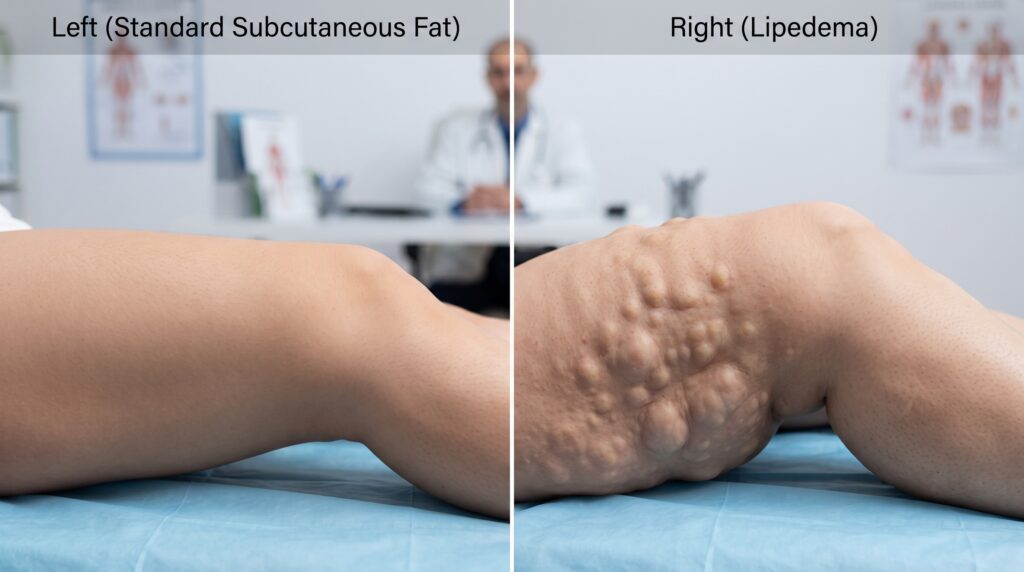
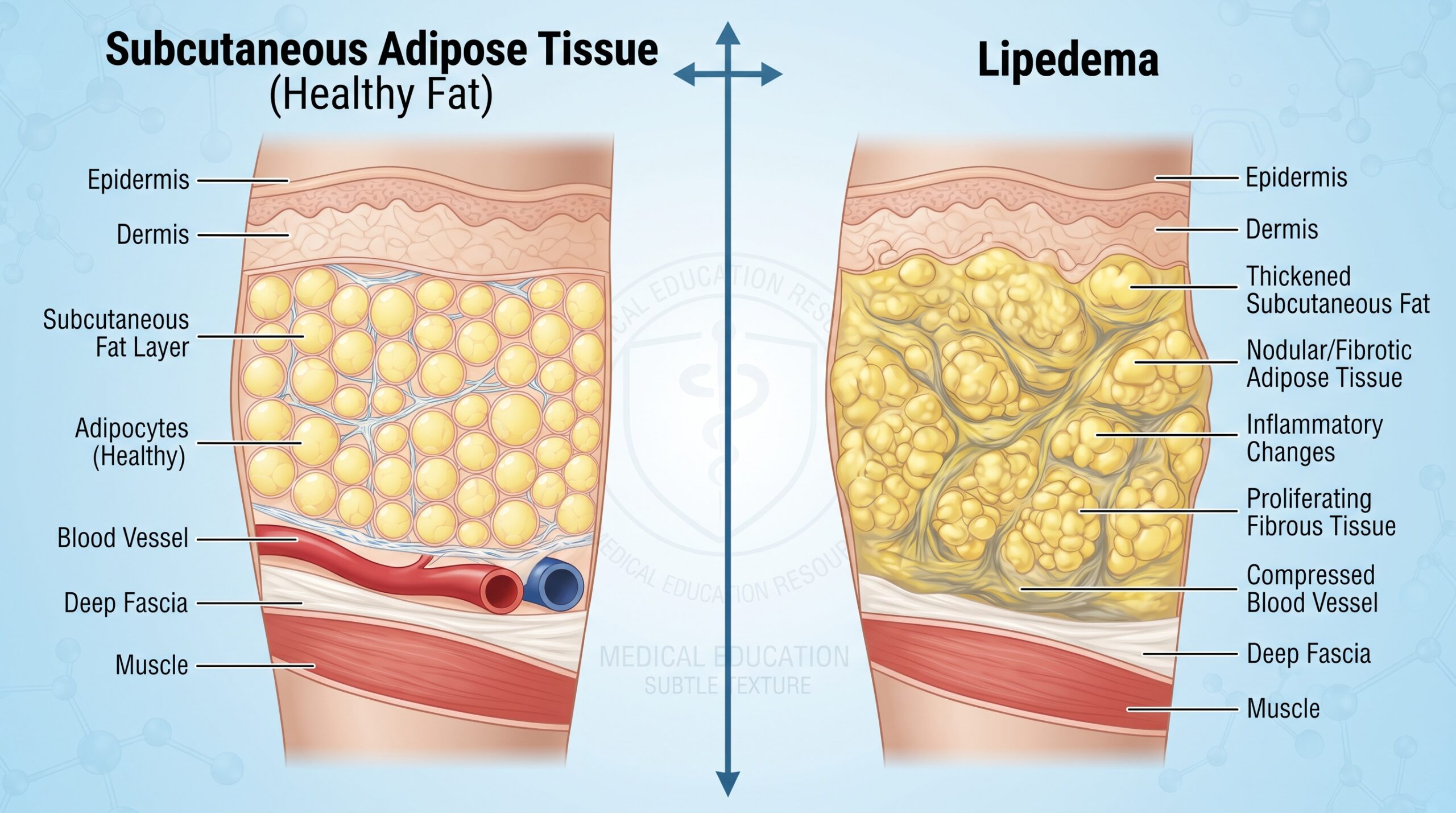
The question of fat or lipedema can be difficult to answer because lipedema can look similar to ordinary body fat. However, lipedema is a chronic condition involving abnormal fat distribution, usually affecting both sides of the lower body. It can cause pain, tenderness, heaviness, swelling and easy bruising.
Ordinary body fat is a normal type of tissue that stores energy and provides insulation and cushioning. Its amount and distribution can change with overall weight, diet, physical activity, genetics, age and other factors.
Lipedema is different. It usually affects the legs and sometimes the arms while often leaving the feet and hands unaffected. The condition is much more common in women and may appear or worsen around hormonal changes such as puberty, pregnancy or menopause.
Understanding the difference can help you know when it may be useful to speak with a healthcare professional.
Quick Answer
Ordinary body fat and lipedema are not the same thing.
Normal body fat can occur throughout the body and often decreases when a person loses overall body weight.
Lipedema involves an abnormal buildup of fat, commonly in the buttocks, thighs and lower legs, and sometimes the upper arms. It usually affects both sides of the body in a relatively symmetrical pattern.
Common features that may suggest lipedema include:
- Fat distribution that is disproportionate to the upper body
- Both legs being affected similarly
- Pain or tenderness in the affected tissue
- Easy bruising
- A feeling of heaviness in the legs
- Feet usually remaining unaffected
- Limited reduction in affected areas despite overall weight loss
These signs do not prove that someone has lipedema. A healthcare professional needs to assess the symptoms and medical history.

What Is Ordinary Body Fat?
Body fat, also called adipose tissue, is a normal part of the human body.
It has several important functions, including:
- Storing energy
- Providing insulation
- Cushioning organs
- Supporting hormone and metabolic functions
The amount and distribution of body fat varies between individuals.
Body fat can increase when energy intake consistently exceeds energy expenditure, although genetics, hormones, medications, age, sleep, medical conditions and other factors can also influence body weight and fat distribution.
Having body fat is not automatically a sign of a medical problem.
What Is Lipedema?
Lipedema is a chronic condition involving abnormal fat accumulation, most often in the legs and sometimes in the arms. It usually affects both sides of the body and can cause pain, tenderness, heaviness and easy bruising.
Unlike ordinary body fat, lipedema often creates a noticeable difference between the upper and lower parts of the body.
For example, someone may have relatively little fat around the waist and upper body but substantially more around the hips, thighs and lower legs.
The feet are usually not affected, which can create a visible transition around the ankles.
The exact cause of lipedema is not fully understood. Researchers believe hormones and genetics may play a role.
Fat vs Lipedema: Key Differences
| Feature | Ordinary Body Fat | Lipedema |
|---|---|---|
| Distribution | Can occur throughout the body | Usually affects both sides of the legs |
| Symmetry | May vary | Often symmetrical |
| Pain | Usually not painful | Pain or tenderness may occur |
| Bruising | Not usually a defining feature | Easy bruising is common |
| Feet | May gain fat like other areas | Usually unaffected |
| Hands | May gain fat like other areas | Usually unaffected |
| Weight loss | Fat generally decreases with overall weight loss | Affected areas may be resistant to weight loss |
| Appearance | Varies widely | Can create disproportionate lower body |
| Heaviness | Not usually a defining symptom | Commonly reported |
| Diagnosis | Not a medical diagnosis | Requires clinical assessment |
| Treatment | Lifestyle and medical care depend on individual needs | Symptom management and specialist care may be appropriate |
The presence of one feature alone does not diagnose lipedema. A healthcare professional considers the complete pattern of symptoms and medical history.
1. Body Fat Distribution
One of the most noticeable differences between ordinary fat and lipedema is distribution.
Ordinary body fat can accumulate in many areas, including the abdomen, hips, thighs, arms and other parts of the body.
Lipedema more commonly creates disproportionate fat accumulation around the hips, buttocks, thighs and lower legs. It can sometimes affect the upper arms.
2. Symmetry
Lipedema commonly affects both sides of the body in a similar way.
For example, both legs may become larger in a relatively symmetrical pattern.
Ordinary body fat does not necessarily follow this pattern.
However, symmetry alone cannot confirm lipedema.
3. Pain and Tenderness
Pain is an important difference to consider.
Ordinary body fat is generally not painful when gently touched.
Lipedema can cause pain, tenderness or sensitivity in the affected tissue. The discomfort can range from mild to significant.
If unexplained pain accompanies disproportionate fat accumulation, it is worth discussing the symptoms with a healthcare professional.
4. Easy Bruising
People with lipedema may bruise more easily than expected.
Easy bruising is one of the commonly reported symptoms of lipedema.
However, easy bruising can have many other causes, including medications and other medical conditions. It should not be used alone to diagnose lipedema.
5. Feet and Hands
A notable feature of lipedema is that the feet are usually not affected.
The fat accumulation may extend down the legs but stop around the ankles, leaving the feet relatively normal in size. The hands are similarly usually unaffected when the arms are involved.
This pattern can help healthcare professionals distinguish lipedema from other causes of limb swelling.
6. Response to Weight Loss
One of the most confusing parts of the fat or lipedema question is weight loss.
With ordinary body fat, losing overall body weight commonly reduces fat in many parts of the body.
With lipedema, the affected areas may be much more resistant to weight loss. Someone may lose weight from the upper body while the legs remain disproportionately large.
This does not mean that weight management is unimportant. Healthy eating and physical activity can still be part of managing overall health and lipedema symptoms.
7. Feeling of Heaviness
Lipedema can create a heavy or tired feeling in the legs.
Some people experience discomfort that becomes more noticeable after standing or walking for long periods.
Ordinary body fat does not typically cause this characteristic feeling by itself.
8. Skin Appearance
Lipedema can sometimes produce uneven or dimpled skin.
The affected tissue may have an appearance sometimes described as an orange peel texture.
Skin texture can vary considerably, so appearance alone should not be used to diagnose the condition.
9. Hormonal Changes
Lipedema may appear or become worse around hormonal changes.
Reported periods include:
- Puberty
- Pregnancy
- Menopause
- Use of hormonal contraception
Researchers are still studying the exact relationship between hormones and lipedema.
10. Who Is More Likely to Have Lipedema?
Lipedema is much more common in women.
Family history may also play a role, and the condition is thought to have a genetic component in some people.
Lipedema can occur in people who are otherwise healthy and is not simply caused by being overweight.
11. Diagnosis
There is currently no single standard test that confirms lipedema.
Healthcare professionals generally use a medical history and physical examination to assess the condition. Tests such as ultrasound, MRI or other imaging may sometimes be used to rule out other conditions or identify additional problems.
This means online symptom checklists cannot replace a professional assessment.
Fat or Lipedema: Other Conditions to Consider
Several conditions can cause enlarged or swollen legs.
These include:
- Ordinary body fat
- Lipedema
- Lymphedema
- Oedema
- Venous problems
- Other medical conditions
Lymphedema, for example, involves problems with lymphatic drainage and can affect the arms or legs. Unlike typical lipedema, it can involve the feet and may be asymmetrical.
Because several conditions can look similar, self diagnosis can be unreliable.
Lipedema Treatment and Management
There is currently no cure for lipedema, but treatment can help manage symptoms and improve quality of life.
Management may include:
- Healthy eating
- Regular physical activity
- Compression garments when recommended
- Skin care
- Specialist care
- Support for emotional wellbeing
- Liposuction in selected severe cases
Compression therapy may help reduce discomfort and make movement easier, although it does not simply remove the abnormal fat.
Liposuction may be considered in some people with severe symptoms, but it is a medical procedure and requires assessment by an appropriately qualified specialist.

Pros and Cons of Self Assessment
Looking at Symptoms Yourself
Pros
- Helps you notice changes in your body
- Can help you prepare questions for a doctor
- May encourage appropriate medical evaluation
- Can help you track symptoms over time
Cons
- Symptoms can overlap with other conditions
- Body shape alone cannot diagnose lipedema
- Online images can be misleading
- Weight and body size vary naturally
- Self diagnosis may delay appropriate care
A symptom checklist is useful as a starting point, not as a diagnosis.
Common Mistakes When Comparing Fat and Lipedema
Mistake 1: Assuming Larger Legs Automatically Mean Lipedema
Large legs can have many causes.
Body shape, genetics, overall body weight, fluid retention, medications and medical conditions can all affect leg size.
Mistake 2: Assuming Lipedema Is Simply Obesity
Lipedema is a distinct condition involving abnormal fat distribution. It can occur alongside obesity, but it is not simply caused by being overweight.
Mistake 3: Diagnosing Yourself From Photos
Pictures can show body shape but cannot reliably establish a medical diagnosis.
Mistake 4: Assuming Diet Alone Will Cure Lipedema
Healthy eating and physical activity are important for general health, but lipedema does not simply disappear through dieting.
Mistake 5: Ignoring Pain or Bruising
Pain, tenderness, heaviness and unusual bruising are worth discussing with a healthcare professional, particularly when they occur with symmetrical leg changes.
When Should You See a Doctor?
Consider speaking with a healthcare professional if you have:
- Persistent unexplained leg enlargement
- Painful or tender fatty tissue
- Easy bruising
- Persistent swelling
- A noticeable difference between your upper and lower body
- Legs that remain disproportionately large despite overall weight loss
- Difficulty walking or standing because of leg heaviness or discomfort
A healthcare professional can assess your symptoms and determine whether further evaluation is appropriate.
Seek urgent medical attention if a leg suddenly becomes swollen, red, hot and painful, particularly if you also feel unwell, because this can indicate an infection or another condition requiring prompt assessment.
FAQs
Is it fat or lipedema?
It can be difficult to tell from appearance alone. Lipedema commonly involves symmetrical fat accumulation in the legs, pain or tenderness, easy bruising and sparing of the feet. A healthcare professional should make the diagnosis.
Does lipedema look like ordinary fat?
Yes. Lipedema can resemble ordinary body fat, which is one reason it can be difficult to recognize. The distribution, symmetry, pain, bruising and response to weight loss can provide useful clues.
Can you lose lipedema fat through diet?
Lipedema affected areas can be resistant to weight loss. However, healthy eating, physical activity and maintaining a healthy weight remain important parts of overall health and symptom management.
Does lipedema hurt?
It can. Pain, tenderness and sensitivity are common symptoms, although not everyone experiences the same level of discomfort.
Does lipedema affect the feet?
Usually, no. Lipedema typically affects the legs while leaving the feet unaffected.
Can lipedema affect the arms?
Yes. Lipedema can affect the upper arms in some people, while the hands are usually unaffected.
Is lipedema caused by being overweight?
No. Lipedema is not simply caused by being overweight. It can occur in people at different body weights and may occur alongside obesity.
Is there a cure for lipedema?
There is currently no cure, but treatment and symptom management can help people manage the condition and improve quality of life.
Can exercise help lipedema?
Exercise can support general health and may help with movement and symptoms. Low impact activities such as swimming and cycling may be useful for some people, depending on their individual circumstances.
How is lipedema diagnosed?
Diagnosis is generally based on medical history and physical examination. There is no single definitive diagnostic test, although imaging may sometimes be used to investigate other conditions.
Is lipedema the same as lymphedema?
No. They are different conditions. Lipedema primarily involves abnormal fat distribution, while lymphedema involves dysfunction of the lymphatic system. The two can sometimes occur together.
Conclusion
The difference between fat or lipedema is more complicated than simply looking at body size or shape.
Ordinary body fat is normal tissue that can occur throughout the body. Lipedema is a chronic condition involving abnormal fat distribution, commonly affecting both legs and sometimes the arms. It may also cause pain, tenderness, heaviness and easy bruising.
Some of the most useful clues include symmetrical leg enlargement, sparing of the feet, painful or tender tissue, easy bruising and resistance to weight loss in affected areas.
However, these signs cannot confirm lipedema by themselves.
If you are concerned about your body shape, persistent swelling, unexplained pain or unusual bruising, speak with a qualified healthcare professional for an appropriate assessment.