
granite or quartzite

Granite or Quartzite: 9 Amazing Differences You Need to Know Before Choosing Stone

Granite or quartzite is one of the most common comparisons for homeowners, interior designers, architects, and builders planning a new construction or renovation project. Both are natural stones known for their beauty, durability, and long lasting performance, making them popular choices for kitchen countertops, bathroom vanities, flooring, wall cladding, and outdoor living spaces.

Although granite and quartzite may appear similar at first glance, they differ in composition, appearance, hardness, maintenance requirements, and cost. These differences can significantly influence which material is the better fit for a specific project. Choosing the right stone is not only about selecting an attractive surface but also about finding a material that matches your lifestyle, design preferences, and long term maintenance expectations.

Whether you’re remodeling a kitchen, designing a luxury bathroom, or selecting stone for a commercial space, understanding the strengths and limitations of each material will help you make a more informed decision. This guide compares granite vs quartzite, exploring their characteristics, performance, maintenance, and ideal applications so you can confidently choose the best natural stone for your needs.

Quick Answer 

Granite or quartzite? Both are excellent natural stones, but they serve different priorities. Granite is often the better choice for homeowners looking for a durable, attractive, and generally more budget friendly material with a wide variety of colors and patterns. Quartzite is ideal for those who want exceptional hardness, superior scratch resistance, and the elegant appearance often associated with high end natural stone.

There is no universal winner because the right choice depends on several factors, including your budget, maintenance preferences, desired appearance, and intended application. Granite may be the practical option for many residential projects, while quartzite can be the preferred investment for luxury kitchens, premium interiors, and areas that demand outstanding durability. By understanding the unique benefits of each stone, you can select the material that best suits your home, project goals, and long term expectations.
granite or quartzite

What Is Granite?

Granite is a naturally occurring igneous rock formed deep beneath the Earth’s surface. It develops when molten magma cools and solidifies slowly over millions of years. This gradual cooling process allows large mineral crystals to form, giving granite its distinctive speckled appearance and exceptional strength.

Because of its durability and natural beauty, granite has become one of the world’s most popular building and decorative stones. It is widely used in both residential and commercial projects where long lasting performance and timeless style are important.

Main Characteristics of Granite

Granite is valued for several impressive qualities, including:

  • Excellent durability and strength
  • High resistance to heat and scratches
  • Natural resistance to everyday wear
  • Unique mineral patterns with no two slabs exactly alike
  • Long lifespan when properly maintained
  • Suitable for both indoor and outdoor applications

Although granite is a dense natural stone, some varieties are more porous than others. Applying a quality sealant helps protect the surface from stains and moisture while preserving its appearance for years.

Common Colors and Patterns

One of granite’s greatest advantages is its wide variety of colors and natural patterns. Depending on its mineral composition, granite can feature subtle speckles, dramatic veining, or bold crystal formations.

Popular granite colors include:

  • Black
  • White
  • Gray
  • Brown
  • Beige
  • Gold
  • Green
  • Blue
  • Red

These natural variations make granite suitable for both modern and traditional interior designs.

Popular Residential Applications

Granite is commonly chosen for homes because it combines beauty with practical performance.

Popular residential uses include:

  • Kitchen countertops
  • Bathroom vanity tops
  • Kitchen islands
  • Backsplashes
  • Fireplace surrounds
  • Staircases
  • Window sills
  • Outdoor kitchens

Its resistance to heat makes it especially popular in busy kitchens where hot cookware is frequently used.

Commercial Applications

Granite is also widely used in commercial environments because of its durability and professional appearance.

Common commercial applications include:

  • Hotel lobbies
  • Office reception desks
  • Restaurant countertops
  • Shopping centers
  • Airports
  • Hospitals
  • Hotels
  • Public buildings

Its ability to withstand heavy foot traffic and daily use makes granite an excellent choice for high traffic commercial spaces.


What Is Quartzite?

Quartzite is a metamorphic rock created when sandstone rich in quartz is exposed to intense heat and pressure beneath the Earth’s surface. Over millions of years, this natural transformation fuses the quartz grains together, producing an extremely dense and durable stone.

Because of this geological process, quartzite is one of the hardest natural stones available. It combines exceptional strength with elegant natural patterns, making it a popular choice for luxury residential and commercial projects.

Unique Characteristics of Quartzite

Quartzite offers several distinctive advantages:

  • Exceptional hardness
  • Excellent scratch resistance
  • Outstanding heat resistance
  • Natural durability
  • Elegant appearance with unique veining
  • Suitable for indoor and outdoor installations

Although quartzite is highly durable, it is still a natural stone and benefits from periodic sealing to help protect against staining.

Typical Appearance

Quartzite is admired for its sophisticated appearance. Many varieties resemble marble because of their flowing veins, but they generally provide greater durability.

Common quartzite colors include:

  • White
  • Gray
  • Cream
  • Beige
  • Gold
  • Pink
  • Green
  • Blue

Each slab has unique natural patterns, making every installation one of a kind.

Popular Uses in Homes

Quartzite is frequently selected for areas that require both beauty and strength.

Common residential applications include:

  • Kitchen countertops
  • Bathroom countertops
  • Kitchen islands
  • Shower walls
  • Flooring
  • Accent walls
  • Fireplace surrounds
  • Outdoor entertainment areas

Its combination of durability and refined appearance makes it especially popular in luxury kitchen and bathroom designs.

Commercial Applications

Quartzite is also used in commercial spaces where premium aesthetics and long term performance are priorities.

Examples include:

  • Hotel reception areas
  • Luxury retail stores
  • Office buildings
  • Restaurants
  • High end resorts
  • Commercial flooring
  • Wall cladding
  • Feature installations

Its resistance to wear and elegant natural finish make quartzite an excellent investment for projects that demand both visual appeal and lasting durability.

Granite vs Quartzite: Key Differences

Choosing between granite or quartzite can be challenging because both are premium natural stones with excellent durability and visual appeal. While they may look similar, they differ in their geological formation, hardness, maintenance needs, appearance, and overall performance.

Understanding these differences will help you select the right material for your home, commercial property, or renovation project.

Granite vs Quartzite Comparison Table

Feature Granite Quartzite
Formation Igneous rock formed when magma cools slowly beneath the Earth’s surface Metamorphic rock formed when sandstone is transformed by intense heat and pressure
Hardness Very hard and durable Extremely hard, generally harder than granite
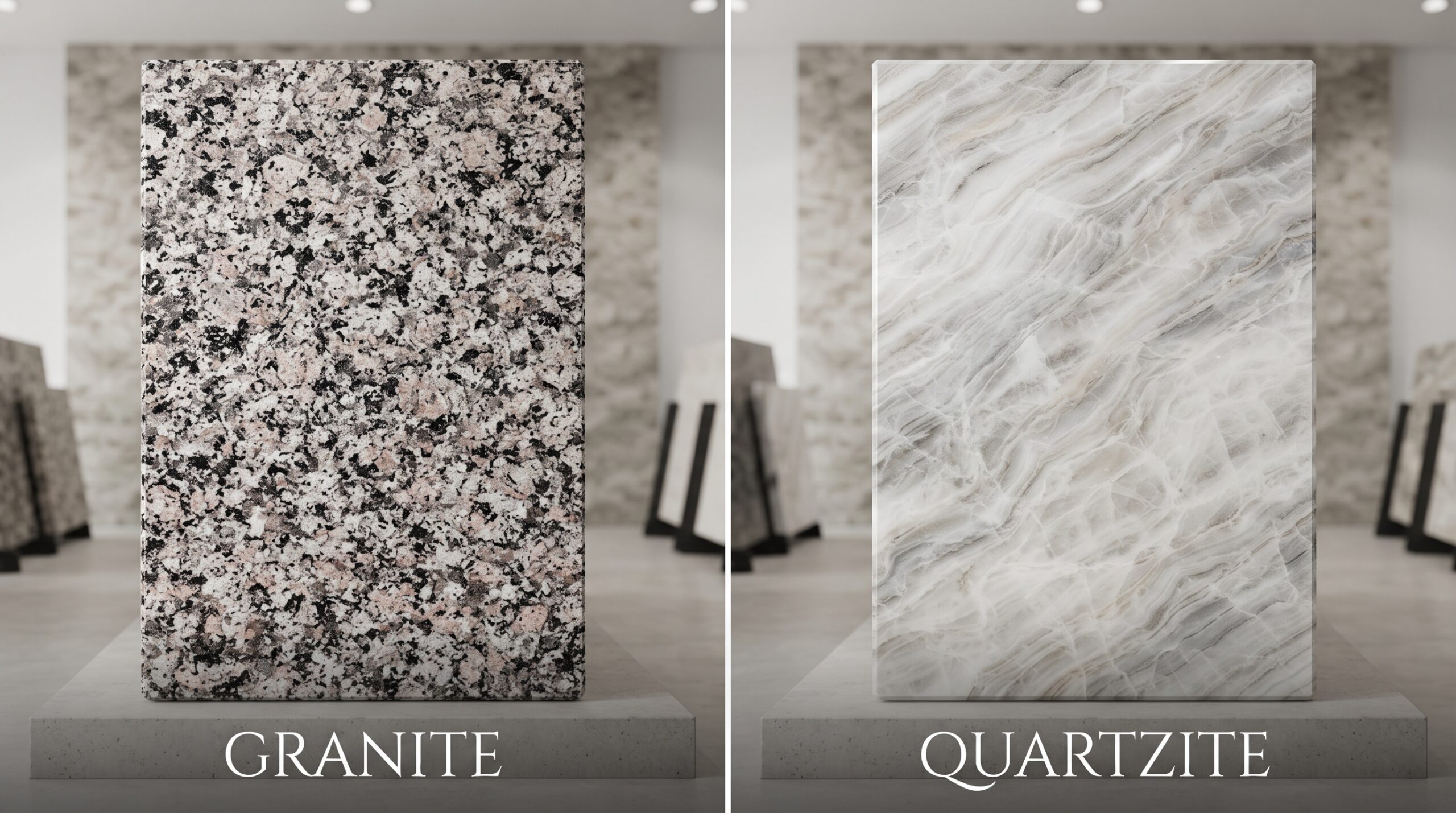
Appearance Speckled patterns with visible mineral crystals Smooth, elegant veining that often resembles marble
Color Variety Wide range of colors including black, white, gray, brown, blue, green, red, and gold Mostly white, gray, cream, beige, gold, pink, and green with natural veining
Heat Resistance Excellent resistance to heat Excellent resistance to heat
Scratch Resistance Highly scratch resistant Exceptional scratch resistance due to higher hardness
Porosity Low to moderate, depending on the variety Low, but still porous enough to benefit from sealing
Maintenance Easy to maintain with regular cleaning and occasional sealing Easy to maintain but typically requires periodic sealing to protect against stains
Sealing Requirements Recommended every few years, depending on use Recommended periodically to maintain stain resistance
Durability Extremely durable for everyday residential and commercial use Exceptional durability for high traffic and demanding environments
Cost Generally more affordable Usually more expensive because of its rarity and premium appearance
Best Applications Kitchen countertops, bathroom vanities, fireplaces, outdoor kitchens, commercial countertops Luxury countertops, kitchen islands, flooring, feature walls, bathrooms, and high end commercial interiors

Which Stone Performs Better?

Both granite and quartzite deliver outstanding performance, but each excels in different situations.

Granite is an excellent choice for homeowners seeking a durable, attractive, and cost effective natural stone. Its broad selection of colors and patterns makes it suitable for a wide range of interior and exterior design styles.

Quartzite, on the other hand, is ideal for those who prioritize maximum hardness, exceptional scratch resistance, and a refined natural appearance. Its marble like veining makes it especially popular in luxury kitchens, elegant bathrooms, and premium commercial spaces.

Factors to Consider Before Choosing

Before selecting granite or quartzite, consider the following factors:

  • Your overall project budget
  • The amount of daily use the surface will receive
  • Your preferred color and pattern
  • Long term maintenance expectations
  • Whether the stone will be installed indoors or outdoors
  • The style of your home or commercial space

Evaluating these factors will help ensure that your chosen stone not only complements your design but also provides lasting performance for years to come.

Appearance Comparison

When comparing granite or quartzite, appearance is often one of the first factors homeowners consider. Although both are natural stones, they offer different visual styles that can dramatically influence the overall look of a space.

Pattern Differences

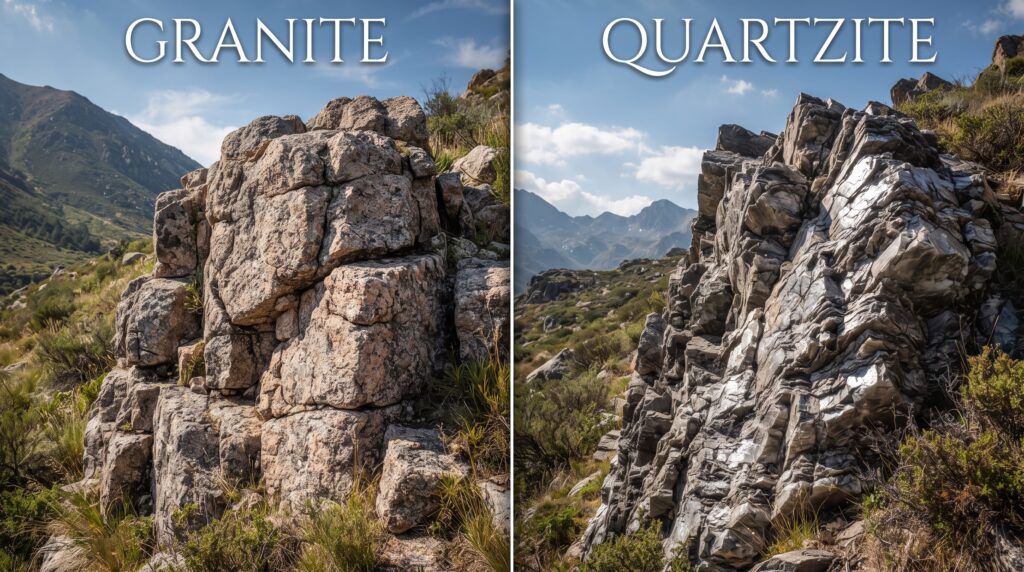
Granite is known for its distinctive speckled appearance created by visible mineral crystals such as quartz, feldspar, and mica. These natural mineral deposits produce unique patterns that range from subtle to bold, making every slab one of a kind.

Quartzite, on the other hand, typically features soft flowing veins that resemble marble. Its elegant veining creates a refined and luxurious appearance while maintaining the durability of a natural stone.

Color Options

Granite offers one of the widest color selections available among natural stones.

Popular granite colors include:

  • Black
  • White
  • Gray
  • Brown
  • Beige
  • Blue
  • Green
  • Red
  • Gold

Quartzite generally has a more neutral color palette.

Common quartzite colors include:

  • White
  • Gray
  • Cream
  • Beige
  • Gold
  • Pink
  • Green
  • Light Blue

Although quartzite has fewer color choices, its natural veining gives each slab a sophisticated character.

Modern or Classic Design

Granite complements a variety of interior styles. Dark granite with bold patterns often creates a dramatic, traditional appearance, while lighter granite colors work well in contemporary kitchens and bathrooms.

Quartzite is frequently chosen for modern and luxury interiors because its marble like veining creates a clean, elegant, and timeless look. It also blends beautifully with minimalist, Scandinavian, and high end contemporary designs.

Lighting Effects

Natural and artificial lighting can significantly affect how each stone looks.

Granite’s mineral crystals often reflect light, adding depth and subtle sparkle to the surface.

Quartzite tends to highlight its flowing veins under natural light, creating a bright and airy appearance that makes kitchens and bathrooms feel larger and more open.


Durability and Strength

Both granite and quartzite are exceptionally durable natural stones, making them suitable for demanding residential and commercial environments. However, there are slight differences in their performance.

Scratch Resistance

Granite is highly resistant to scratches and everyday wear, making it an excellent surface for busy kitchens.

Quartzite is generally even harder than granite, providing outstanding scratch resistance that helps maintain its polished finish over many years.

Heat Resistance

Both materials perform exceptionally well when exposed to heat.

Granite can tolerate hot cookware placed directly on the surface for short periods, although trivets are still recommended.

Quartzite also offers excellent heat resistance because it forms under extremely high temperatures within the Earth.

Crack Resistance

When properly installed, both stones resist cracking under normal household use.

Granite’s crystalline structure provides excellent stability, while quartzite’s dense composition gives it exceptional structural strength.

Impact Resistance

Heavy impacts can damage almost any natural stone, but both granite and quartzite perform well under everyday conditions.

Using cutting boards and avoiding dropping heavy objects helps preserve the appearance of either material.

Everyday Performance

For kitchens, bathrooms, and commercial applications, both stones deliver outstanding long term performance.

Their durability, resistance to wear, and timeless appearance make them excellent investments for properties that require both beauty and functionality.


Maintenance Requirements

Proper maintenance helps preserve the beauty and performance of both granite and quartzite for many years.

Cleaning Recommendations

Clean surfaces using:

  • Warm water
  • Mild dish soap
  • A soft microfiber cloth
  • Stone safe cleaners when needed

Avoid harsh chemicals, bleach, or abrasive cleaners that may damage the protective seal.

Sealing Frequency

Granite generally benefits from sealing every one to three years, depending on the stone type and daily use.

Quartzite should also be sealed periodically to reduce moisture absorption and help prevent staining.

The exact schedule depends on the specific slab and manufacturer recommendations.

Stain Resistance

When properly sealed, both materials resist common household stains.

Promptly wiping up spills from coffee, wine, oil, and acidic foods further protects the surface and maintains its appearance.

Long Term Care

Simple maintenance practices can extend the life of both stones:

  • Clean spills quickly.
  • Use cutting boards instead of cutting directly on the surface.
  • Place trivets under very hot cookware.
  • Reapply sealant when recommended.
  • Avoid harsh chemical cleaners.

With proper care, both granite and quartzite can remain beautiful for decades.


Cost Comparison

Price is an important consideration when choosing between granite and quartzite.

Factors That Influence Pricing

Several factors affect the total cost, including:

  • Stone rarity
  • Color and pattern
  • Slab thickness
  • Country of origin
  • Transportation costs
  • Fabrication complexity
  • Edge profile selection

Rare colors and premium finishes generally increase the overall price.

Installation Costs

Professional installation is recommended for both materials because of their weight and specialized fabrication requirements.

Quartzite installation may cost more due to its exceptional hardness, which requires specialized cutting tools and additional labor.

Long Term Value

Although quartzite often has a higher initial cost, many homeowners appreciate its premium appearance and exceptional durability.

Granite provides excellent value by combining affordability, durability, and a wide variety of design options.

Maintenance Expenses

Maintenance costs for both materials are relatively low.

Occasional sealing and regular cleaning are usually the only ongoing expenses, making both stones economical choices over their long service life.


Best Uses for Granite

Granite’s combination of durability, affordability, and design flexibility makes it suitable for numerous residential and commercial projects.

Popular applications include:

  • Kitchen countertops
  • Bathroom vanities
  • Outdoor kitchens
  • Fireplace surrounds
  • Laundry room countertops
  • Bar tops
  • Reception desks
  • Restaurant countertops
  • Hotel lobbies
  • Commercial workspaces

Its broad color selection allows homeowners and designers to match almost any interior style.


Best Uses for Quartzite

Quartzite is often selected for projects that demand exceptional durability and a luxurious natural appearance.

Common applications include:

  • Luxury kitchen countertops
  • Large kitchen islands
  • Bathroom countertops
  • Accent walls
  • Interior wall panels
  • Flooring
  • Staircases
  • Fireplace surrounds
  • High traffic commercial areas
  • Premium hospitality spaces

Its elegant veining and outstanding hardness make quartzite an excellent choice for homeowners seeking both beauty and long term performance.

Pros and Cons

Understanding the advantages and disadvantages of each material can make the decision between granite or quartzite much easier. While both natural stones offer exceptional performance, each has unique strengths that suit different projects and preferences.

Granite

Pros

  • Excellent durability for everyday residential and commercial use.
  • Wide selection of colors, patterns, and finishes.
  • Very good heat resistance for busy kitchens.
  • Generally more affordable than quartzite.
  • Readily available in a variety of slab sizes and styles.

Cons

  • Requires periodic sealing to help prevent staining.
  • Some granite varieties are more porous than others.
  • Natural patterns vary from slab to slab, making exact matching more difficult.

Quartzite

Pros

  • Extremely hard natural stone with outstanding durability.
  • Elegant marble like appearance with unique natural veining.
  • Excellent scratch resistance for high use surfaces.
  • Superior heat resistance for kitchens and outdoor spaces.
  • Long lifespan when properly maintained.

Cons

  • Usually more expensive than granite.
  • Installation can be more challenging because of its hardness.
  • Requires periodic sealing to maintain stain resistance.
  • Offers a narrower range of colors than granite.

Common Mistakes When Choosing Natural Stone

Selecting the right natural stone involves more than choosing a beautiful color. Avoiding these common mistakes can help ensure your investment performs well for many years.

Confusing Quartzite with Engineered Quartz

Quartzite is a natural stone formed by geological processes, while engineered quartz is a manufactured surface made from crushed quartz and resin. Although their names are similar, their composition, maintenance requirements, and performance characteristics are different.

Choosing Based Only on Color

Appearance is important, but durability, maintenance, and intended use should also influence your decision. A stone that looks beautiful may not always be the best option for your lifestyle or project.

Ignoring Maintenance Requirements

Both granite and quartzite benefit from regular care. Understanding cleaning methods and sealing schedules before installation helps preserve the stone’s appearance and longevity.

Not Requesting a Properly Sealed Surface

Many natural stones should be sealed before or shortly after installation. Confirming that the stone has been properly sealed provides additional protection against stains and moisture.

Hiring Inexperienced Installers

Natural stone installation requires precision and specialized equipment. Working with experienced professionals helps ensure accurate measurements, proper support, and high quality finishing.

 FAQs

Is quartzite stronger than granite?

Yes. Quartzite is generally harder than granite, making it exceptionally resistant to scratches and everyday wear. Both materials are extremely durable, but quartzite has a slight advantage in hardness.

Which stone lasts longer?

With proper installation and maintenance, both granite and quartzite can last for several decades. Their longevity depends largely on proper care, sealing, and daily use rather than the material alone.

Which is easier to maintain?

Both stones are relatively easy to maintain. Regular cleaning with a mild stone safe cleaner and periodic sealing will help preserve their appearance and performance.

Can both be used outdoors?

Yes. Granite and quartzite both perform well in outdoor environments because they offer excellent durability and heat resistance. Proper installation and routine maintenance help maximize their lifespan outdoors.

Which is better for kitchen countertops?

Both are excellent choices for kitchen countertops. Granite is often preferred for its affordability, broad color selection, and dependable performance, while quartzite is favored for its exceptional hardness and elegant natural appearance.

Does quartzite stain easily?

Quartzite is naturally durable, but like most natural stones, it can absorb liquids if left unsealed. Applying a quality sealant and cleaning spills promptly helps reduce the risk of staining.

Is granite more affordable?

In many cases, yes. Granite is generally less expensive than quartzite because it is more widely available and easier to fabricate. However, prices vary depending on color, rarity, thickness, and installation requirements.


Conclusion 

When comparing granite or quartzite, both natural stones offer exceptional durability, timeless beauty, and long term value. Each material has earned its reputation as a premium surface for residential and commercial projects, making either one an excellent investment when selected for the right application.

Granite is an outstanding choice for homeowners seeking affordability, a wide variety of colors and patterns, proven durability, and dependable performance. Its versatility makes it suitable for kitchens, bathrooms, fireplaces, outdoor living areas, and commercial spaces.

Quartzite is ideal for buyers who want exceptional hardness, superior scratch resistance, and a luxurious natural appearance that closely resembles marble. Its impressive strength and elegant veining make it a popular option for high end kitchens, bathrooms, flooring, and premium commercial interiors.

Ultimately, there is no single winner in the granite or quartzite comparison. The best choice depends on your budget, maintenance preferences, design style, and the specific needs of your project. By carefully considering appearance, durability, cost, and long term maintenance, you can confidently select the natural stone that will provide lasting beauty and performance for many years.

Scroll to Top