
Hysterectomy or Myomectomy

Hysterectomy or Myomectomy: 7 Ultimate Facts Explained to Choose the Right Fibroid Treatment

Hysterectomy or Myomectomy: What’s the Difference?

If you’ve been diagnosed with uterine fibroids, heavy menstrual bleeding, or other uterine conditions, you may have heard about two common surgical options: hysterectomy and myomectomy.

Many patients are confused because both procedures can treat fibroids and related symptoms. However, they have very different goals and long-term outcomes.

Although they may be recommended for similar conditions, they serve completely different purposes. Understanding these differences is essential when discussing treatment options with your healthcare provider.

This guide explains the procedures, their benefits, risks, recovery expectations, and how they may affect future fertility.

Quick Answer : Hysterectomy or Myomectomy

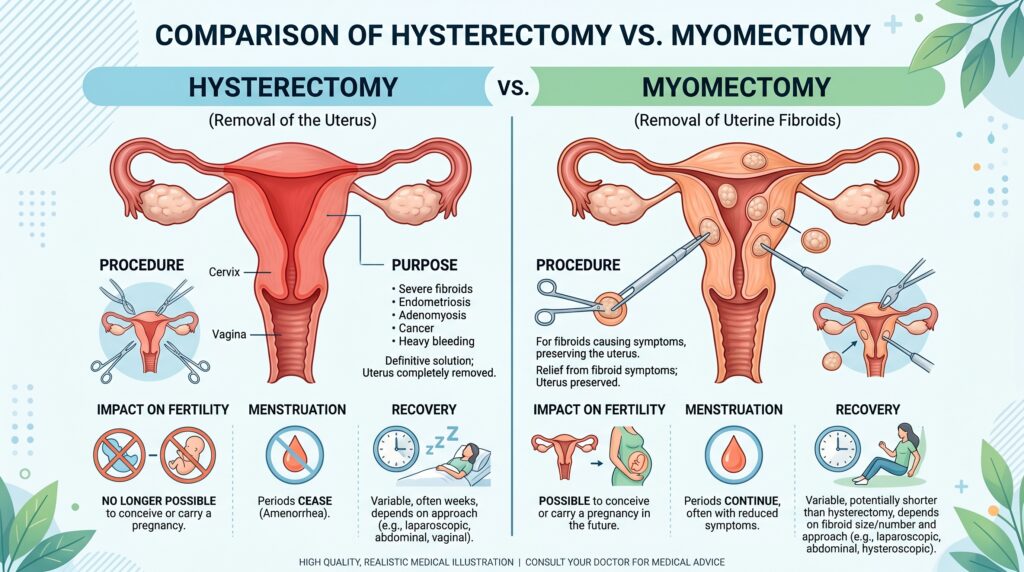
A myomectomy removes fibroids while preserving the uterus.

A hysterectomy removes the uterus and permanently eliminates the possibility of future uterine fibroids.

In general, women who wish to preserve fertility may be candidates for myomectomy, while hysterectomy is often considered when childbearing is complete or when a definitive solution is desired.
Hysterectomy or Myomectomy


What Is a Myomectomy?

Definition

A myomectomy is a surgical procedure that removes uterine fibroids while leaving the uterus intact.

Purpose

The goal is to relieve symptoms while preserving the ability to become pregnant in the future.

Common Reasons for Myomectomy

  • Symptomatic uterine fibroids
  • Heavy menstrual bleeding
  • Pelvic pressure
  • Pain caused by fibroids
  • Fertility concerns related to fibroids

Benefits

  • Preserves the uterus
  • Maintains the possibility of pregnancy
  • Can reduce fibroid-related symptoms
  • Avoids removal of the uterus

Real-World Examples

Example 1

A woman with fibroids who hopes to have children chooses myomectomy.

Example 2

A patient experiences heavy bleeding caused by fibroids and seeks symptom relief while preserving fertility.

Example 3

Fibroids affecting reproductive health are surgically removed.

Key Insight

Myomectomy treats fibroids while preserving reproductive potential, but fibroids can sometimes recur.


What Is a Hysterectomy?

Definition

A hysterectomy is a surgical procedure that removes the uterus.

Purpose

The goal is to provide definitive treatment for certain uterine conditions, including severe fibroids, abnormal bleeding, and other gynecologic disorders.

Common Reasons for Hysterectomy

  • Large symptomatic fibroids
  • Severe abnormal uterine bleeding
  • Certain gynecologic cancers
  • Chronic pelvic pain from specific causes
  • Other serious uterine conditions

Benefits

  • Eliminates uterine fibroids permanently
  • Prevents recurrence of fibroids within the removed uterus
  • Can provide long-term symptom relief
  • May eliminate heavy menstrual bleeding

Real-World Examples

Example 1

A woman who has completed childbearing chooses hysterectomy for severe fibroids.

Example 2

Persistent symptoms continue despite previous treatments.

Example 3

A physician recommends hysterectomy due to a complex uterine condition.

Key Insight

Hysterectomy is generally considered a definitive treatment because the uterus is removed.


Hysterectomy vs Myomectomy: Key Differences

Main Differences

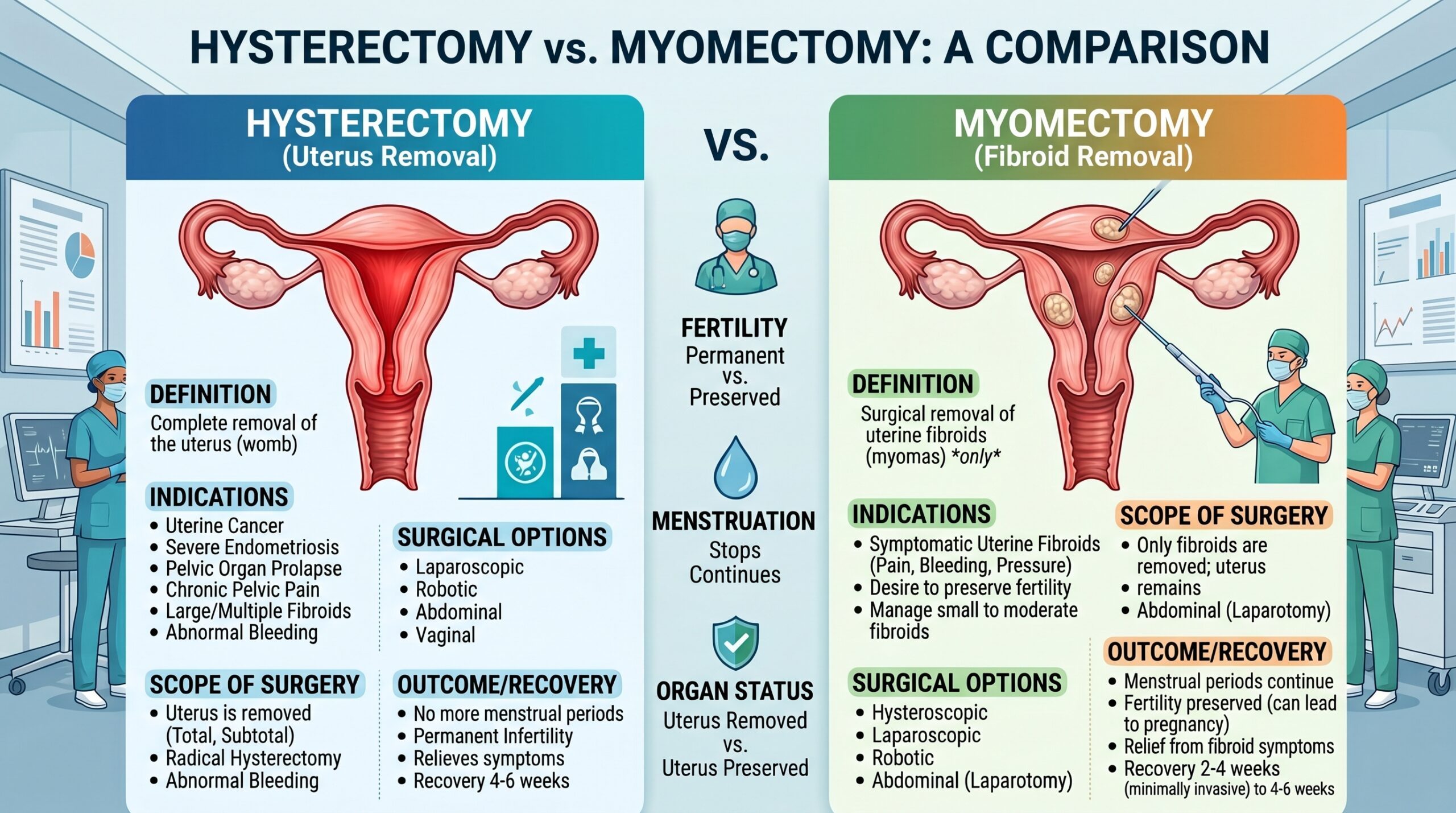
  • Myomectomy removes fibroids; hysterectomy removes the uterus.
  • Myomectomy preserves fertility potential; hysterectomy does not.
  • Fibroids may recur after myomectomy.
  • Fibroids cannot recur in a removed uterus after hysterectomy.
  • Recovery experiences vary depending on surgical technique and individual factors.
  • Treatment goals differ significantly.

Comparison Table of Hysterectomy or Myomectomy

FeatureMyomectomyHysterectomy
Removes FibroidsYesYes (with uterus removal)
Removes UterusNoYes
Preserves Fertility PotentialUsually yesNo
Future Pregnancy PossiblePotentiallyNo
Fibroid Recurrence RiskPossibleEliminated in removed uterus
GoalPreserve uterusDefinitive treatment
Menstrual PeriodsUsually continueStop after uterus removal
Typical CandidateWants uterus preservedCompleted childbearing or needs definitive treatment

Real-World Usage Scenarios

Scenario 1

Patient: “I hope to have children in the future.”

Doctor: “A myomectomy may be considered if appropriate for your situation.”

🎯 Lesson: Fertility goals often play a major role in treatment decisions.


Scenario 2

Patient: “My fibroids are causing severe symptoms, and I do not plan future pregnancies.”

Doctor: “A hysterectomy may be one option to discuss.”

🎯 Lesson: Long-term goals influence treatment selection.


Scenario 3

Patient: “I want symptom relief but would like to keep my uterus.”

Doctor: “Myomectomy may be an option depending on fibroid characteristics.”

🎯 Lesson: Uterus preservation is a key reason patients consider myomectomy.


Scenario 4

Patient: “Can fibroids come back after surgery?”

Doctor: “Fibroids can recur after myomectomy.”

🎯 Lesson: Understanding recurrence risk is important.


Scenario 5

Patient: “I want a permanent solution.”

Doctor: “A hysterectomy may provide definitive treatment in appropriate cases.”

🎯 Lesson: Treatment goals differ among patients.


Common Mistakes

Mistake 1: Assuming the Procedures Are the Same

Why it happens:

Both procedures may be discussed when treating fibroids.

Correction:

One preserves the uterus, while the other removes it.


Mistake 2: Ignoring Fertility Goals

Why it happens:

Patients may focus only on symptom relief.

Correction:

Future pregnancy plans should be discussed before surgery.


Mistake 3: Not Understanding Recurrence Risk

Why it happens:

Patients assume fibroids never return after removal.

Correction:

Fibroids can recur after myomectomy.


Mistake 4: Choosing Based Only on Recovery Time

Why it happens:

Recovery is important but not the only factor.

Correction:

Long-term health goals and treatment outcomes should also be considered.


Memory Tricks

Remember Myomectomy

Myomectomy = My Fibroids Removed

Think: fibroids removed, uterus remains.

Remember Hysterectomy

Hysterectomy = Uterus Removed

Think: definitive uterine surgery.


Expert Insight

The decision between hysterectomy and myomectomy is highly individualized.

Factors such as age, symptom severity, fibroid size and location, reproductive goals, overall health, and personal preferences all influence treatment recommendations.

Neither procedure is universally better. The most appropriate option depends on the patient’s medical situation and priorities. Treatment decisions should always be made in consultation with a qualified gynecologist who can evaluate individual risks and benefits.

Conclusion:Hysterectomy or Myomectomy

When comparing hysterectomy or myomectomy, the most important difference is that myomectomy preserves the uterus, while hysterectomy removes it.

  • Choose myomectomy when preserving the uterus and future fertility potential is an important goal.
  • Consider hysterectomy when a definitive solution is needed and future pregnancy is not desired.
  • Discuss all treatment options, risks, benefits, and goals with your healthcare provider.

Understanding the distinction between these procedures can help you make a more informed and confident healthcare decision.

Scroll to Top