
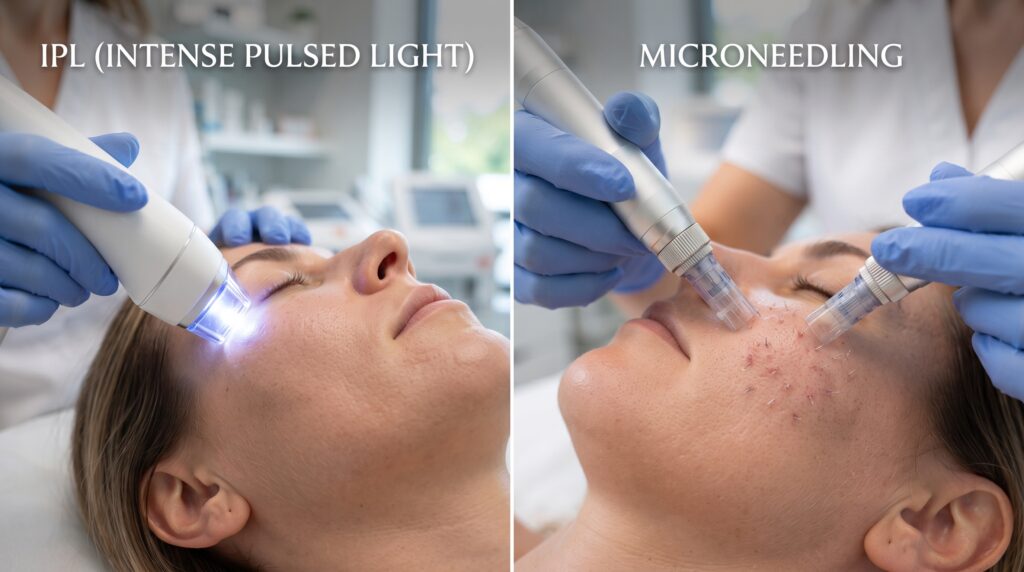
IPL or microneedling is one of the most common comparisons people make when looking for effective skin rejuvenation treatments. Both are among the most popular non surgical cosmetic procedures because they can improve the skin’s appearance without the need for invasive surgery or lengthy recovery times. Whether your goal is to reduce acne scars, fade sun damage, minimize fine lines, or achieve a smoother complexion, both treatments offer proven benefits.
Many people compare IPL and microneedling because they address several of the same skin concerns while using completely different technologies. Intense Pulsed Light (IPL) uses broad spectrum light energy to target pigmentation, redness, sun damage, and broken blood vessels beneath the skin. Microneedling, on the other hand, creates tiny controlled micro injuries that stimulate the body’s natural healing process and boost collagen and elastin production, making it especially effective for improving skin texture, acne scars, enlarged pores, and wrinkles.
The best treatment depends on several important factors, including your skin type, cosmetic goals, recovery time, and budget. Some people want fast improvements in skin tone and discoloration, while others prioritize long term collagen production and scar reduction. Understanding how each treatment works and what results you can expect will help you choose the option that best meets your needs.
In this guide, we’ll compare IPL vs microneedling by examining how each treatment works, their benefits, effectiveness, costs, recovery times, side effects, and ideal candidates, helping you make an informed decision for healthier, smoother, and more radiant skin.
Quick Answer
IPL or microneedling? Neither treatment is universally better because each addresses different skin concerns. The right choice depends on your skin type, cosmetic goals, recovery time, and the specific issues you want to treat.
IPL (Intense Pulsed Light) is an excellent option for people looking to reduce sun damage, age spots, freckles, hyperpigmentation, redness, rosacea, and broken capillaries. It uses broad spectrum light energy to target pigment and blood vessels beneath the skin, creating a more even complexion with minimal downtime.
Microneedling is better suited for individuals who want to improve acne scars, fine lines, wrinkles, enlarged pores, stretch marks, and uneven skin texture. By creating tiny controlled micro injuries in the skin, it stimulates the body’s natural collagen and elastin production, leading to firmer, smoother, and healthier looking skin over time.
Ultimately, the best treatment depends on your skin concerns, recovery time, skin tone, and treatment goals. If discoloration and redness are your primary concerns, IPL may be the better choice. If you’re focused on improving skin texture, scars, and collagen production, microneedling is often more effective. Consulting a qualified dermatologist or skincare professional can help determine the most suitable treatment plan.
What Is IPL?
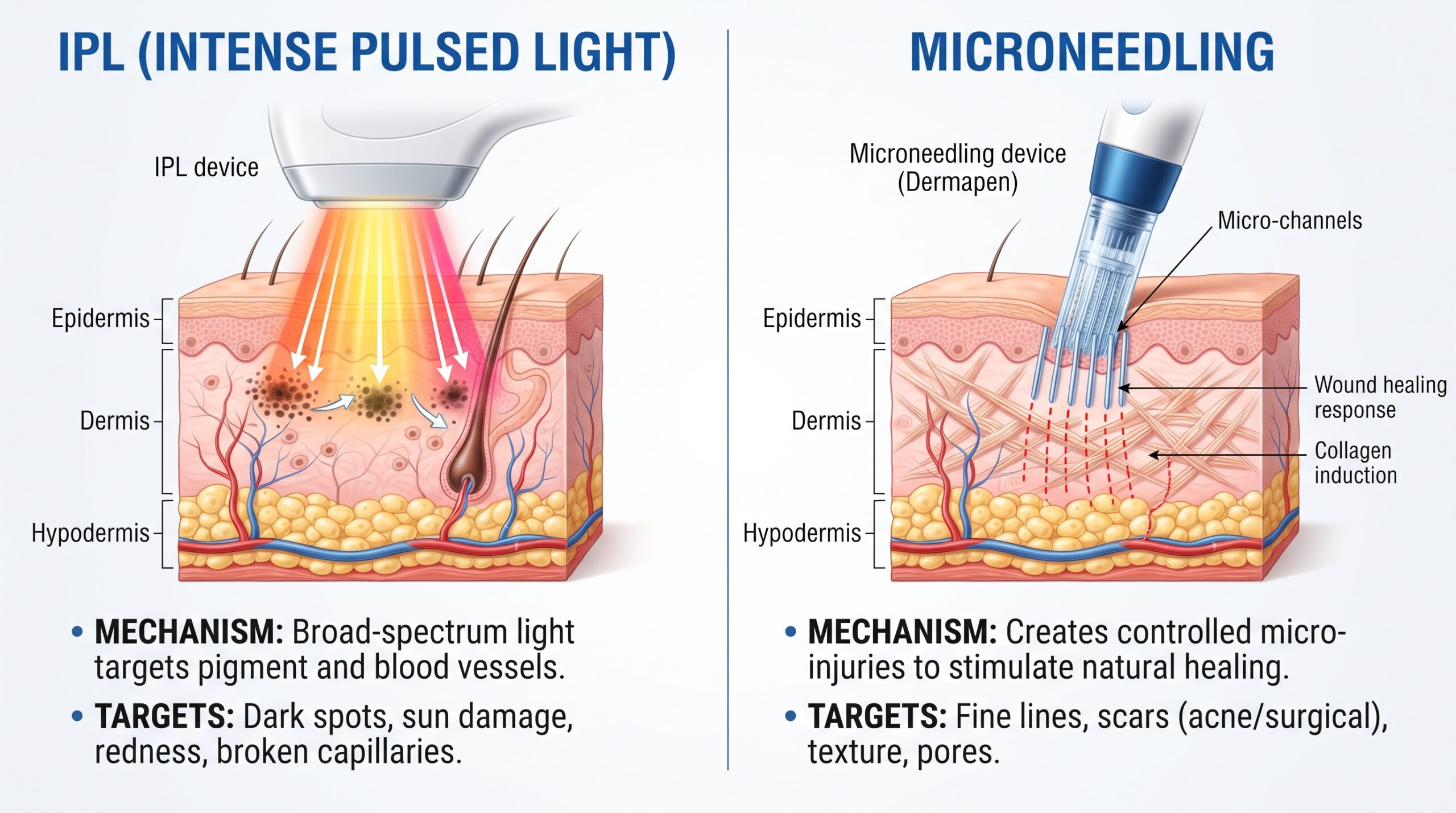
Intense Pulsed Light (IPL) is a non invasive cosmetic treatment that uses multiple wavelengths of light to improve skin tone and treat a variety of pigmentation and vascular concerns. Unlike lasers that use a single wavelength, IPL delivers broad spectrum light energy that targets different chromophores within the skin.
How IPL Works
During treatment, pulses of light penetrate the skin and are absorbed by excess melanin or damaged blood vessels. This process breaks down unwanted pigmentation while stimulating the body’s natural healing response. Over time, the treated pigment fades, leaving the skin looking clearer and more even.
Common Skin Concerns Treated
IPL is commonly used to treat:
Sun damage
Age spots
Freckles
Hyperpigmentation
Rosacea
Facial redness
Broken capillaries
Uneven skin tone
Mild acne discoloration
It may also improve overall skin brightness and reduce visible signs of photoaging.
Benefits of IPL
Some of the biggest advantages of IPL include:
Improves overall skin tone.
Reduces pigmentation and sun damage.
Minimizes redness and visible blood vessels.
Non surgical with minimal downtime.
Quick treatment sessions, often lasting 20 to 45 minutes.
Stimulates mild collagen production for healthier looking skin.
Who Is a Good Candidate?
IPL generally works best for individuals with light to medium skin tones who have pigmentation issues, sun damage, or facial redness. People with active skin infections, certain medical conditions, or very dark skin tones should consult a dermatologist, as IPL may not be suitable for everyone.
What Is Microneedling?
Microneedling, also called collagen induction therapy, is a minimally invasive skin rejuvenation treatment that uses fine sterile needles to create controlled micro injuries in the skin. These tiny punctures trigger the body’s natural healing process, increasing collagen and elastin production for smoother, firmer, and healthier skin.
How Microneedling Works
A specialized microneedling device creates microscopic channels in the skin. As these channels heal, the body produces new collagen and elastin fibers, improving skin texture, elasticity, and overall appearance. The tiny channels can also enhance the absorption of certain skincare products applied after treatment.
Skin Concerns Treated
Microneedling is commonly recommended for:
Acne scars
Fine lines and wrinkles
Enlarged pores
Uneven skin texture
Stretch marks
Mild skin laxity
Surgical scars
Dull skin
Because it stimulates natural skin repair, results continue to improve over several weeks following treatment.
Benefits of Microneedling
Microneedling offers numerous skin rejuvenation benefits, including:
Boosts natural collagen and elastin production.
Improves acne scars and surgical scars.
Reduces fine lines and wrinkles.
Minimizes enlarged pores.
Smooths rough skin texture.
Enhances skin firmness and elasticity.
Suitable for a wider range of skin tones than many light based treatments.
Who Is a Good Candidate?
Microneedling is suitable for most healthy adults who want to improve skin texture, scars, signs of aging, or overall skin quality. It is often considered a safe option for a broader range of skin tones than IPL. However, individuals with active acne, skin infections, eczema flare ups, or certain medical conditions should seek professional medical advice before treatment.
IPL vs Microneedling: Key Differences
Choosing between IPL or microneedling becomes much easier when you compare how each treatment performs across important factors such as effectiveness, recovery time, cost, and suitability for different skin concerns.
| Feature | IPL (Intense Pulsed Light) | Microneedling |
|---|---|---|
| Definition | Light based skin rejuvenation treatment | Collagen induction therapy using fine needles |
| Technology | Broad spectrum light energy | Tiny sterile needles create controlled micro injuries |
| Best For | Pigmentation, sun damage, redness, rosacea | Acne scars, wrinkles, enlarged pores, skin texture |
| Skin Tone Suitability | Best for light to medium skin tones | Suitable for most skin tones |
| Pain Level | Mild stinging sensation | Mild to moderate discomfort with numbing cream |
| Downtime | Minimal, usually 1 to 3 days | Mild redness for 2 to 5 days |
| Number of Sessions | Usually 3 to 6 treatments | Usually 3 to 6 treatments |
| Results Timeline | Visible improvement within a few weeks | Gradual improvement over several weeks as collagen develops |
| Cost | Moderate | Moderate to slightly higher depending on treatment depth |
| Recovery | Mild redness and temporary darkening of pigmentation | Redness, mild swelling, and skin sensitivity |
| Common Side Effects | Temporary redness, swelling, pigment darkening | Redness, swelling, dryness, slight peeling |
| Long Term Benefits | Brighter complexion and improved skin tone | Increased collagen, firmer skin, smoother texture |
| Best Candidate | Individuals with pigmentation and sun damage | Individuals with acne scars, wrinkles, and uneven texture |
Both treatments are highly effective, but they target different concerns. IPL focuses on discoloration and redness, while microneedling improves skin texture and stimulates collagen production.
1. How Each Treatment Works
Although IPL and microneedling are both skin rejuvenation treatments, they improve the skin using completely different methods.
IPL Uses Light Based Technology
IPL delivers pulses of broad spectrum light beneath the skin. The light is absorbed by excess melanin and damaged blood vessels, breaking them down naturally while stimulating mild collagen production. This process gradually improves pigmentation, redness, and overall skin tone.
Microneedling Stimulates Collagen
Microneedling creates thousands of tiny, controlled micro injuries using fine sterile needles. These microscopic punctures activate the body’s natural healing response, encouraging the production of new collagen and elastin. As the skin repairs itself, it becomes smoother, firmer, and more even.
Skin Healing Process
After IPL, pigmented spots often darken before gradually fading over several days.
Following microneedling, the skin begins repairing itself almost immediately, with collagen production continuing for several weeks after treatment.
Treatment Duration
IPL: Approximately 20 to 45 minutes.
Microneedling: Approximately 30 to 60 minutes, depending on the treatment area.
Professional vs At Home Devices
Professional treatments generally produce faster, safer, and more consistent results than at home devices because they use medical grade equipment operated by trained professionals.
2. Skin Concerns Comparison
Understanding which treatment is best for your specific skin concern is one of the most important factors when choosing between IPL and microneedling.
Acne Scars
Microneedling is usually the preferred treatment because collagen production helps remodel scar tissue and improve skin texture.
Fine Lines and Wrinkles
Microneedling typically provides greater improvement by increasing collagen and elastin, although IPL may improve mild signs of aging caused by sun damage.
Hyperpigmentation
IPL is highly effective for treating sun spots, freckles, and age spots by targeting excess pigment beneath the skin.
Sun Damage
IPL is considered one of the best non surgical treatments for reducing visible signs of sun damage and improving overall skin tone.
Rosacea and Redness
IPL is commonly recommended for facial redness, broken capillaries, and rosacea because it targets visible blood vessels.
Enlarged Pores
Microneedling helps tighten the skin and reduce the appearance of enlarged pores through collagen remodeling.
Uneven Skin Tone
Both treatments can improve uneven skin tone, although IPL is generally more effective when discoloration is the primary concern.
Stretch Marks
Microneedling is usually more effective because it stimulates collagen production within damaged skin.
3. Treatment Experience
Knowing what to expect during treatment can help reduce anxiety and prepare you for recovery.
Preparation
Before either procedure, patients should avoid excessive sun exposure, tanning, harsh skincare products, and certain medications as advised by their healthcare provider.
Procedure
During IPL, a handheld device delivers short bursts of light to the skin while protective eyewear is worn.
During microneedling, a numbing cream is usually applied before a specialized device creates controlled micro channels across the treatment area.
Pain Level
IPL is often described as feeling like a light rubber band snap against the skin.
Microneedling generally causes mild discomfort, although topical anesthetic significantly improves comfort.
Aftercare
Following both treatments, patients should:
Wear sunscreen daily.
Avoid excessive sun exposure.
Keep the skin moisturized.
Avoid harsh exfoliants until healing is complete.
Follow all aftercare instructions provided by their practitioner.
Recovery Expectations
IPL usually involves mild redness that resolves within a day or two.
Microneedling often causes redness similar to a mild sunburn for several days before the skin gradually heals.
4. Safety and Side Effects
Both IPL and microneedling are considered safe when performed by experienced professionals.
Common Side Effects
IPL
Temporary redness.
Mild swelling.
Darkening of pigmented spots before they fade.
Slight skin sensitivity.
Microneedling
Redness.
Mild swelling.
Dryness.
Temporary skin tightness.
Light peeling.
Rare Complications
Although uncommon, complications may include infection, prolonged pigmentation changes, scarring, or delayed healing if treatments are performed incorrectly or aftercare instructions are ignored.
Skin Tone Considerations
IPL is generally safest for lighter skin tones because darker skin contains more melanin, increasing the risk of pigmentation changes.
Microneedling is suitable for a broader range of skin tones and is often recommended for individuals with darker complexions.
Who Should Avoid Treatment?
These procedures may not be appropriate for individuals with:
Active skin infections.
Open wounds.
Severe eczema or psoriasis flare ups.
Certain autoimmune conditions.
Pregnancy (depending on practitioner recommendations).
Recent use of medications that increase skin sensitivity.
Importance of Qualified Professionals
Choosing an experienced dermatologist or licensed skincare professional greatly improves safety, treatment outcomes, and overall satisfaction.
5. Cost Comparison
Cost is an important consideration when deciding between IPL and microneedling.
Average Treatment Costs
Prices vary depending on your location, provider experience, and treatment area.
IPL and microneedling are generally similarly priced, although deeper microneedling treatments or combination therapies may cost more.
Number of Sessions
Most patients require three to six sessions for optimal results, with maintenance treatments recommended periodically depending on individual skin concerns.
Maintenance Treatments
Occasional maintenance sessions help preserve improvements, particularly for pigmentation, aging, and collagen production.
Long Term Value
IPL provides excellent value for improving pigmentation, redness, and sun damage.
Microneedling often delivers outstanding long term value for collagen stimulation, acne scar improvement, and skin rejuvenation because results continue to develop over time.
Overall Investment
The best investment depends on your primary skin concern. If your goal is correcting discoloration and redness, IPL often provides the greatest value. If improving skin texture, acne scars, wrinkles, and firmness is your priority, microneedling is usually the better long term investment.
Pros and Cons
Choosing between IPL or microneedling is easier when you understand the advantages and limitations of each treatment. Both can improve your skin’s appearance, but they target different concerns and offer different benefits.
IPL
Intense Pulsed Light (IPL) is an excellent treatment for improving skin tone, pigmentation, and redness with minimal downtime.
Pros
Excellent for treating sun damage, age spots, and hyperpigmentation.
Effectively reduces facial redness, rosacea, and broken capillaries.
Requires minimal downtime, allowing most people to return to normal activities quickly.
Treatment sessions are relatively fast, often taking only 20 to 45 minutes.
Improves overall skin tone and creates a brighter, more even complexion.
Can stimulate mild collagen production for smoother looking skin.
Cons
Less effective for deep acne scars and significant skin texture issues.
May not be suitable for all skin tones, particularly very dark skin, because of a higher risk of pigmentation changes.
Most people need multiple treatment sessions for the best results.
Temporary redness, swelling, or skin sensitivity may occur after treatment.
Sun protection is essential before and after each session.
Microneedling
Microneedling focuses on stimulating the skin’s natural healing process to improve texture, firmness, and collagen production.
Pros
Stimulates natural collagen and elastin production.
Improves the appearance of acne scars, fine lines, and wrinkles.
Suitable for most skin tones, including many darker complexions.
Helps reduce the appearance of enlarged pores.
Improves overall skin texture, firmness, and elasticity.
Can enhance the absorption and effectiveness of certain skincare products.
Cons
Redness and mild swelling may last two to five days after treatment.
Several sessions are usually required for noticeable improvement.
Temporary dryness, tightness, or light peeling may occur during healing.
Results develop gradually as new collagen forms, so immediate changes should not be expected.
Proper aftercare is necessary to reduce the risk of irritation or infection.
Common Mistakes When Choosing Between IPL and Microneedling
Selecting the right skin treatment requires more than comparing prices or reading online reviews. Avoiding these common mistakes can help you achieve better, safer, and longer lasting results.
Choosing Based Only on Price
The cheapest treatment is not always the best value. Consider the provider’s experience, equipment quality, expected results, and the number of sessions required instead of focusing only on cost.
Ignoring Your Specific Skin Concern
IPL and microneedling treat different skin problems. Choosing the wrong procedure for your concern may lead to disappointing results. Identify whether your primary goal is reducing pigmentation, improving skin texture, minimizing scars, or treating signs of aging.
Expecting Immediate Results
Neither treatment delivers instant transformation. IPL results usually become noticeable after several weeks, while microneedling continues improving the skin as collagen develops over the following months.
Skipping Post Treatment Skincare
Aftercare plays an important role in healing and achieving the best outcome. Wearing sunscreen, keeping the skin moisturized, and avoiding harsh skincare products help protect the treated skin and support recovery.
Having Treatment Performed by Unqualified Providers
Choosing an experienced dermatologist or licensed skincare professional greatly reduces the risk of complications and improves treatment results. Always verify qualifications and experience before scheduling a procedure.
Not Following the Recommended Treatment Schedule
Most people require a series of treatments rather than a single session. Skipping appointments or stopping treatment too early may reduce the overall effectiveness and limit long term improvements.
FAQs
Is IPL Better Than Microneedling?
Neither treatment is universally better because they target different skin concerns. IPL is more effective for pigmentation, sun damage, redness, and broken capillaries, while microneedling is better for acne scars, fine lines, wrinkles, enlarged pores, and improving overall skin texture. The best option depends on your skin type and treatment goals.
Which Treatment Is Better for Acne Scars?
Microneedling is generally the preferred treatment for acne scars because it stimulates collagen production, helping remodel scar tissue and improve skin texture over time. IPL may help fade post acne pigmentation but is less effective for deep or indented scars.
Does IPL Hurt More Than Microneedling?
Both treatments involve only mild to moderate discomfort. IPL often feels like a quick snap of a rubber band against the skin, while microneedling creates a mild prickling sensation. A topical numbing cream is commonly applied before microneedling to improve comfort.
Which Treatment Has Less Downtime?
IPL usually has slightly less downtime than microneedling. Most people experience mild redness for one to three days after IPL, while microneedling commonly causes redness and mild swelling that may last two to five days, depending on the treatment depth.
Can IPL and Microneedling Be Combined?
Yes. Many dermatologists combine IPL and microneedling as part of a personalized treatment plan because they address different skin concerns. However, the treatments are typically scheduled several weeks apart to allow the skin to heal properly. Always follow the advice of a qualified skincare professional before combining procedures.
Which Is Better for Dark Skin Tones?
Microneedling is generally considered the safer option for darker skin tones because it does not target melanin in the same way as IPL. IPL may increase the risk of pigmentation changes in darker complexions unless performed with appropriate technology by an experienced practitioner.
How Many Sessions Will I Need?
Most patients achieve the best results after three to six treatment sessions, although the exact number depends on the condition being treated, your skin type, and your desired outcome. Your dermatologist or skincare specialist can recommend a personalized treatment plan after evaluating your skin.
ConclusionÂ
When comparing IPL or microneedling, both treatments offer effective, non surgical solutions for improving skin health and appearance. However, each treatment is designed to address different concerns, making the right choice highly individual.
IPL is an excellent option for people who want to reduce sun damage, pigmentation, age spots, redness, rosacea, and uneven skin tone. It delivers noticeable improvements with minimal downtime and is especially beneficial for creating a brighter, clearer complexion.
Microneedling is better suited for individuals looking to increase collagen production, improve acne scars, reduce fine lines and wrinkles, minimize enlarged pores, and enhance overall skin texture. Its collagen boosting effects continue to improve the skin for weeks after each session, making it an outstanding long term rejuvenation treatment.
Ultimately, there is no single winner in the IPL or microneedling comparison. The best treatment depends on your skin type, cosmetic concerns, budget, recovery time, and professional medical advice. Consulting a qualified dermatologist or licensed skincare provider will help you choose the safest and most effective treatment plan for achieving healthier, smoother, and more radiant skin.
