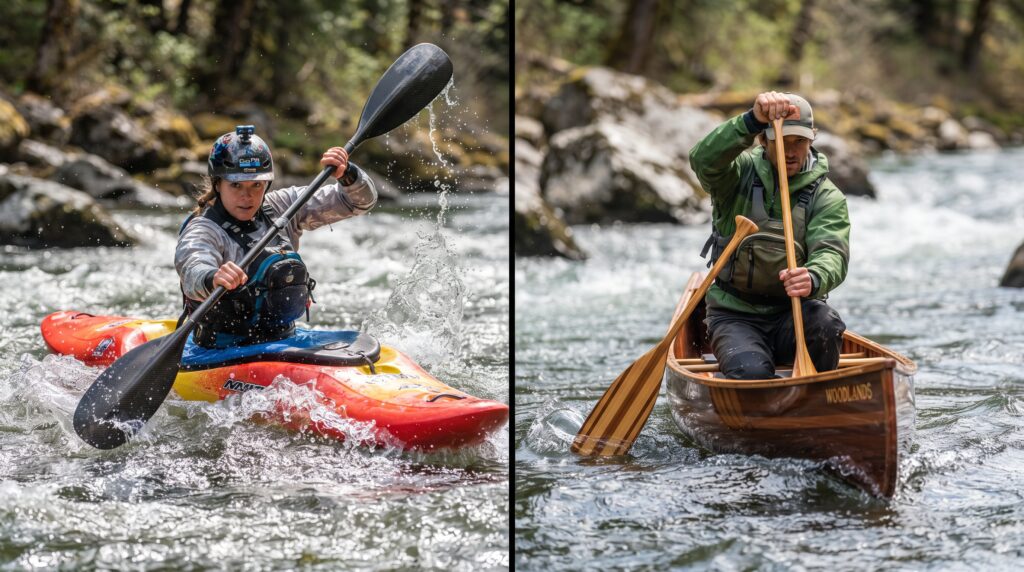
Kayaking or canoeing is a common comparison for people who want to explore lakes, rivers, coastal waters, and other waterways. Both activities involve paddling a small watercraft, but kayaks and canoes have different designs, seating positions, paddles, stability characteristics, and typical uses.
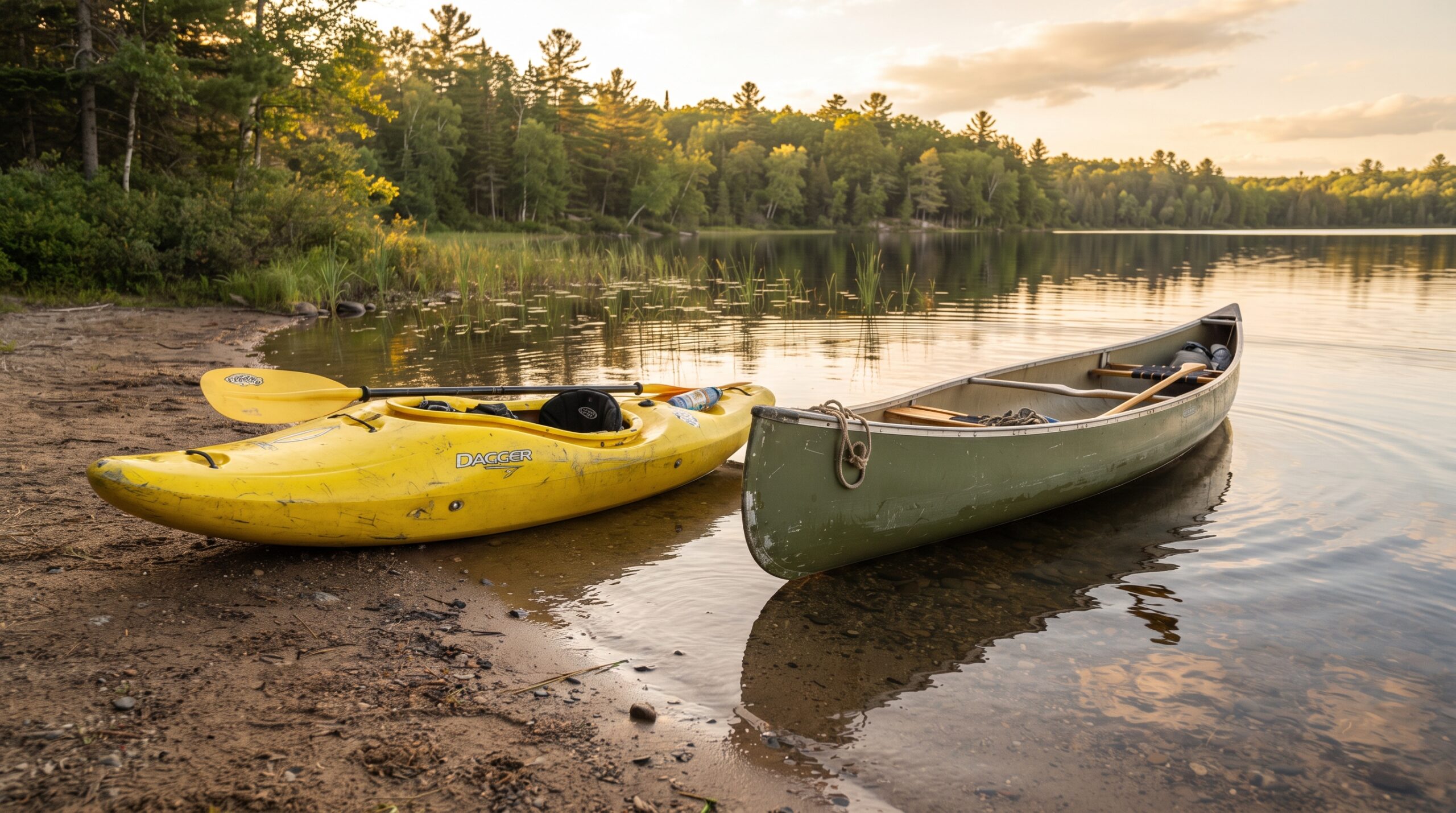
A kayak usually has a narrower body and a low seating position. Most kayakers use a double bladed paddle, which allows them to paddle on both sides without changing the paddle position.
A canoe generally has an open top and a higher seating position. Canoeists commonly use a single bladed paddle and may paddle from a kneeling or seated position.
Neither activity is universally better. The right choice depends on your experience, water conditions, desired speed, comfort, equipment preferences, and the type of adventure you want.
 Quick Answer
If you’re looking for a faster, more enclosed, and often more maneuverable paddling experience, kayaking may be the better choice.
If you want more open space, easier access to equipment, and a comfortable option for carrying passengers or camping gear, canoeing may be more suitable.
Choose kayaking for: recreational paddling, coastal exploration, touring, fishing, faster movement, and situations where a lower seating position is useful.
Choose canoeing for: calm lakes, family trips, camping, carrying equipment, fishing, and relaxed exploration.
Both sports can be enjoyable for beginners, but proper instruction and suitable equipment are important.
What Is Kayaking?
Kayaking is a water activity involving a kayak, a small boat designed to be propelled with a double bladed paddle.
Kayaks come in several designs, including recreational, touring, sea, fishing, and whitewater kayaks.

Main Characteristics of Kayaks
Kayaks commonly feature:
- Narrow hull designs
- Low seating positions
- Double bladed paddles
- One or more enclosed cockpit designs
- Good maneuverability
- Efficient paddling
- Different models for different water conditions
Some kayaks have sit on top designs, while others have enclosed cockpits.
Common Uses of Kayaks
Kayaks can be used for:
- Recreational paddling
- Fishing
- Sea kayaking
- Touring
- River trips
- Whitewater paddling
- Wildlife observation
- Fitness
- Camping trips
What Is Canoeing?
Canoeing involves paddling an open canoe using a single bladed paddle.
Canoes are commonly wider and more open than traditional kayaks, giving paddlers plenty of space for equipment, passengers, or camping supplies.
Main Characteristics of Canoes
Canoes typically offer:
- Open tops
- Higher seating positions
- Single bladed paddles
- Generous storage space
- Good capacity for passengers
- Flexible seating positions
- Stable designs for many recreational situations
Different canoe designs are available for flatwater paddling, touring, racing, fishing, and river use.
Common Uses of Canoes
Canoes are commonly used for:
- Lake trips
- River exploration
- Family outings
- Fishing
- Camping
- Wildlife viewing
- Recreational paddling
- Multi day expeditions
Kayaking vs Canoeing: Key Differences
| Feature | Kayaking | Canoeing |
|---|---|---|
| Boat design | Usually narrower and enclosed or sit on top | Generally wider and open |
| Paddle | Double bladed | Single bladed |
| Seating | Usually seated with legs extended | Seated higher or kneeling |
| Stability | Depends on design | Often stable for recreational use |
| Speed | Often efficient and fast | Depends on hull and paddling technique |
| Maneuverability | Generally responsive | Requires different steering technique |
| Storage | Limited in some models | Often generous open storage |
| Weather protection | Some kayaks offer more enclosure | Generally more exposed |
| Learning curve | Often straightforward for beginners | Requires learning single blade control |
| Best for | Touring, recreation, fishing, rivers | Families, camping, lakes, gear transport |
Design and Construction Comparison
One of the biggest differences between kayaking and canoeing is the design of the watercraft.
Kayak Design
Kayaks are usually designed with a narrower profile and lower seating position.
This design can make them efficient through the water and suitable for longer paddling trips.
Some kayaks have enclosed cockpits that provide additional protection from splashing water.
Canoe Design
Canoes are generally open and provide more interior space.
Their design makes it easier to carry coolers, camping equipment, fishing equipment, or other larger items.
For people planning multi day trips, this additional storage can be a major advantage.
Paddling Technique
Kayaking Technique
Kayakers typically use a double bladed paddle.
The paddler alternates strokes between the left and right sides of the kayak.
This technique can provide efficient forward movement and relatively straightforward steering.
Canoeing Technique
Canoeists generally use a single bladed paddle.
A paddler may use strokes such as the forward stroke, reverse stroke, sweep stroke, and draw stroke.
Learning to control the canoe effectively can require practice because the paddle is used primarily on one side at a time.
Stability Comparison
Stability depends on the specific boat rather than simply whether it is a kayak or canoe.
Recreational kayaks can be designed with wider hulls that provide good stability for beginners.
Canoes can also provide excellent stability, particularly on calm water.
However, different hull shapes can produce very different experiences.
When choosing a boat, consider the type of water you plan to use and your experience level.
Speed and Efficiency
Kayaks are often considered efficient because their narrow hulls and double bladed paddles can allow paddlers to maintain a steady rhythm.
Canoes can also travel efficiently, especially when paddled by experienced users.
For longer trips where maintaining a consistent pace is important, a touring kayak can be an attractive option.
For relaxed lake trips, the difference in speed may be less important than comfort and storage.
Comfort Comparison
Comfort depends heavily on the boat design and the individual paddler.
Kayak Comfort
A kayak usually places the paddler closer to the bottom of the boat.
This can provide a secure feeling but may feel restrictive for some people, especially during long trips.
Sit on top kayaks provide easier entry and exit and may be more comfortable for recreational users.
Canoe Comfort
Canoes provide an open interior and allow more freedom of movement.
Some paddlers prefer the higher seating position and ability to change positions.
Canoes can also accommodate multiple people in many designs.
Storage and Gear Capacity
If you plan to carry significant equipment, canoeing can offer an advantage.
The open design provides space for:
- Camping equipment
- Food
- Fishing gear
- Coolers
- Dry bags
- Safety equipment
- Personal belongings
Kayaks can also have storage compartments, especially touring and fishing models, but the available space varies considerably.
Kayaking or Canoeing for Beginners
Both activities can be suitable for beginners when practiced in appropriate conditions.
Kayaking for Beginners
Kayaking can be easy to learn because the double bladed paddle provides a consistent paddling rhythm.
Recreational kayaks with wider hulls can also provide good stability.
Beginners should start on calm, sheltered water and learn basic paddling and safety techniques.
Canoeing for Beginners
Canoeing can also be beginner friendly, particularly on calm lakes and slow moving rivers.
The main challenge is learning how to steer effectively using a single bladed paddle.
Taking an introductory lesson can make the learning process easier.
Kayaking or Canoeing for Families
Canoes can be particularly useful for family outings because they often provide more open space and can accommodate multiple people depending on the model.
Kayaks can also work well for families, especially when choosing recreational or tandem models.
The best choice depends on the ages and swimming abilities of the participants, the water conditions, and the amount of equipment being carried.
Children should always use appropriately fitted personal flotation devices.
Kayaking or Canoeing for Fishing
Both kayaks and canoes can be used for fishing.
Kayak Fishing
Fishing kayaks often include:
- Rod holders
- Storage compartments
- Comfortable seats
- Mounting points
- Stability focused hull designs
Their smaller size can make it easier to reach certain fishing locations.
Canoe Fishing
Canoes provide an open area for fishing equipment.
They can be especially useful when carrying several pieces of gear or fishing with another person.
Kayaking or Canoeing for Camping
Canoes are often popular for camping trips because of their storage capacity.
The open design makes it easier to load tents, food, cooking equipment, and other supplies.
Touring kayaks can also support camping trips, particularly when the equipment is packed efficiently into dry storage compartments.
Water Conditions
The best boat depends heavily on the water.
Calm Lakes
Both kayaks and canoes can work well on calm lakes.
Canoes may appeal to people who prioritize open space, while kayaks may appeal to people who want efficient paddling.
Rivers
Both can be used on rivers, but the appropriate design depends on current speed, obstacles, and water conditions.
Coastal Water
Sea kayaks are specifically designed for coastal paddling and can provide useful tracking and efficiency.
A recreational canoe may be less suitable for exposed coastal conditions.
Whitewater
Specialized whitewater kayaks are commonly used for challenging rapids.
Whitewater canoeing also exists, but it requires specialized equipment and appropriate training.
Cost Comparison
The cost of kayaking or canoeing varies widely.
Factors include:
- Boat material
- Boat size
- Brand
- Design
- Accessories
- Paddle quality
- Safety equipment
- Transportation requirements
Basic recreational equipment can be relatively affordable, while specialized touring, fishing, racing, or expedition equipment can cost considerably more.
Remember to include the cost of essential safety equipment in your budget.

Pros and Cons
Kayaking
Pros
- Efficient paddling
- Good maneuverability
- Wide variety of specialized designs
- Suitable for lakes, rivers, and coastal trips
- Double bladed paddle is easy to understand
- Many compact models are available
- Specialized fishing and touring options
Cons
- Some models have limited storage
- Enclosed cockpits may feel restrictive
- Getting in and out can take practice
- Some kayaks can be difficult to transport
- Specialized models can be expensive
Canoeing
Pros
- Open design
- Generous storage space
- Suitable for camping
- Can accommodate multiple people
- Easy to load equipment
- Comfortable for relaxed trips
- Excellent for calm lakes and rivers
Cons
- Single bladed paddling requires practice
- Larger canoes can be difficult to transport
- Less enclosed protection from splashing water
- Some designs can be affected by wind
- Specialized models can be expensive
Common Mistakes When Choosing Between Kayaking and Canoeing
Choosing Based Only on Appearance
A boat that looks appealing may not be suitable for the water conditions where you plan to use it.
Ignoring Boat Design
Different kayaks and canoes are designed for different activities. A recreational kayak is not the same as a sea kayak or whitewater kayak.
Choosing Without Considering Storage
If you plan to camp or carry large amounts of equipment, storage capacity should be an important consideration.
Ignoring Transportation
Consider whether you can safely transport the boat to and from the water.
Underestimating Safety Equipment
A paddle is not enough. Appropriate personal flotation equipment and other safety gear should be part of your planning.
Starting on Difficult Water
Beginners should not start on challenging rapids, rough coastal waters, or strong currents without suitable training and equipment.
FAQs
Is kayaking or canoeing easier for beginners?
Both can be learned by beginners. Kayaking may feel easier initially because the double bladed paddle provides a simple alternating stroke. Canoeing requires learning effective single blade strokes and steering techniques.
Is kayaking faster than canoeing?
Kayaks can be very efficient and fast, particularly touring models. However, speed depends on the boat design, paddler, water conditions, and technique.
Which is more stable, a kayak or canoe?
There is no universal answer. Stability depends on the hull design, width, seating position, load, and water conditions.
Is kayaking or canoeing better for families?
Canoes can be convenient for families because they often provide open space and can carry multiple people and equipment. Tandem and recreational kayaks can also be excellent family options.
Which is better for fishing, kayaking or canoeing?
Both can be excellent for fishing. Kayaks are often easier to maneuver and can reach narrow locations, while canoes provide more open space for fishing equipment.
Which is better for camping?
Canoes are often preferred for camping because they can carry substantial equipment. Touring kayaks can also work well when gear is packed efficiently.
Is kayaking safer than canoeing?
Neither is automatically safer. Safety depends on the water conditions, boat design, experience, weather, equipment, and proper use of personal flotation devices.
Can you use a kayak on a river?
Yes. Many kayaks are designed for river use. However, the appropriate kayak depends on the river’s current, obstacles, water conditions, and difficulty level.
Can you use a canoe on a lake?
Yes. Canoes are widely used on lakes and other calm waterways.
Which requires more upper body strength?
Both activities use the upper body and core. Paddling technique can make a major difference, so efficient technique is more important than simply relying on strength.
Conclusion
The choice between kayaking or canoeing depends on the type of water adventure you want.
Kayaking is a strong choice for people who want efficient paddling, maneuverability, touring, fishing, coastal exploration, or specialized water activities. Its double bladed paddle and variety of designs make it suitable for many different environments.
Canoeing is an excellent option for people who value open space, storage capacity, family outings, fishing, camping, and relaxed exploration. The open design can make it especially convenient when carrying passengers or larger amounts of equipment.
Neither activity is universally better. The right choice depends on your experience, water conditions, comfort preferences, budget, storage needs, transportation options, and intended activity.
If you’re a beginner, start with calm water, choose equipment appropriate for your skill level, wear a properly fitted personal flotation device, and consider taking an introductory lesson. With the right preparation, both kayaking and canoeing can provide enjoyable ways to explore the water.