
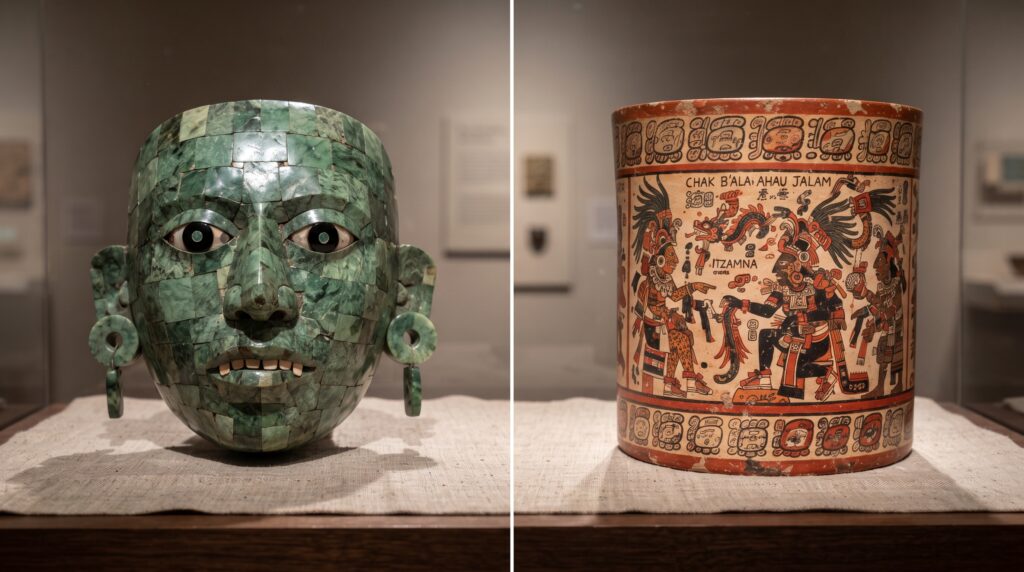
Maya or Mayan is a common language question because both terms are closely connected to the history, culture, people, and languages of the Maya civilization. Although the words are often used interchangeably, they have different preferred uses depending on the context.
Maya is generally used when referring to the Indigenous people, civilization, culture, history, art, and traditions of the Maya. Mayan is most commonly used when discussing the broader family of languages spoken by Maya communities. Understanding the difference between Maya or Mayan can help you choose the correct term in academic writing, historical articles, travel content, and everyday English.
This guide explains the meaning of Maya and Mayan, their key differences, correct usage, examples, common mistakes, and the situations where each term is most appropriate.
Quick Answer
If you’re wondering Maya or Mayan, the best choice depends on what you’re describing. Maya is generally preferred when referring to the Indigenous people, their civilization, culture, history, art, and traditions. Mayan is commonly used when referring to the broader family of languages spoken by Maya communities.
For example, Maya civilization, Maya people, and Maya culture are widely preferred terms. In contrast, Mayan languages is commonly used when discussing the group of related languages spoken across parts of Mexico and Central America.
Both words appear in English, and older sources may use “Mayan” more broadly. However, modern academic and cultural writing often uses Maya for the people and civilization and Mayan for the language family.
Simple Rule
Maya: People, civilization, culture, history, art, and individual languages.
Mayan: The broader language family and linguistic classification.
Therefore, neither word is simply “wrong.” The appropriate choice depends on the subject and context.
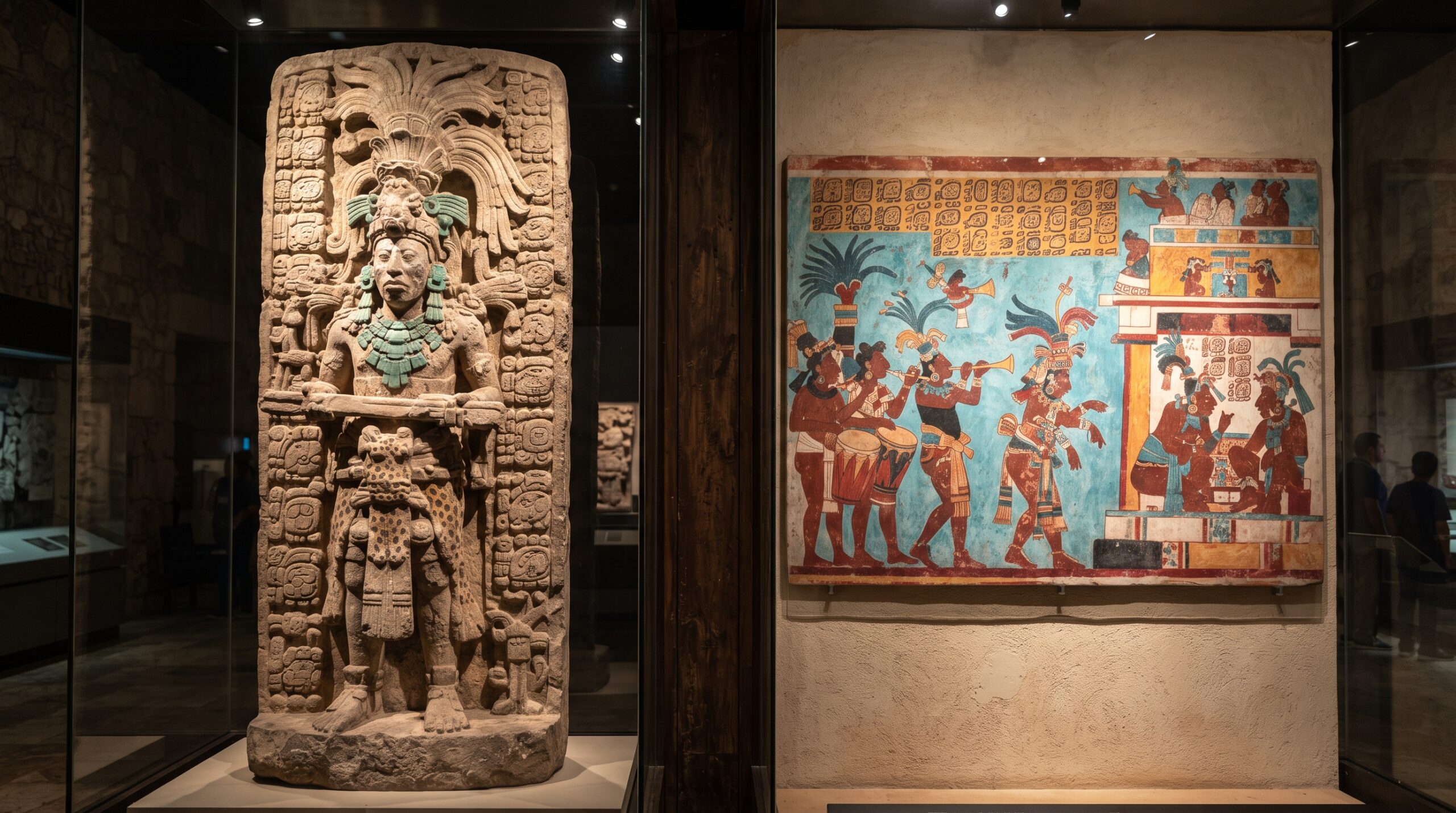
2. What Does Maya Mean?
Maya refers to the Indigenous peoples of Mesoamerica and the civilization and cultures associated with them. Maya communities have a long history in areas that are now part of Mexico, Guatemala, Belize, Honduras, and El Salvador.
The Maya are not one completely uniform group. They include many different communities with their own languages, traditions, customs, and identities.
The term Maya is commonly used in historical, cultural, archaeological, and educational contexts.
Examples of Maya Usage
Here are common examples:
Maya civilization
Maya people
Maya culture
Maya history
Maya art
Maya architecture
Maya cities
Maya astronomy
Maya mathematics
Maya writing
For example:
Correct and commonly preferred: The Maya developed sophisticated systems of writing and mathematics.
Common modern usage: Maya architecture can be seen at many archaeological sites in Mesoamerica.
The word can also appear in the names of individual languages, such as Yucatec Maya.
3. What Does Mayan Mean?
Mayan is most commonly used to describe the Mayan language family, which includes numerous related languages spoken by Maya communities.
The Mayan language family contains languages such as K’iche’, Kaqchikel, Q’eqchi’, and Yucatec Maya. These languages are related but are not simply different accents of one language.
The word Mayan has also traditionally been used in English as a broader adjective for Maya history and culture. You may therefore encounter expressions such as “Mayan civilization” or “Mayan culture,” particularly in older publications and general English content.
However, in modern writing, Maya is often preferred when directly describing the people, civilization, or culture.
Examples of Mayan Usage
Common examples include:
Mayan languages
Mayan language family
Mayan linguistics
Mayan language research
Mayan language classification
For example:
Mayan languages are spoken by communities across parts of Mexico and Central America.
Understanding this distinction makes it easier to use Maya or Mayan accurately without assuming that one term is always correct and the other is always incorrect.
4. Maya vs Mayan: Key Differences
The main difference between Maya and Mayan is how the terms are used in modern English. Maya is generally preferred when referring to the Indigenous people, their civilization, culture, history, and traditions. Mayan is especially common when discussing the group of related languages known as the Mayan language family.
| Feature | Maya | Mayan |
|---|---|---|
| Main meaning | People, civilization, and culture | Language family |
| Refers to the people | Yes | Less preferred |
| Refers to the civilization | Yes | Used historically |
| Refers to culture | Yes | Sometimes used |
| Refers to languages | Yes, for individual languages | Yes, for the language family |
| Common academic use | People and civilization | Linguistics |
| Modern preferred usage | Maya people and culture | Mayan languages |
| Example | Maya civilization | Mayan language family |
Another important point is that Maya does not necessarily refer to one single ethnic group or one language. Maya communities are diverse and include numerous cultural and linguistic groups.
Similarly, Mayan does not describe one universal language. It describes a family of related languages.
For this reason, the best choice depends on what you’re discussing. If the subject is the people or civilization, Maya is usually the better choice. If the subject is the broader group of related languages, Mayan is generally appropriate.
5. When Should You Use Maya?
Use Maya when you’re talking about the Indigenous people, their civilization, culture, history, traditions, art, architecture, or an individual Maya language.
Maya People
When referring to the people collectively, Maya people is generally preferred.
Example:
The Maya people have maintained diverse cultural traditions for generations.
This wording recognizes that modern Maya communities have different identities, languages, and regional traditions.
Maya Civilization
Use Maya civilization when discussing the ancient civilization and its historical development.
Example:
The Maya civilization developed sophisticated systems of writing, mathematics, astronomy, and architecture.
You may see “Mayan civilization” in older sources, but Maya civilization is widely preferred in modern historical writing.
Maya Culture
Use Maya culture when discussing traditions, beliefs, art, architecture, food, customs, or other cultural subjects.
Examples include:
-
Maya culture
-
Maya art
-
Maya architecture
-
Maya traditions
-
Maya history
-
Maya heritage
Individual Maya Languages
The word Maya can also appear in the name of a specific language.
For example:
Yucatec Maya is spoken in parts of Mexico and neighboring regions.
Therefore, “Maya” is not limited only to the name of a civilization.
6. When Should You Use Mayan?
Use Mayan primarily when discussing the broader family of languages associated with Maya communities.
Mayan Languages
Mayan languages is one of the clearest and most established uses of the word.
The Mayan language family contains many individual languages that are spoken across parts of Mexico and Central America.
For example:
Several Mayan languages are spoken in Guatemala.
Mayan Language Family
Use Mayan language family when discussing the linguistic classification of these related languages.
The family includes numerous languages that developed from earlier ancestral forms and now have their own vocabulary, grammar, and pronunciation systems.
Mayan Linguistics
The term Mayan is also appropriate in academic discussions of linguistics.
Examples include:
-
Mayan linguistics
-
Mayan language research
-
Mayan language classification
-
Mayan language documentation
What About “Mayan Culture” or “Mayan People”?
You may encounter these expressions, especially in older books, websites, and general English writing. They are widely understood.
However, if you’re writing modern educational, historical, or cultural content, Maya culture and Maya people are generally more precise choices.
The easiest way to remember the distinction is:
Maya = people, civilization, culture, and individual languages
Mayan = language family and linguistic context
Using the terms this way makes your writing clearer while avoiding the common mistake of treating all Maya communities and languages as one single group.
7. Maya or Mayan in History
The difference between Maya or Mayan becomes easier to understand when looking at historical writing. The Maya civilization developed across a large area of Mesoamerica, including parts of present day Mexico, Guatemala, Belize, Honduras, and El Salvador.
The Maya developed major cities, monumental architecture, writing systems, mathematical methods, calendars, and detailed astronomical knowledge. Important Maya centers included Tikal, Palenque, Calakmul, and Chichén Itzá.
Older English language sources often used Mayan as a general adjective for the civilization, people, language, and culture. As a result, terms such as “Mayan civilization” and “Mayan culture” can still be found in historical books and websites.
Modern academic and cultural writing often makes a clearer distinction. Maya is generally used for the people and civilization, while Mayan is particularly associated with the language family.
The Maya should also not be viewed only as an ancient civilization. Maya peoples continue to live throughout Mesoamerica today, maintaining diverse languages, traditions, and cultural identities.
8. Maya or Mayan in Modern Usage
Modern usage of Maya or Mayan depends strongly on the subject and the context.
When discussing people, culture, history, archaeology, or civilization, Maya is generally the preferred term.
For example:
-
Maya people
-
Maya civilization
-
Maya culture
-
Maya history
-
Maya art
-
Maya architecture
-
Maya heritage
When discussing linguistics, Mayan is commonly used.
Examples include:
-
Mayan languages
-
Mayan language family
-
Mayan linguistics
-
Mayan language classification
This distinction is especially useful in academic writing, educational content, journalism, museum descriptions, and travel articles.
However, usage can vary. Some publications continue to use “Mayan” more broadly, and readers will generally understand the intended meaning from context.
A useful modern rule is to use Maya for the people and their civilization, and Mayan when specifically discussing the larger family of related languages.
9. Maya and Mayan Examples
Understanding Maya or Mayan becomes easier when you see the terms used in complete sentences.
Examples Using Maya
Maya people:
The Maya people continue to maintain diverse languages and cultural traditions.
Maya civilization:
The Maya civilization developed remarkable cities and architectural structures.
Maya culture:
Maya culture includes diverse traditions that vary among different communities.
Maya art:
Maya art provides valuable information about historical life and beliefs.
Maya architecture:
Maya architecture includes temples, pyramids, palaces, and other monumental structures.
Yucatec Maya:
Yucatec Maya is an individual language spoken in parts of Mexico and surrounding areas.
Examples Using Mayan
Mayan languages:
Mayan languages are spoken by communities across parts of Mexico and Central America.
Mayan language family:
The Mayan language family contains numerous related languages.
Mayan linguistics:
Researchers study Mayan linguistics to understand the development and relationships among these languages.
Simple Comparison
Instead of writing:
The Mayan people have many different languages.
A more precise modern version is:
The Maya people speak many different languages, which belong to the Mayan language family.
This example shows why context matters when choosing between Maya and Mayan.
10. Common Mistakes When Using Maya and Mayan
Mistake 1: Assuming Maya and Mayan Are Completely Different Subjects
The two words are closely related. The difference is mainly about preferred usage and context rather than two completely unrelated meanings.
Mistake 2: Calling the People “Mayan”
“Mayan people” is widely understood, but Maya people is generally preferred in modern usage when referring to the Indigenous people themselves.
Mistake 3: Assuming There Is Only One Maya Language
The Maya speak numerous languages. The Mayan language family contains many distinct languages with their own grammatical and vocabulary differences.
Mistake 4: Saying the Maya Civilization Disappeared
The ancient Maya civilization experienced major political and demographic changes, but Maya peoples did not disappear.
Millions of Maya people continue to live in Mesoamerica today.
Mistake 5: Treating Maya Culture as Completely Uniform
Maya communities are diverse. Different communities may have distinct languages, traditions, customs, and identities.
Mistake 6: Thinking “Mayan” Is Always Incorrect
“Mayan” remains a valid and widely recognized English term, especially in linguistic contexts. The important point is to use it appropriately rather than assuming it should replace “Maya” in every situation.
Mistake 7: Using One Term for Every Context
The easiest way to avoid confusion is to consider what you’re describing.
Use Maya for the people, civilization, culture, history, and individual languages.
Use Mayan primarily for the broader language family and linguistic topics.
This simple distinction can make articles, essays, educational materials, and other forms of content more accurate and easier to understand.
11.FAQs
Is Maya or Mayan correct?
Both Maya and Mayan are used in English, but they are preferred in different contexts. Maya is generally used for the Indigenous people, civilization, culture, and history, while Mayan is commonly used for the broader family of related languages.
Should I say Maya people or Mayan people?
Maya people is generally the preferred modern term. The Maya include many different communities with their own languages, traditions, and cultural identities.
Is it Maya civilization or Mayan civilization?
Maya civilization is generally preferred in modern historical and academic writing. However, “Mayan civilization” is still found in older sources and general English content.
Is Mayan a language?
Mayan is the name of a language family, not one single universal language. The Mayan language family includes numerous individual languages spoken by Maya communities.
Are Maya and Mayan interchangeable?
They can overlap in some contexts, but they are not always interchangeable. Maya is generally preferred when discussing people, civilization, and culture, while Mayan is especially appropriate for the language family.
Are the Maya still alive today?
Yes. Maya peoples continue to live in Mexico, Guatemala, Belize, Honduras, and El Salvador. Modern Maya communities maintain diverse languages, cultural traditions, and identities.
Where did the Maya civilization develop?
The Maya civilization developed across parts of Mesoamerica, including areas that are now southern Mexico, Guatemala, Belize, Honduras, and El Salvador.
Why do some sources say Mayan civilization?
“Mayan” has historically been used as a broad English adjective for Maya civilization and culture. Older books and publications may therefore use “Mayan” in contexts where modern writers often prefer “Maya.”
What is the easiest way to remember Maya vs Mayan?
A simple rule is:
Maya refers mainly to the people, civilization, culture, history, and individual languages.
Mayan is mainly used for the broader language family and linguistic topics.
12. Conclusion
Understanding Maya or Mayan is mainly a matter of context. Both terms are connected to the history, culture, people, and languages of Mesoamerica, but modern usage often gives them different roles.
Maya is generally the preferred term for the Indigenous people, the ancient civilization, cultural traditions, history, art, architecture, and individual languages such as Yucatec Maya.
Mayan is most commonly used when referring to the broader family of related languages spoken by Maya communities. The term also appears in older English sources as a broader adjective for Maya history and culture.
The most useful rule is simple: use Maya when discussing the people or civilization, and use Mayan when discussing the language family. This distinction can make your writing more accurate, respectful, and appropriate for academic, historical, educational, and professional audiences.
Ultimately, Maya or Mayan does not have one answer that applies to every sentence. The correct choice depends on what you are describing and the conventions of your audience or field.
