
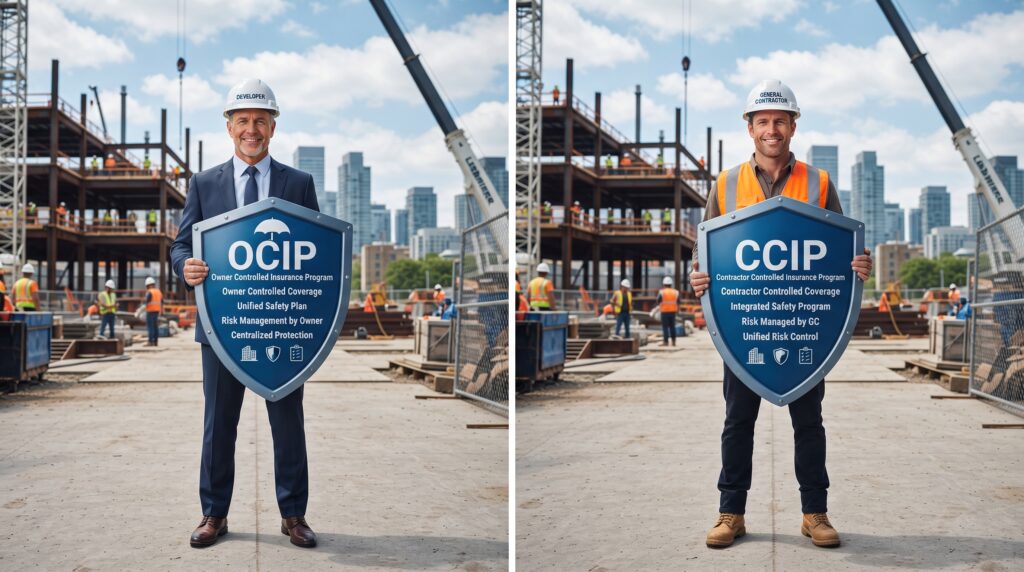
ocip or ccip

OCIP or CCIP: 11 Essential Differences, Benefits, Coverage and Best Choice

When planning a large construction project, understanding OCIP or CCIP can help owners, contractors, and project teams choose an appropriate insurance structure. Both are types of wrap up insurance programs designed to provide coverage for multiple parties working on the same construction project.

OCIP stands for Owner Controlled Insurance Program, while CCIP stands for Contractor Controlled Insurance Program.

The main difference is who controls and sponsors the insurance program. An OCIP is generally arranged and controlled by the project owner, while a CCIP is generally arranged and controlled by the general contractor or construction manager.

Both approaches can help coordinate insurance coverage across a construction project, but the better choice depends on project size, contractual responsibilities, risk management goals, and the parties involved.

 Quick Answer

OCIP is an insurance program controlled by the project owner.

CCIP is an insurance program controlled by the contractor.

Both can provide coverage for multiple contractors and subcontractors under one construction insurance program.

An OCIP may be suitable when the owner wants greater control over project wide insurance, while a CCIP may be appropriate when the contractor is responsible for managing the insurance program.

Neither option is automatically better. The right choice depends on the project’s structure, contracts, risks, size, and insurance requirements.

ocip or ccip

What Is OCIP?

OCIP means Owner Controlled Insurance Program.

It is a construction insurance arrangement in which the project owner sponsors and controls an insurance program covering eligible contractors and subcontractors working on the project.

Instead of requiring every contractor to obtain separate project specific coverage, the owner may establish a centralized insurance program.

An OCIP can potentially simplify insurance administration and provide consistent coverage across participating parties.

How Does OCIP Work?

A typical OCIP may involve:

  1. The owner establishes the insurance program.
  2. Eligible contractors and subcontractors enroll in the program.
  3. The insurance program provides specified coverage.
  4. Contractors coordinate their work under the program requirements.
  5. The owner and insurance professionals manage program administration.

The exact structure and coverage depend on the policy documents and project requirements.

What Is CCIP?

CCIP means Contractor Controlled Insurance Program.

Under a CCIP, the general contractor or another designated contractor typically sponsors and controls the insurance program.

The contractor arranges coverage for eligible subcontractors and manages the insurance requirements associated with the project.

A CCIP can provide centralized insurance management while placing primary program responsibility with the contractor.

How Does CCIP Work?

A typical CCIP may involve:

  1. The contractor establishes the insurance program.
  2. Eligible subcontractors enroll.
  3. Covered parties follow program requirements.
  4. The contractor manages insurance administration.
  5. Claims and compliance are handled according to the program structure.

The exact responsibilities depend on the construction contract and insurance policy.

OCIP vs CCIP: Key Differences

FeatureOCIPCCIP
Full nameOwner Controlled Insurance ProgramContractor Controlled Insurance Program
Program sponsorProject ownerGeneral contractor or designated contractor
Main controllerOwnerContractor
Covered partiesEligible contractors and subcontractorsEligible contractors and subcontractors
Insurance administrationGenerally owner controlledGenerally contractor controlled
Project risk managementOwner ledContractor led
CoverageDepends on policyDepends on policy
Contractor involvementParticipates in owner programManages program
Subcontractor enrollmentUsually requiredUsually required
Project sizeOften used on large projectsOften used on large projects
Best suited forOwners seeking centralized controlContractors seeking centralized control

How OCIP and CCIP Insurance Works

Both programs are often referred to as wrap up insurance programs because they can bring multiple construction participants under a coordinated insurance structure.

The exact policies can vary, but a program may include coverage such as:

  • General liability
  • Workers’ compensation
  • Employers’ liability
  • Excess liability

Not every OCIP or CCIP includes identical coverage. The actual policy terms should always be reviewed carefully.

OCIP Coverage

OCIP coverage can vary depending on the insurer, project, jurisdiction, and policy.

Common coverage may include workers’ compensation and general liability for enrolled participants.

An OCIP may help an owner create consistent insurance requirements across participating contractors.

However, contractors should review exclusions, limits, deductibles, enrollment requirements, and other conditions before relying on the program.

CCIP Coverage

CCIP coverage can similarly provide centralized insurance for eligible project participants.

The contractor typically manages the program and ensures participating subcontractors meet enrollment and compliance requirements.

Coverage may include:

  • General liability
  • Workers’ compensation
  • Employers’ liability
  • Excess liability

The actual coverage depends on the insurance contract.

OCIP or CCIP: Who Controls the Program?

This is the most important distinction.

OCIP

The owner controls the insurance program.

The owner generally decides how the program is structured and works with insurance professionals to administer it.

CCIP

The contractor controls the insurance program.

The general contractor generally manages the program and coordinates participating subcontractors.

This difference can affect administration, risk management, contracts, and decision making.

Cost Comparison

The cost of an OCIP or CCIP depends on many factors.

These can include:

  • Project value
  • Construction type
  • Location
  • Project duration
  • Number of contractors
  • Payroll
  • Exposure to risk
  • Claims history
  • Coverage limits
  • Deductibles
  • Insurance market conditions

A wrap up program may create economies of scale on certain large projects, but it is not automatically cheaper than traditional insurance arrangements.

A proper comparison should consider both insurance premiums and administrative costs.

OCIP or CCIP for Large Construction Projects

OCIPs and CCIPs are often considered for large or complex construction projects because many contractors and subcontractors may be working at the same location.

Centralized insurance can potentially provide:

  • Consistent coverage
  • Centralized administration
  • Better coordination
  • Easier tracking of enrolled contractors
  • More consistent project requirements

However, the suitability of a wrap up program should be evaluated on a project by project basis.

Advantages of OCIP

Better Owner Control

The owner has direct control over the project insurance structure.

Centralized Coverage

Multiple eligible contractors can potentially operate under one insurance program.

Consistent Requirements

The owner can establish consistent insurance requirements for enrolled participants.

Project Wide Risk Management

An OCIP can support a coordinated approach to project risk management.

Potential Administrative Benefits

Centralized insurance administration can reduce duplication in certain circumstances.

Disadvantages of OCIP

Greater Owner Responsibility

The owner takes on significant responsibility for program administration.

Complex Setup

Creating a large insurance program can require considerable planning.

Enrollment Requirements

Contractors and subcontractors must understand and follow enrollment procedures.

Coverage Limitations

Not every risk or contractor activity will necessarily be covered.

Administrative Work

The owner may need to coordinate with brokers, insurers, contractors, and project managers.

Advantages of CCIP

Contractor Control

The general contractor manages the insurance program.

Centralized Administration

Insurance requirements can be coordinated across eligible subcontractors.

Consistent Coverage

Participating subcontractors may operate under a common project insurance structure.

Contractor Led Risk Management

The contractor can align insurance administration with project operations.

Potential Efficiency

A centralized program can reduce duplication for qualifying large projects.

Disadvantages of CCIP

Contractor Responsibility

The contractor takes on significant administrative responsibility.

Complex Enrollment

Subcontractors need to understand the program requirements.

Contract Coordination

The insurance program must be properly integrated into subcontract agreements.

Coverage Differences

The CCIP may not cover every risk or activity performed by every subcontractor.

Potential Administrative Burden

Managing certificates, enrollment, claims, payroll, and compliance can require substantial effort.

OCIP or CCIP: Common Mistakes

Assuming They Are the Same

OCIP and CCIP are both wrap up programs, but their controlling parties are different.

Looking Only at Premium Cost

The cheapest premium does not necessarily represent the lowest overall project cost.

Consider administration, deductibles, coverage limits, exclusions, and risk exposure.

Ignoring Subcontractor Requirements

Subcontractors need clear information about enrollment and coverage requirements.

Failing to Review Exclusions

A wrap up program may exclude certain operations, contractors, or risks.

Not Coordinating Contracts

Insurance provisions should be consistent with the construction contract and subcontract agreements.

Assuming Every Project Needs a Wrap Up

OCIP and CCIP programs are not automatically appropriate for every construction project.

OCIP vs CCIP: Which Is Better?

There is no universal winner.

OCIP May Be Better When:

  • The owner wants direct control.
  • The project is large and complex.
  • The owner wants centralized insurance administration.
  • The owner has strong risk management resources.
  • Multiple contractors need coordinated coverage.

CCIP May Be Better When:

  • The general contractor wants control of the insurance program.
  • The contractor has strong insurance administration capabilities.
  • The project structure places significant responsibility on the contractor.
  • Subcontractor insurance needs to be coordinated centrally.
  • The owner prefers the contractor to manage the program.

The best choice depends on the project’s contracts, risks, insurance market, size, and management structure.

FAQs

What is the difference between OCIP and CCIP?

OCIP means Owner Controlled Insurance Program, while CCIP means Contractor Controlled Insurance Program. The primary difference is who sponsors and controls the insurance program.

Is OCIP better than CCIP?

Not necessarily. OCIP may provide greater owner control, while CCIP gives the contractor greater control. The appropriate choice depends on the project.

Is CCIP cheaper than OCIP?

Neither is automatically cheaper. Cost depends on project size, risks, insurance terms, claims history, coverage limits, and other factors.

Who pays for an OCIP?

The project owner generally sponsors the OCIP and arranges the program, but the economic cost can be incorporated into project pricing and contracts.

Who pays for a CCIP?

The contractor generally sponsors the CCIP, with costs handled according to the construction contract and project pricing structure.

What does OCIP stand for?

OCIP stands for Owner Controlled Insurance Program.

What does CCIP stand for?

CCIP stands for Contractor Controlled Insurance Program.

Are subcontractors covered by OCIP?

Eligible subcontractors can be covered when they properly enroll in the program and their work falls within the policy’s coverage.

Are subcontractors covered by CCIP?

Eligible subcontractors can be covered under a CCIP when they meet the program’s enrollment and coverage requirements.

What insurance does an OCIP cover?

Coverage varies, but an OCIP may include workers’ compensation, employers’ liability, general liability, and excess liability.

What insurance does a CCIP cover?

A CCIP may include workers’ compensation, employers’ liability, general liability, and excess liability, depending on the policy.

Is OCIP or CCIP better for a large construction project?

Both can work well for large projects. An OCIP may suit an owner seeking centralized control, while a CCIP may suit a contractor responsible for centralized insurance management.

Conclusion 

When comparing OCIP or CCIP, the main difference is who controls the construction insurance program.

An OCIP, or Owner Controlled Insurance Program, is generally sponsored and managed by the project owner.

A CCIP, or Contractor Controlled Insurance Program, is generally sponsored and managed by the general contractor.

Both can provide centralized insurance coverage for eligible contractors and subcontractors, potentially improving consistency and coordination on large construction projects.

Choose an OCIP when owner control and centralized owner led risk management are important.

Choose a CCIP when the contractor is better positioned to manage insurance administration and project risk.

Ultimately, the right choice depends on the project’s size, contracts, insurance requirements, risk profile, budget, and management structure. Because insurance terms and construction laws vary by jurisdiction, project owners and contractors should obtain advice from qualified insurance and legal professionals before selecting a program.

Scroll to Top