
ointment or cream

Ointment or Cream: 7 Ultimate Differences Explained for the Best Skin Care Choice

Ointment or Cream: Which One Should You Use?

If you are treating dry skin, rashes, burns, or irritation, you may see both ointment or cream recommended.

They can contain similar medicines or moisturizers, but the base they are made in is very different. This changes how they feel on the skin, how fast they absorb, and how strong their effect is.

Although they are often used for similar conditions, they are not the same in performance or purpose

Quick Answer : Ointment or Cream

Ointments are thick, oily, and provide strong moisture by locking in hydration.

Creams are lighter, less greasy, and absorb faster into the skin.

Choose ointment for very dry or damaged skin. Choose cream for daily use and lighter hydration.
ointment or cream


What Is an Ointment?

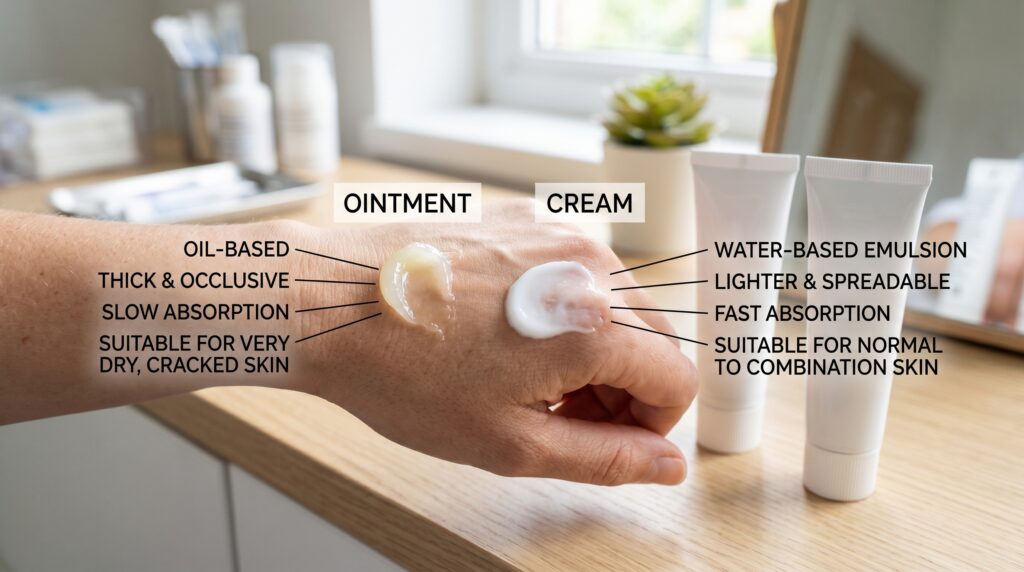
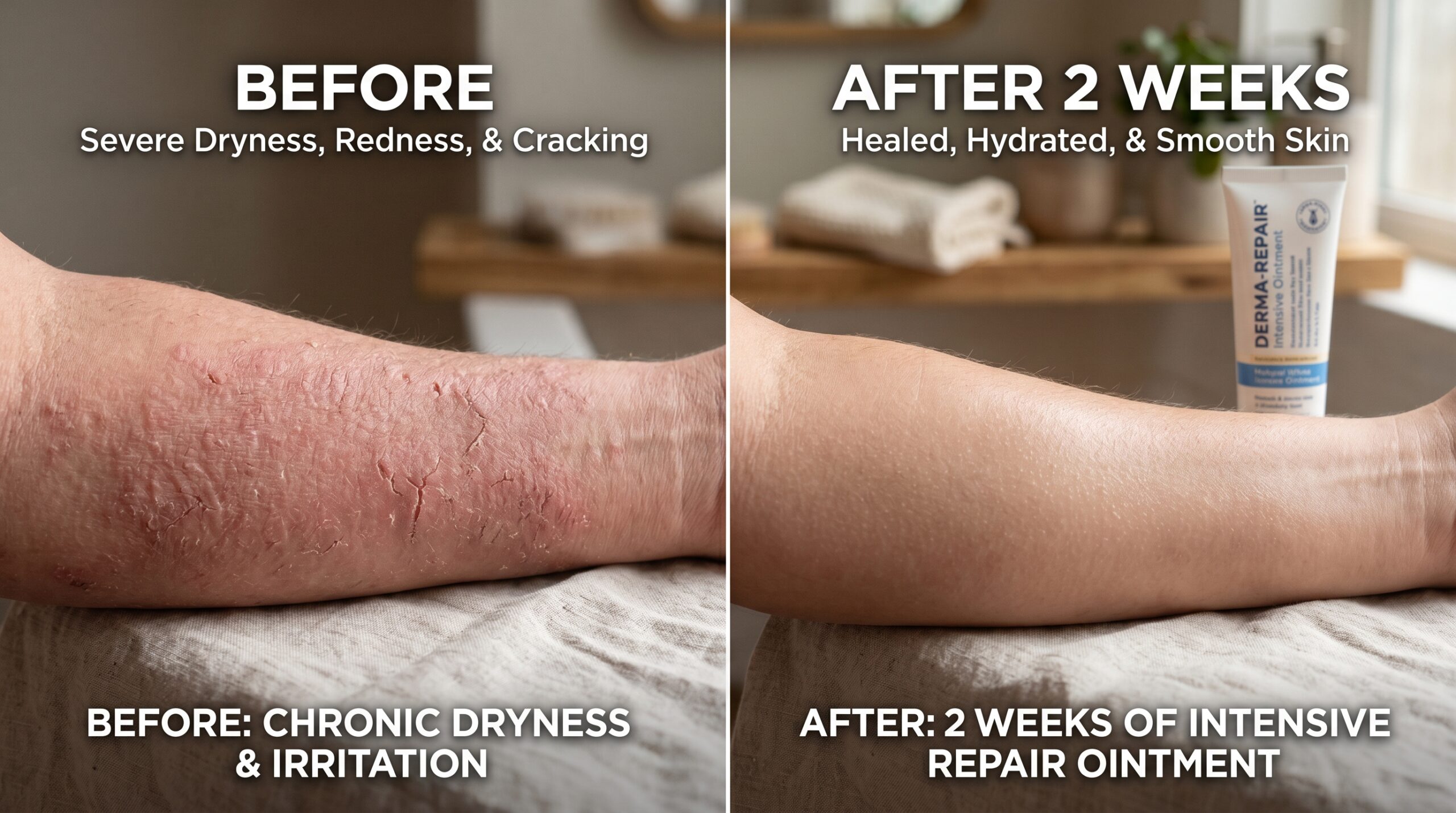
Ointment is a thick, oil based topical product designed to protect and deeply moisturize the skin.

Key Features

  • Thick and greasy texture
  • Strong barrier over the skin
  • High moisture retention
  • Slow absorption
  • Long lasting protection

Best For

  • Very dry skin
  • Cracked heels or lips
  • Eczema and severe irritation
  • Overnight healing treatments

Key Insight

Ointments stay on the skin longer and prevent moisture loss.


What Is a Cream?

Cream is a lighter, water and oil based product that absorbs quickly into the skin.

Key Features

  • Lightweight texture
  • Fast absorption
  • Less greasy feel
  • Easier to spread
  • Suitable for daily use

Best For

  • Mild dryness
  • Everyday moisturizing
  • Sensitive skin care routines
  • Face and exposed skin areas

Key Insight

Creams balance hydration and comfort without feeling heavy.


Ointment vs Cream: Key Differences

Main Differences

  • Ointments are thicker, creams are lighter
  • Ointments stay longer on skin, creams absorb faster
  • Ointments are more greasy, creams are less greasy
  • Ointments provide stronger moisture barrier
  • Creams are better for daily use and daytime application
  • Ointments are better for healing and repair
  • Creams feel more comfortable for facial use

Comparison Table of Ointment or Cream

FeatureOintmentCream
TextureThick and oilyLight and smooth
AbsorptionSlowFast
Moisture LevelVery highModerate
GreasinessHighLow
Best UseSevere dryness, healingDaily skincare
Skin ProtectionStrong barrierModerate barrier
ComfortHeavy feelLight feel
Application TimeNight use preferredDay and night use

Real World Usage Scenarios

Scenario 1

Person: “My hands are very cracked and painful.”

Doctor: “Use an ointment.”

🎯 Lesson: Ointments are best for severe dryness.


Scenario 2

Person: “I want a moisturizer for daily use on my face.”

Skin specialist: “A cream is better.”

🎯 Lesson: Creams are lighter and suitable for daily routines.


Scenario 3

Person: “My skin feels oily after applying product.”

Specialist: “Switch to a cream.”

🎯 Lesson: Ointments can feel too heavy for daytime use.


Scenario 4

Person: “I have eczema patches that are very dry.”

Doctor: “Ointment will help lock in moisture.”

🎯 Lesson: Ointments protect damaged skin better.


Scenario 5

Person: “I need something for work hours.”

Advice: “Use cream during the day, ointment at night.”

🎯 Lesson: Combination use is often ideal.


Common Mistakes

Mistake 1: Using Ointment on Oily Skin

Why it happens:

People think stronger means better.

Correction:

Ointments can clog pores for some skin types.


Mistake 2: Using Cream for Severe Dryness

Why it happens:

Cream feels more comfortable.

Correction:

Cream may not provide enough protection.


Mistake 3: Applying Too Much Product

Why it happens:

More product seems more effective.

Correction:

Thin layers work better for both.


Mistake 4: Ignoring Skin Type

Why it happens:

One product is used for all conditions.

Correction:

Choice depends on severity and skin needs.


Memory Tricks

Remember Ointment

Ointment = Oil shield

Think: heavy protection and healing.

Remember Cream

Cream = Comfortable care

Think: light, daily hydration.


Expert Insight

Ointments contain a higher percentage of oil, which creates an occlusive layer on the skin. This reduces transepidermal water loss and helps damaged skin retain moisture for longer periods.

Creams contain a balance of water and oil, making them more cosmetically elegant and suitable for regular application. They are widely used in dermatology for maintenance therapy, while ointments are often used for acute or severe skin conditions.

In clinical practice, dermatologists often recommend using both depending on time of day and severity of the condition.

Conclusion : Ointment or Cream

When comparing ointment or cream, the best choice depends on your skin needs.

  • Choose an ointment for deep moisture, healing, and very dry or damaged skin
  • Choose a cream for daily use, lighter hydration, and comfort
  • Ointments are stronger but heavier, creams are lighter but less intensive
  • Both play important roles in skincare routines

If you want protection and repair, go with ointment. If you want comfort and daily hydration, go with cream.

Scroll to Top