
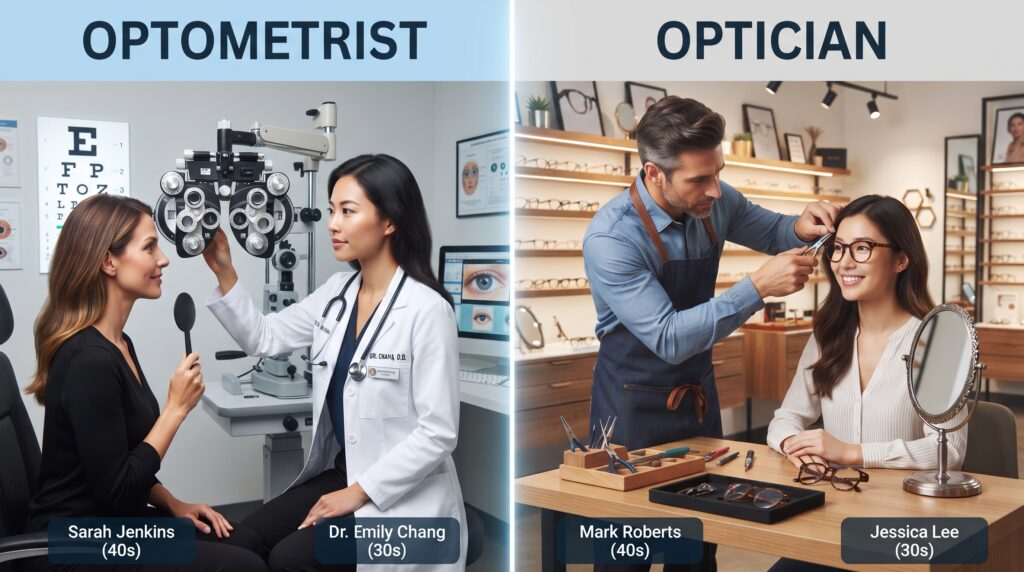
Choosing between an optician or optometrist can be confusing because both professionals work in eye care. However, their education, responsibilities, and services are different.
An optometrist is a healthcare professional who examines eyes, checks vision, identifies many eye conditions, and provides prescriptions for glasses or contact lenses. An optician uses those prescriptions to help patients select, fit, adjust, and maintain glasses and other vision correction products.
In simple terms, an optometrist focuses mainly on eye examinations and vision health, while an optician focuses mainly on eyewear and fitting.
Understanding the difference between an optician and an optometrist can help you choose the right professional for your needs.
Quick Answer
The simple answer is:
Visit an optometrist for an eye examination, vision assessment, prescription, or evaluation of many common eye problems. Visit an optician when you need glasses or contact lenses fitted, adjusted, or supplied according to a prescription.
An optometrist may:
- Perform eye examinations
- Test vision
- Prescribe glasses
- Prescribe contact lenses
- Identify signs of eye disease
- Manage certain eye conditions
- Refer patients to ophthalmologists when necessary
An optician may:
- Interpret prescriptions
- Help choose frames
- Fit glasses
- Adjust frames
- Measure for lenses
- Dispense contact lenses
- Repair or maintain eyewear
The exact scope of practice varies by country and local regulations.
What Is an Optician?
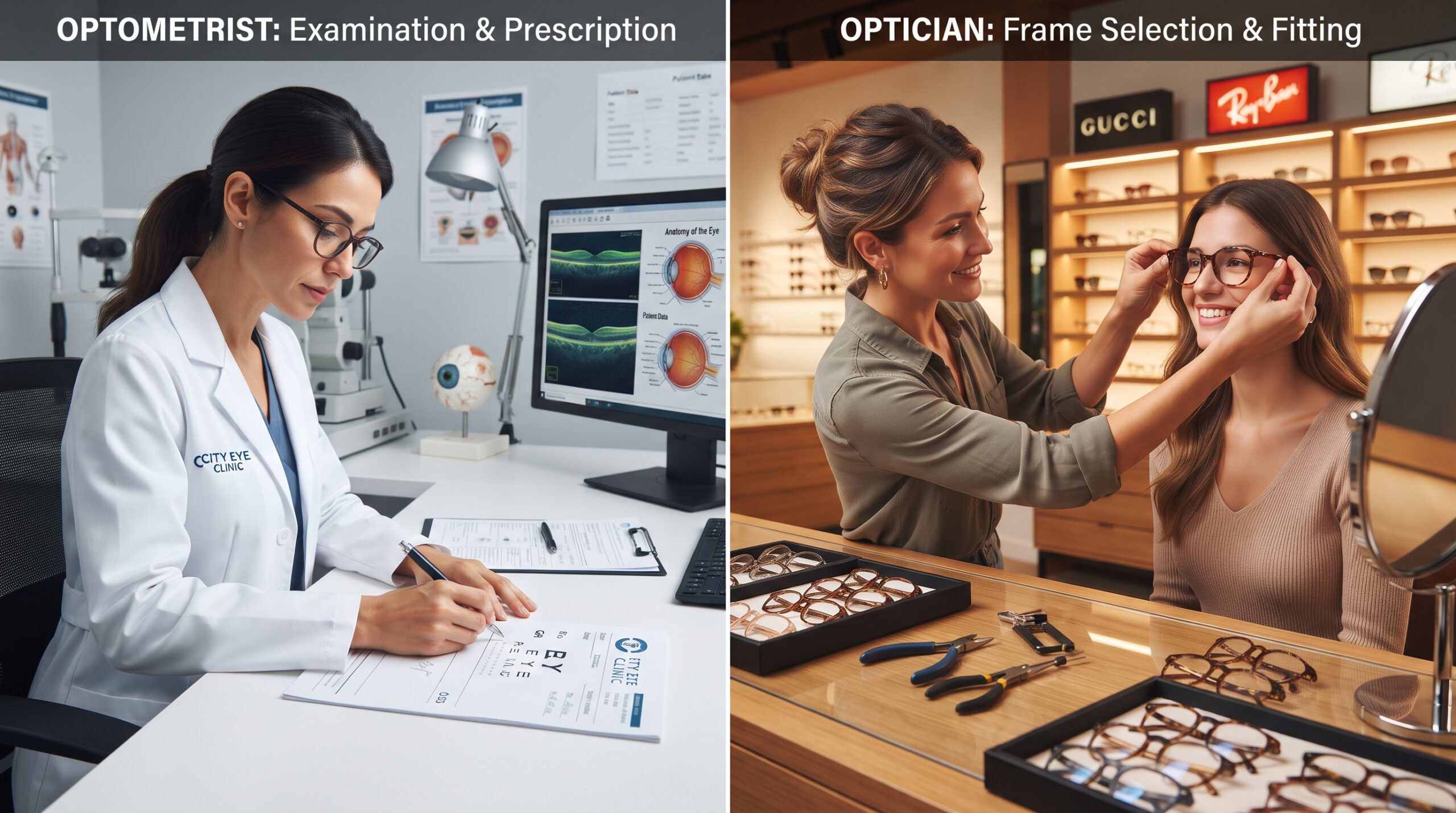
An optician is a professional who specializes in preparing and fitting eyewear based on a prescription from an optometrist, ophthalmologist, or other qualified eye care professional.
Opticians commonly help customers choose suitable:
- Eyeglass frames
- Lenses
- Contact lenses
- Protective eyewear
- Specialty eyewear
They also measure the fit of glasses and make adjustments so that the frames sit correctly.
For example, if your glasses constantly slide down your nose, an optician can often adjust the frame for a better fit.
Opticians generally do not perform comprehensive eye examinations or diagnose eye diseases.
What Is an Optometrist?
An optometrist is a healthcare professional who provides primary eye and vision care.
Optometrists perform eye examinations and assess visual function. Depending on local laws and qualifications, they can diagnose and manage various eye conditions and prescribe corrective lenses.
An optometrist may examine patients for:
- Nearsightedness
- Farsightedness
- Astigmatism
- Presbyopia
- Glaucoma
- Cataracts
- Retinal problems
- Other eye conditions
If a patient needs advanced treatment or surgery, an optometrist may refer them to an ophthalmologist or another specialist.
Optician vs Optometrist: Key Differences
| Feature | Optician | Optometrist |
|---|---|---|
| Main role | Eyewear and fitting | Eye and vision care |
| Eye examination | Usually no | Yes |
| Vision testing | Limited or prescription based | Yes |
| Diagnoses eye disease | No | Yes, within scope of practice |
| Prescribes glasses | Usually does not create prescription | Yes |
| Fits glasses | Yes | May help with fitting |
| Adjusts frames | Yes | Sometimes |
| Contact lenses | Fits or dispenses | Examines and prescribes |
| Medical eye care | No | Yes, within professional scope |
| Referral | May recommend eye examination | Can refer to ophthalmologist |
| Best for | Eyewear needs | Eye examination and vision health |
1. Education and Training
The education required for opticians and optometrists is different.
Opticians receive specialized education and practical training focused on eyewear, lenses, measurements, fitting, and dispensing.
Optometrists complete professional education focused on eye health, vision science, eye examinations, diagnosis, and management.
The exact training requirements vary significantly between countries.
This difference in training explains why the two professionals have different responsibilities.
2. Eye Examinations
If you need a comprehensive eye examination, an optometrist is generally the appropriate professional.
An optometrist can assess your visual acuity and examine different structures and functions of the eye.
An optician usually works from an existing prescription rather than performing a full medical eye examination.
3. Glasses
Both professionals can be involved in the process of getting glasses, but their roles are different.
An optometrist determines the prescription.
An optician uses that prescription to help you select appropriate lenses and frames and ensures that the finished glasses fit correctly.
For example:
Optometrist: Determines your prescription.
Optician: Helps turn that prescription into properly fitted eyewear.
4. Contact Lenses
Contact lenses require more than simply choosing a lens from a shelf.
An optometrist or appropriately qualified eye care professional can assess whether contact lenses are suitable and determine the appropriate prescription and fitting requirements.
An optician may help dispense or fit contact lenses depending on their training and local regulations.
Because poorly fitted contact lenses can cause eye problems, professional guidance is important.
5. Eye Disease
Optometrists are trained to identify signs of many eye conditions.
During an eye examination, an optometrist may identify findings that require monitoring, treatment, or referral.
Opticians generally do not diagnose eye diseases.
If an optician notices something concerning while working with a customer, they may recommend an eye examination.
6. Prescription
An optometrist can determine and provide a vision prescription within the scope of their professional practice.
The prescription may include measurements needed for:
- Distance vision
- Near vision
- Astigmatism correction
- Reading correction
- Contact lenses
The optician then uses the prescription to prepare suitable eyewear.
7. Eyewear Fitting
This is one of the areas where opticians play an especially important role.
An optician can measure and adjust:
- Frame width
- Lens positioning
- Nose pad placement
- Temple fit
- Frame alignment
- Lens measurements
Correct fitting can improve comfort and ensure that lenses are positioned appropriately in front of the eyes.
8. Eye Health Advice
Optometrists can provide advice related to eye and vision health.
They may discuss:
- Vision changes
- Eye strain
- Contact lens hygiene
- Dry eye symptoms
- Protective eyewear
- Follow up examinations
Opticians can also provide practical advice about eyewear care and use.
9. Referrals
An optometrist may refer a patient to an ophthalmologist or another specialist if advanced investigation or treatment is required.
For example, a patient with a potentially serious eye condition may need specialist medical treatment or surgery.
An optician may recommend that a customer visit an optometrist if they have not had a recent eye examination or report concerning vision symptoms.
10. Cost
The cost of seeing an optician or optometrist varies by country, clinic, insurance coverage, and type of service.
An eye examination may have a separate cost from glasses or contact lenses.
Eyewear prices can also vary considerably depending on:
- Frame material
- Brand
- Lens type
- Prescription
- Coatings
- Contact lens type
- Additional features
For an accurate price, check the current fees charged by your local eye care provider.
11. Best Choice
The best choice depends on what you need.
Choose an optometrist when:
- You need an eye examination
- Your vision has changed
- You need a new prescription
- You have unexplained eye symptoms
- You are concerned about eye health
- You need contact lens assessment
- You need referral for specialist care
Choose an optician when:
- You already have a prescription
- You need new glasses
- You want help choosing frames
- Your glasses need adjustment
- Your eyewear needs repair
- You need help with lens options
Optician or Optometrist for Glasses
If you need a new pair of glasses and already have a current prescription, an optician is usually the professional who helps you select and fit the eyewear.
They can explain different lens options and help ensure the frame fits comfortably.
If you do not have a current prescription, you may first need an eye examination with an optometrist.
Optician or Optometrist for an Eye Test
For a comprehensive eye test, choose an optometrist or another appropriately qualified eye care professional who is legally authorized to perform eye examinations in your location.
An eye examination is not simply about determining whether you need stronger glasses.
It can also help identify signs of certain eye conditions.
Optician or Optometrist for Contact Lenses
Contact lens wearers need an appropriate prescription and fitting.
An optometrist may assess your eyes, determine whether contact lenses are suitable, and provide the necessary prescription.
An optician may assist with dispensing and fitting depending on their qualifications and local regulations.
Always follow professional instructions for cleaning, wearing, and replacing contact lenses.
Pros and Cons
Optician
Pros
- Specializes in eyewear
- Helps choose frames
- Provides professional fitting
- Adjusts glasses
- Helps with lens selection
- Can explain eyewear options
Cons
- Does not generally provide comprehensive eye examinations
- Does not diagnose eye diseases
- Usually works from an existing prescription
- Scope of practice varies by location
Optometrist
Pros
- Performs eye examinations
- Assesses vision
- Identifies many eye conditions
- Provides prescriptions
- Can provide eye health advice
- Can refer patients to specialists
Cons
- May not provide the same level of detailed eyewear fitting as an optician
- Some advanced eye conditions require an ophthalmologist
- Services and prescribing authority vary by country
Common Mistakes When Choosing an Optician or Optometrist
Mistake 1: Assuming They Have the Same Role
Opticians and optometrists are both involved in eye care, but their responsibilities are different.
Mistake 2: Visiting an Optician for an Eye Disease
If you have concerning eye symptoms, an eye examination is more appropriate than simply purchasing new glasses.
Mistake 3: Buying Glasses Without a Current Prescription
If your vision has changed, an eye examination may be necessary before ordering new lenses.
Mistake 4: Ignoring Changes in Vision
Sudden or significant changes in vision should not simply be treated by purchasing stronger glasses.
Mistake 5: Choosing Glasses Based Only on Appearance
Frame style matters, but comfort, fit, lens requirements, and correct measurements are also important.
Mistake 6: Ignoring Local Regulations
The exact roles of opticians and optometrists differ between countries.
Always check the qualifications and services offered by your local provider.
When Should You See an Eye Care Professional?
You should arrange an eye examination if you notice:
- Blurred vision
- Difficulty seeing at night
- Frequent headaches related to vision
- Difficulty reading
- Double vision
- New floaters
- Changes in peripheral vision
- Difficulty focusing
- Increasing sensitivity to light
Sudden vision loss, severe eye pain, a sudden increase in floaters or flashes, or a curtain or shadow across your vision can require urgent medical attention.
Do not wait for a routine glasses appointment if you experience sudden or severe eye symptoms.
FAQs
Is an optician the same as an optometrist?
No. An optician mainly specializes in preparing, fitting, adjusting, and dispensing eyewear, while an optometrist provides eye examinations and vision care.
Is an optometrist a doctor?
Optometrists are healthcare professionals trained in eye and vision care. Their professional title and scope of practice vary by country.
Can an optician test your eyes?
The answer depends on the country and the optician’s qualifications. In many places, comprehensive eye examinations are performed by optometrists or other specifically qualified eye care professionals.
Can an optometrist prescribe glasses?
Yes. Optometrists can determine prescriptions for glasses within their professional scope of practice.
Should I see an optician or optometrist for glasses?
If you already have a current prescription, an optician can usually help you select and fit glasses. If you need an eye examination or a new prescription, see an optometrist or another qualified eye care professional first.
Should I see an optician or optometrist for an eye test?
An optometrist is generally the appropriate choice for a comprehensive eye examination.
Can an optician diagnose eye disease?
Opticians generally do not diagnose eye disease. Their primary role is related to eyewear and fitting.
Can an optometrist diagnose eye problems?
Optometrists are trained to examine the eyes and identify and manage many eye conditions within the scope of their professional practice.
Who is better for contact lenses?
Both professionals can be involved, depending on their qualifications and local regulations. An optometrist can assess your eyes and determine an appropriate contact lens prescription and fitting requirements.
What is the difference between an optician and an ophthalmologist?
An optician specializes in eyewear. An optometrist provides primary eye and vision care. An ophthalmologist is a medical doctor specializing in eye disease and can perform eye surgery.
How often should I have an eye examination?
The appropriate frequency depends on your age, eye health, risk factors, symptoms, and recommendations from your eye care professional. People with certain conditions may need more frequent examinations.
Can an optician adjust my glasses?
Yes. Adjusting and fitting glasses is one of the main services provided by opticians.
Conclusion
The choice between an optician or optometrist depends on what kind of eye care you need.
An optometrist is generally the better choice when you need an eye examination, vision assessment, prescription, contact lens evaluation, or assessment of possible eye problems.
An optician is the better choice when you already have a prescription and need help choosing, fitting, adjusting, or maintaining glasses or other eyewear.
The two professionals often work together. An optometrist determines the prescription and evaluates eye health, while an optician helps turn that prescription into comfortable, properly fitted eyewear.
If you have new or concerning vision symptoms, don’t simply replace your glasses. Arrange an appropriate eye examination so the underlying cause can be evaluated.