
Pamphlet or Brochure: What’s the Difference?
If you’re creating marketing materials, educational handouts, or informational documents, you may wonder whether you need a pamphlet or a brochure.
Many people use these terms interchangeably because both are printed documents designed to share information. However, they serve different purposes and are typically structured differently.
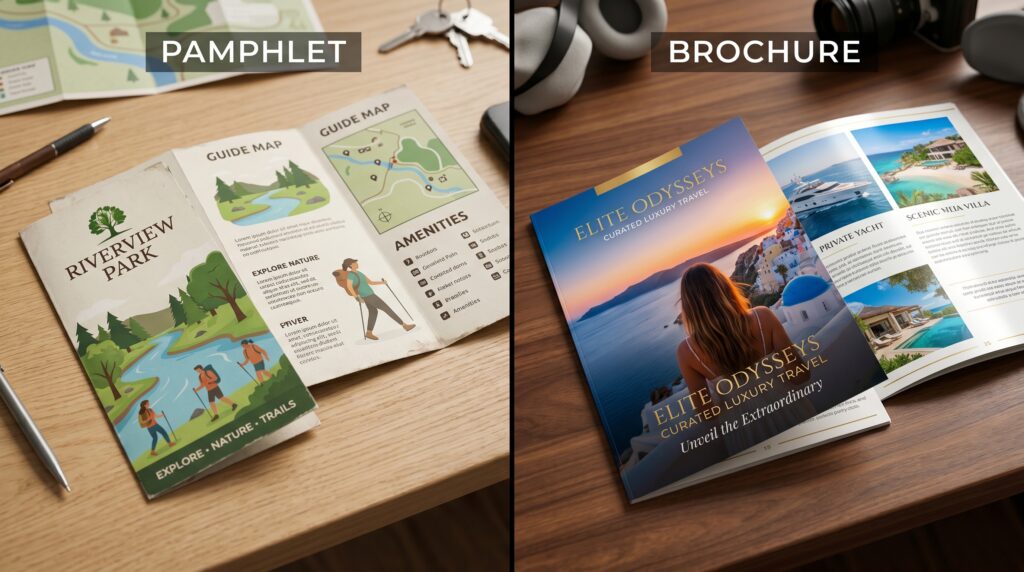
Although they look similar at first glance, they serve completely different purposes. A pamphlet is usually designed to educate or inform, while a brochure is often created to promote products, services, organizations, or events.
This guide explains the differences clearly, helping you choose the right format for your goals.
Quick Answer : Pamphlet or Brochure
A pamphlet is an informational document designed to educate, explain, or raise awareness about a topic.
A brochure is a promotional document designed to market a business, product, service, destination, or event.
In simple terms, pamphlets inform, while brochures promote.
What Is a Pamphlet?
Definition
A pamphlet is a printed or digital publication that provides information, instructions, guidance, or awareness about a specific subject.
Usage Rules
Pamphlets are commonly used for:
- Public awareness campaigns
- Health education
- Government information
- Community programs
- Instructional guides
- Nonprofit outreach
Examples
Example 1
A hospital distributes a pamphlet explaining heart disease prevention.
Example 2
A government agency publishes a pamphlet about voter registration.
Example 3
A nonprofit organization creates a pamphlet on environmental conservation.
Key Insight
The primary purpose of a pamphlet is to educate rather than sell.
What Is a Brochure?
Definition
A brochure is a marketing document created to promote a business, product, service, organization, or event.
Usage Rules
Brochures are commonly used for:
- Business marketing
- Tourism promotion
- Product advertising
- Real estate marketing
- School and university recruitment
- Event promotion
Examples
Example 1
A hotel distributes brochures highlighting accommodations and amenities.
Example 2
A travel agency creates a brochure showcasing vacation packages.
Example 3
A university uses brochures to attract prospective students.
Key Insight
The primary purpose of a brochure is to persuade and promote.
Pamphlet vs Brochure: Key Differences
Main Differences
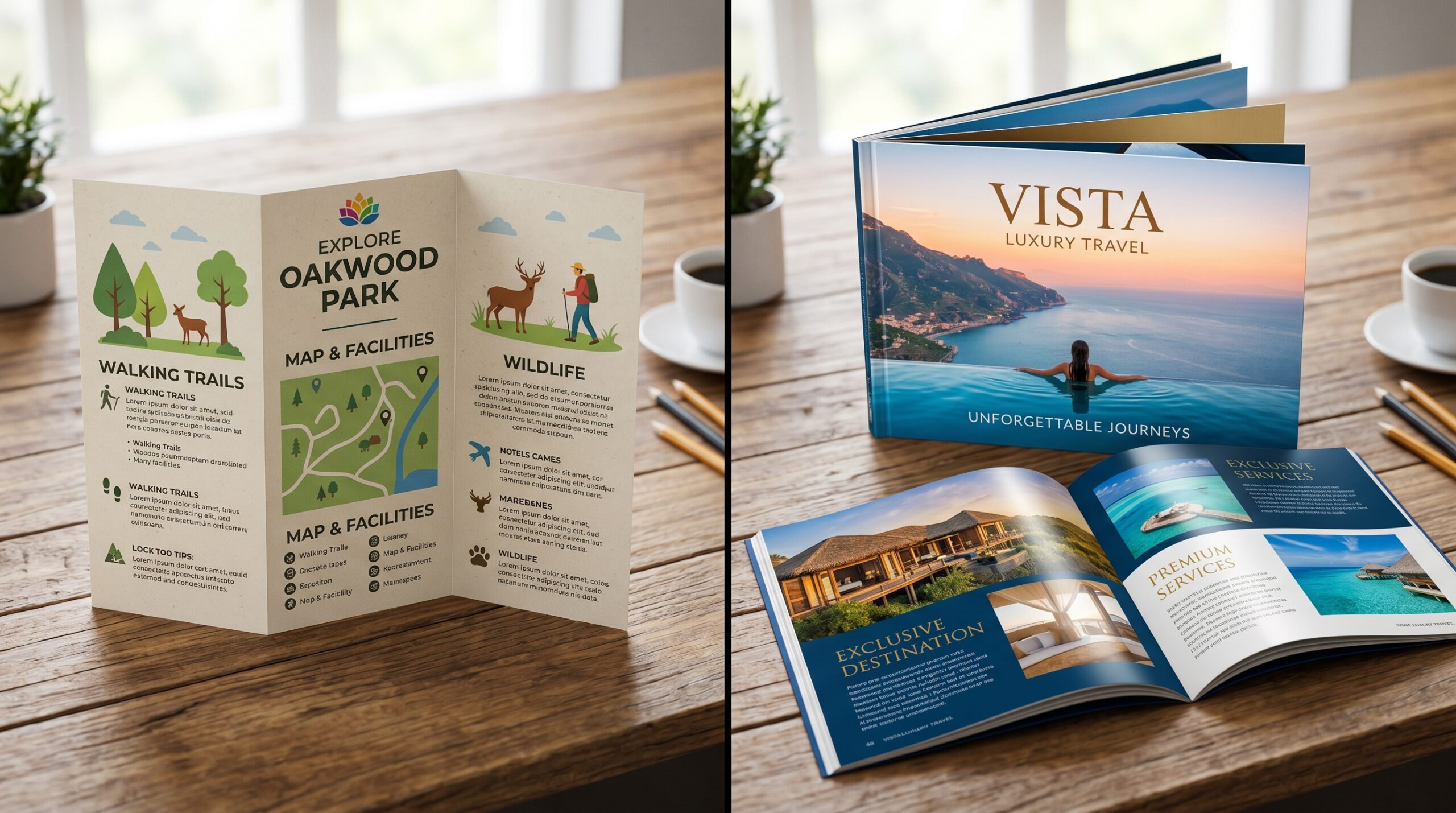
- Pamphlets focus on information and education.
- Brochures focus on promotion and marketing.
- Pamphlets often contain more explanatory content.
- Brochures emphasize visuals and branding.
- Pamphlets are common in public services.
- Brochures are common in business and advertising.
Comparison Table
| Feature | Pamphlet | Brochure |
|---|---|---|
| Primary Purpose | Inform and educate | Promote and market |
| Content Style | Educational | Promotional |
| Visual Design | Simple | Highly designed |
| Branding Focus | Limited | Strong |
| Common Users | Governments, hospitals, nonprofits | Businesses, hotels, universities |
| Call to Action | Sometimes | Usually prominent |
| Sales Objective | Rare | Common |
| Reader Goal | Learn | Consider or buy |
Real-World Usage Scenarios
Scenario 1
Organization: “We want to educate people about diabetes.”
Designer: “A pamphlet is likely the better choice.”
🎯 Lesson: Educational topics are ideal for pamphlets.
Scenario 2
Business: “We want more customers.”
Designer: “A brochure can showcase your services.”
🎯 Lesson: Marketing goals favor brochures.
Scenario 3
Government Agency: “We need to explain a public program.”
Designer: “Use a pamphlet.”
🎯 Lesson: Information-heavy content works well in pamphlets.
Scenario 4
Resort Owner: “We want travelers to book vacations.”
Designer: “Create a brochure.”
🎯 Lesson: Promotional content belongs in brochures.
Scenario 5
University: “We want to attract new students.”
Designer: “A brochure can highlight programs and campus life.”
🎯 Lesson: Recruitment campaigns often use brochures.
Common Mistakes
Mistake 1: Treating Them as Identical
Why it happens:
Both are printed informational materials.
Correction:
Their objectives are different.
Mistake 2: Using a Pamphlet for Sales Purposes
Why it happens:
People focus only on distributing information.
Correction:
Marketing campaigns usually benefit more from brochures.
Mistake 3: Overloading a Brochure With Text
Why it happens:
Writers try to include every detail.
Correction:
Brochures should balance visuals and concise messaging.
Mistake 4: Ignoring Audience Intent
Why it happens:
Design choices are made without considering reader goals.
Correction:
Match the format to what the audience needs.
Memory Tricks
Remember Pamphlet
Pamphlet = Public Information
Think education, awareness, and guidance.
Remember Brochure
Brochure = Business Promotion
Think marketing, branding, and sales.
Expert Insight
Historically, pamphlets were used to spread information, opinions, and public messages. Governments, educational institutions, and advocacy groups relied on pamphlets to educate large audiences.
Brochures evolved as marketing tools designed to attract customers and generate interest in products and services. Modern brochures often use professional photography, branding, persuasive copywriting, and strong calls to action.
While digital marketing has grown rapidly, both pamphlets and brochures remain valuable communication tools because they serve different audience needs and objectives.
Conclusion: Pamphlet or Brochure
When comparing pamphlet or brochure, the most important difference is purpose.
- Choose a pamphlet when your goal is to educate, inform, or raise awareness.
- Choose a brochure when your goal is to promote, market, or persuade.
- Consider your audience, message, and desired outcome before selecting a format.
By understanding these differences, you can create more effective communication materials that achieve your objectives and deliver the right message to the right audience.
