
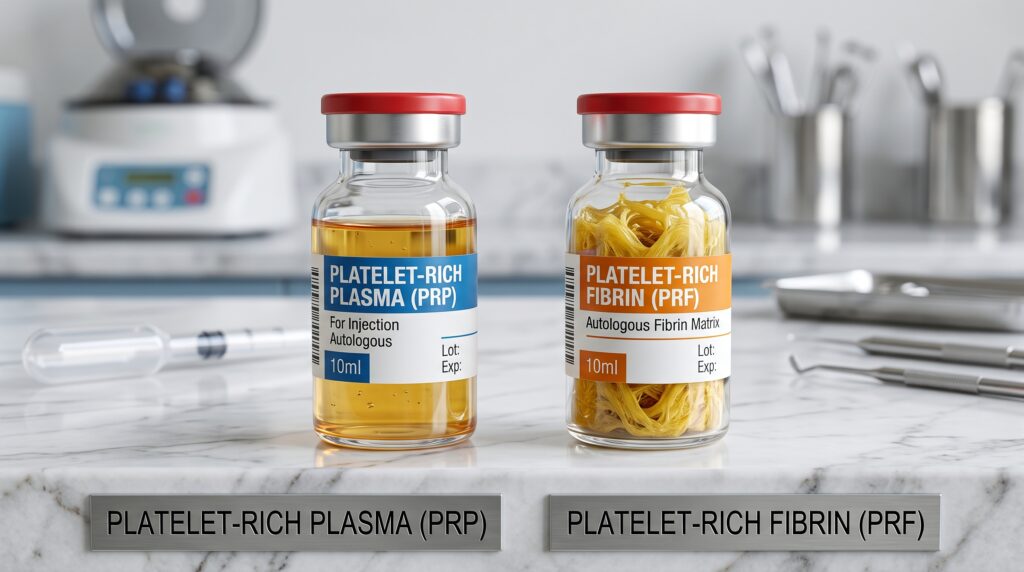
PRF or PRP: 7 Powerful Differences Explained to Understand the Better Option
Choosing between PRF or PRP can be confusing because both treatments use platelet based technology from a person’s own blood. They are often discussed in aesthetics, hair restoration, and regenerative treatments.
Many people think PRF and PRP are the same, but they have important differences in preparation, platelet concentration, growth factor release, and how long they work in the body.
Although both methods use natural healing properties, the right choice depends on the treatment goal and individual needs. This guide explains PRF vs PRP, including how they work, benefits, differences, and common mistakes.
Quick Answer: PRF or PRP?
PRP (Platelet Rich Plasma) contains a higher concentration of platelets and releases growth factors quickly. PRF (Platelet Rich Fibrin) creates a fibrin structure that allows slower and longer release of healing factors.
PRP is commonly used for faster stimulation, while PRF focuses on gradual and sustained results.
What Is PRP?
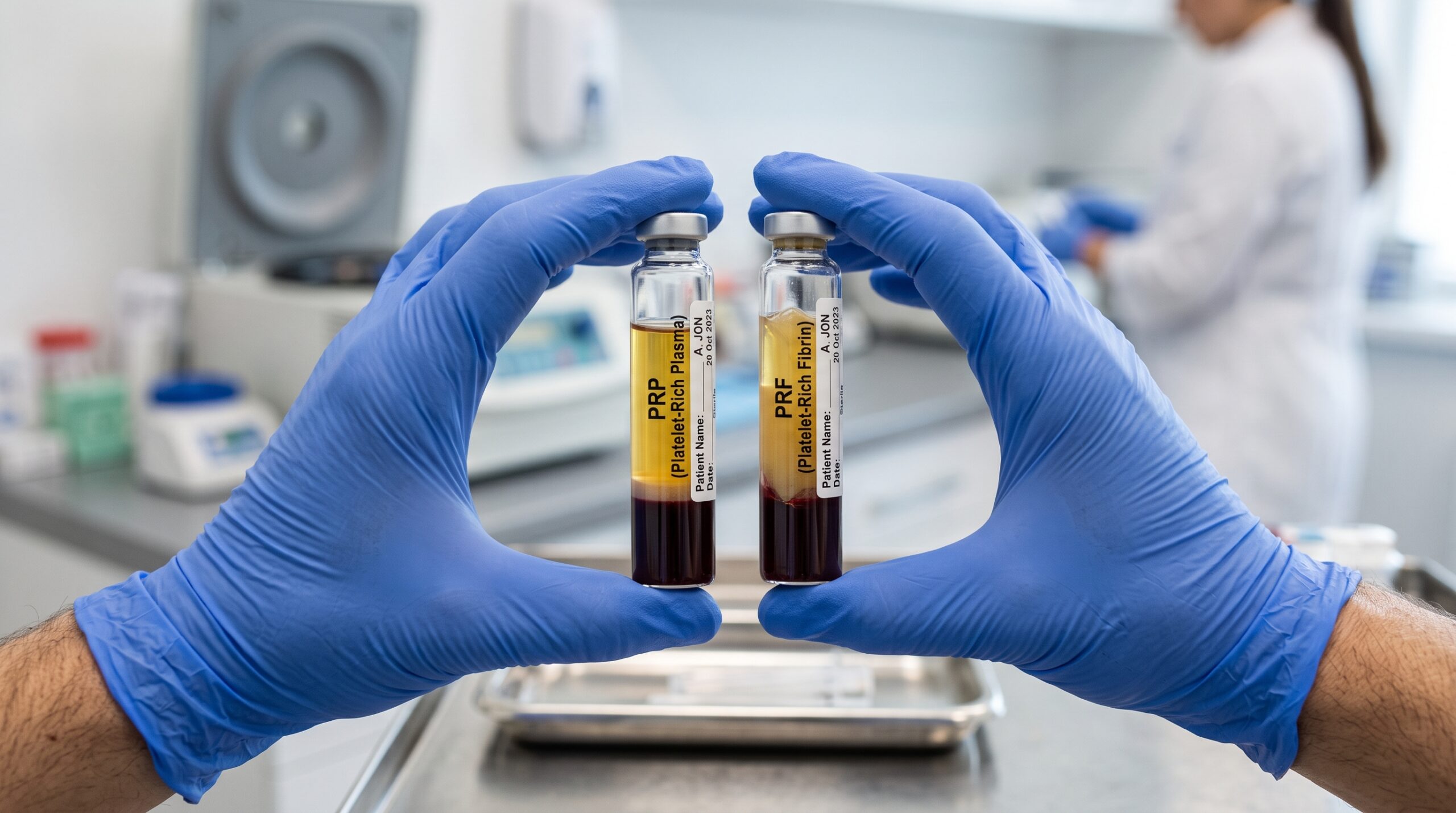
PRP (Platelet Rich Plasma) is a treatment that uses a concentrated amount of platelets from a person’s own blood.
During the process:
• Blood is collected
• It is processed in a centrifuge
• Platelet rich plasma is separated
• The plasma is used in the treatment area
PRP contains growth factors that support tissue repair and regeneration.
Common Uses of PRP
PRP is used for:
• Hair restoration
• Skin rejuvenation
• Sports injuries
• Tissue healing support
Key insight: PRP delivers a strong concentration of growth factors quickly.
What Is PRF?
PRF (Platelet Rich Fibrin) is a newer platelet based treatment that uses a natural fibrin matrix.
Unlike PRP, PRF is usually processed without anticoagulants, allowing fibrin to form naturally.
This fibrin structure helps release growth factors gradually over time.
Common Uses of PRF
PRF is used for:
• Facial rejuvenation
• Skin improvement
• Hair treatments
• Natural tissue support
Key insight: PRF focuses on a slower and longer lasting release of healing components.
PRF vs PRP: Main Differences
| Feature | PRF | PRP |
|---|---|---|
| Full Form | Platelet Rich Fibrin | Platelet Rich Plasma |
| Release Speed | Slow and gradual | Faster release |
| Structure | Fibrin matrix | Liquid plasma |
| Platelet Level | Moderate concentration | Higher concentration |
| Processing | Usually no anticoagulant | Often uses anticoagulant |
| Duration | Longer natural release | Faster action |
How Do PRF and PRP Work?
Both treatments use platelets, which contain growth factors involved in natural healing.
PRP Process
PRP separates platelet rich plasma and introduces it into the target area.
The goal is to quickly deliver growth factors.
PRF Process
PRF creates a fibrin network that acts like a natural support structure.
This allows growth factors to be released more slowly.
Real World Usage Scenarios
Example 1: Hair Treatment
Person:
“I want a platelet based option for hair support.”
Possible options:
PRP or PRF
🎯 Lesson: Both may be considered depending on treatment goals.
Example 2: Skin Rejuvenation
Person:
“I prefer a gradual natural improvement.”
Possible option:
PRF
🎯 Lesson: PRF is designed for slower growth factor release.
Example 3: Faster Stimulation
Person:
“I want a treatment known for stronger platelet concentration.”
Possible option:
PRP
🎯 Lesson: PRP provides a concentrated platelet approach.
Common Mistakes About PRF or PRP
Mistake 1: Thinking PRF and PRP are identical
Why it happens:
Both come from blood and use platelets.
Correction:
Their preparation methods and release patterns are different.
Mistake 2: Assuming one treatment works for everyone
Why it happens:
Online information often sounds universal.
Correction:
Results depend on the person, treatment area, and professional evaluation.
Mistake 3: Choosing only based on popularity
Why it happens:
One option may be more widely known.
Correction:
The right option depends on your specific goal.
Memory Trick: PRF vs PRP
Remember:
PRP = Platelets Released Promptly
PRF = Fibrin Releases Gradually
Expert Insight: Which Is Better, PRF or PRP?
Neither treatment is automatically better for every situation.
PRP may be preferred when a stronger platelet concentration and quicker growth factor release are desired.
PRF may be preferred when a more natural fibrin structure and gradual release are important.
A qualified healthcare professional can help determine which option fits the specific purpose.
Conclusion: PRF or PRP?
The difference between PRF or PRP comes down to how the platelet treatment is prepared and how growth factors are released.
Choose PRP when a concentrated platelet approach is needed.
Choose PRF when a slower, more gradual release approach is preferred.
Both treatments use the body’s natural healing properties, but understanding their differences helps you make a more informed decision.
