
progressive or bifocal

Progressive or Bifocal: 7 Ultimate Differences Explained for the Best Vision Choice

Progressive or Bifocal: Which Glasses Are Better?

If you need glasses for both near and distance vision, you may be choosing between progressive or bifocal lenses.

Both are designed to correct presbyopia, a common age related condition that affects near focus. They allow you to see clearly at different distances without changing glasses.

Although they serve the same purpose, their design and visual experience are very different.

Quick Answer : Progressive or Bifocal

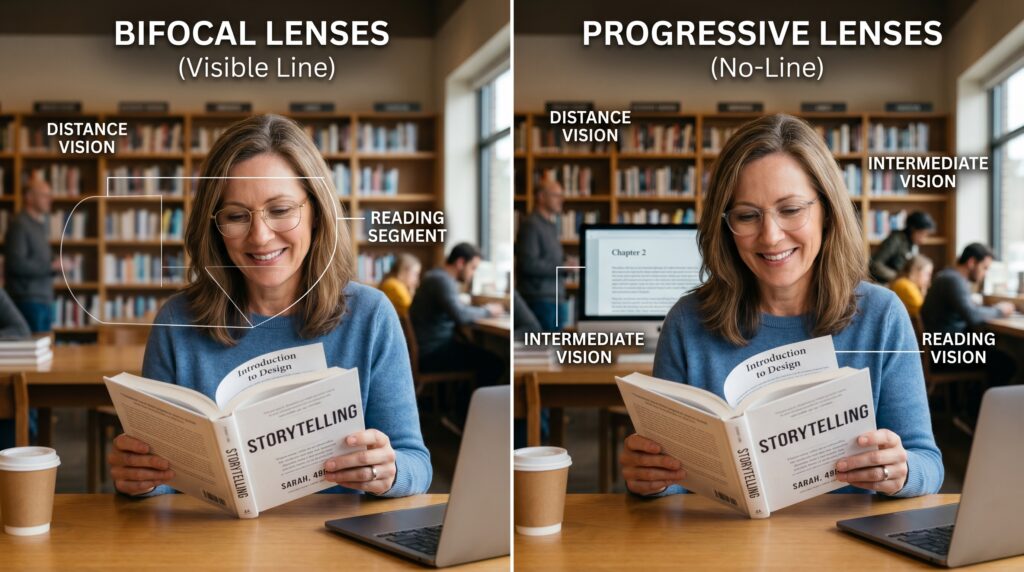
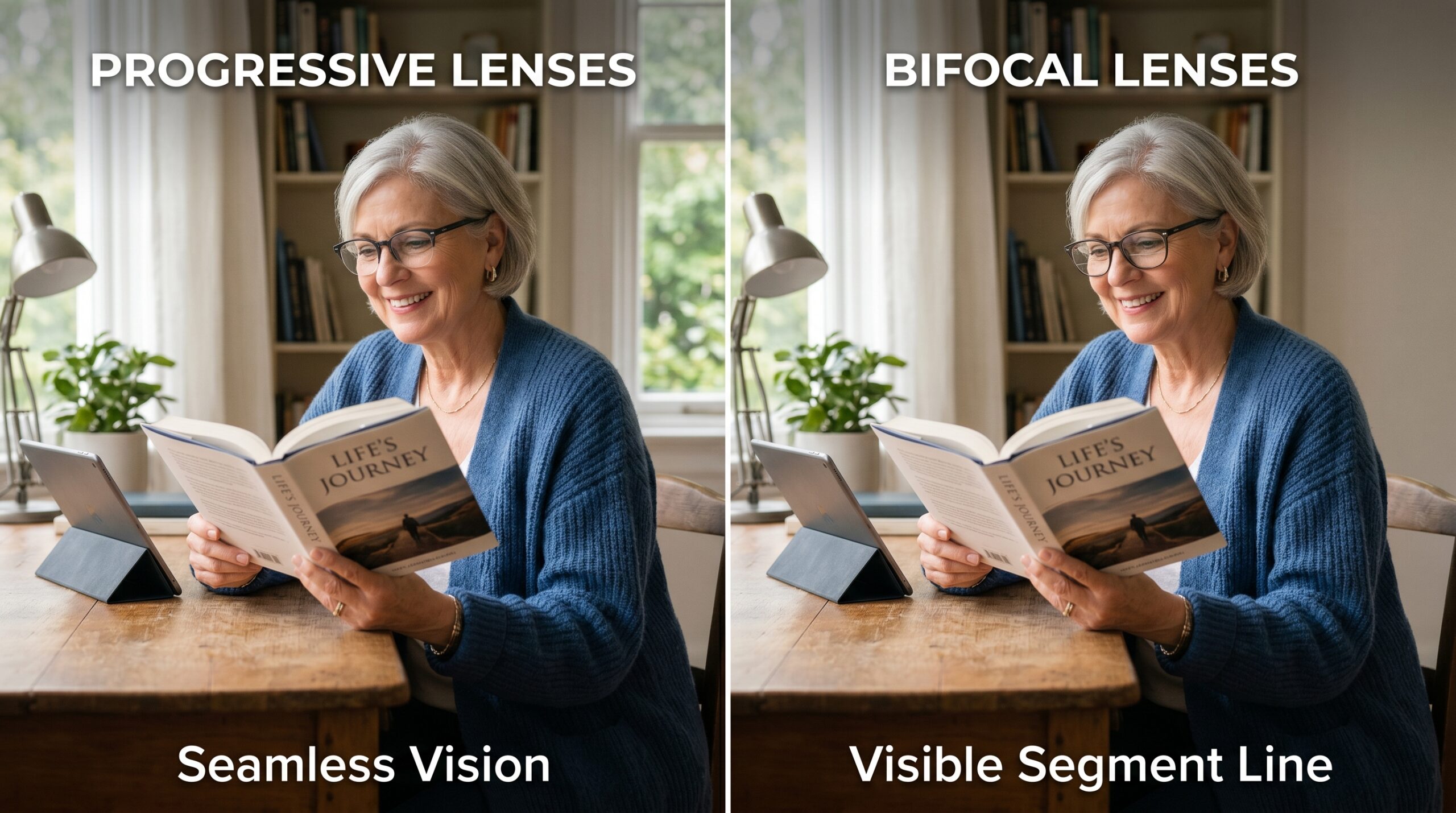
Progressive lenses provide a smooth transition between near, intermediate, and distance vision without visible lines.

Bifocal lenses have two fixed zones for near and distance vision with a visible line in the lens.

Choose progressives for a natural visual experience. Choose bifocals for simplicity and lower cost.
progressive or bifocal


What Are Bifocal Lenses?

Bifocal lenses are glasses that contain two distinct optical powers in one lens.

Key Features

  • Two separate vision zones
  • Upper part for distance vision
  • Lower segment for near vision
  • Visible dividing line
  • Simple lens structure

Best For

  • People who prefer simple design
  • Users who only need near and distance correction
  • Budget conscious buyers
  • Quick adaptation users

Key Insight

Bifocals give clear separation between near and far vision zones.


What Are Progressive Lenses?

Progressive lenses are advanced multifocal lenses that provide a gradual change in prescription strength.

Key Features

  • No visible line
  • Smooth transition between distances
  • Near, intermediate, and far vision in one lens
  • More natural viewing experience
  • Modern lens technology

Best For

  • Computer users
  • Driving and reading combination
  • People wanting natural vision flow
  • Long term comfortable wear

Key Insight

Progressives mimic natural eye movement more closely than bifocals.


Progressive vs Bifocal: Key Differences

Main Differences

  • Bifocals have two zones, progressives have multiple zones
  • Bifocals show a visible line, progressives do not
  • Progressives offer smoother vision transitions
  • Bifocals are easier to adapt to initially
  • Progressives support intermediate vision (like screens)
  • Bifocals are usually more affordable
  • Progressives look more modern and aesthetic

Comparison Table of Progressive or Bifocal

FeatureBifocal LensesProgressive Lenses
Lens DesignTwo sectionsGradual gradient
Visible LineYesNo
Vision ZonesNear + distanceNear + intermediate + distance
ComfortBasicHigh
Adaptation TimeFastModerate
Computer UseLimitedExcellent
AppearanceTraditionalModern
CostLowerHigher
Visual TransitionAbruptSmooth

Real World Usage Scenarios

Scenario 1

User: “I only need reading and driving vision.”

Optician: “Bifocals are enough.”

🎯 Lesson: Simple needs suit bifocals.


Scenario 2

User: “I work on a laptop daily.”

Optician: “Progressives are better.”

🎯 Lesson: Intermediate vision matters for screens.


Scenario 3

User: “I want glasses that look modern.”

Optician: “Progressives have no visible line.”

🎯 Lesson: Aesthetic preference matters.


Scenario 4

User: “I want easy adjustment.”

Optician: “Bifocals are easier to adapt to.”

🎯 Lesson: Simplicity helps beginners.


Scenario 5

User: “I switch between reading, phone, and driving.”

Optician: “Progressives are ideal.”

🎯 Lesson: Multiple distance use needs smooth transition.


Common Mistakes

Mistake 1: Choosing Only Based on Price

Why it happens:

Bifocals are cheaper.

Correction:

Comfort and daily use matter more long term.


Mistake 2: Expecting Instant Comfort with Progressives

Why it happens:

New technology feels unfamiliar.

Correction:

Progressives may need adjustment time.


Mistake 3: Ignoring Work Habits

Why it happens:

People focus only on vision correction.

Correction:

Screen use affects lens choice.


Mistake 4: Not Testing Before Buying

Why it happens:

Assuming all lenses feel the same.

Correction:

Fit and prescription testing is important.


Memory Tricks

Remember Bifocal

Bi = Two zones

Think: simple split vision.

Remember Progressive

Progress = Smooth flow

Think: gradual vision transition.


Expert Insight

Bifocal lenses were developed earlier and provided a practical solution for people needing two vision corrections. However, they create a sharp division that can feel unnatural.

Progressive lenses were developed later to solve this issue by creating a continuous gradient of lens power. This design improves visual comfort, especially for modern activities like computer use and multitasking.

Today, progressive lenses are more commonly recommended, especially for active lifestyles, while bifocals remain a reliable and cost effective option.

Conclusion : Progressive or Bifocal

When comparing progressive or bifocal lenses, the right choice depends on your vision needs and lifestyle.

  • Choose bifocal lenses if you want a simple, affordable option with quick adaptation
  • Choose progressive lenses if you want smooth vision, modern design, and better all around usability
  • Both correct near and distance vision, but progressives offer a more natural viewing experience

If you want simplicity, go with bifocals. If you want comfort and seamless vision, progressives are the better choice.

Scroll to Top