Prosecco or Champagne is a common comparison for people choosing a sparkling wine for celebrations, dinners, weddings, parties, or special occasions. Both drinks are popular sparkling wines, but they differ in origin, production methods, grape varieties, flavor, texture, sweetness, and price.
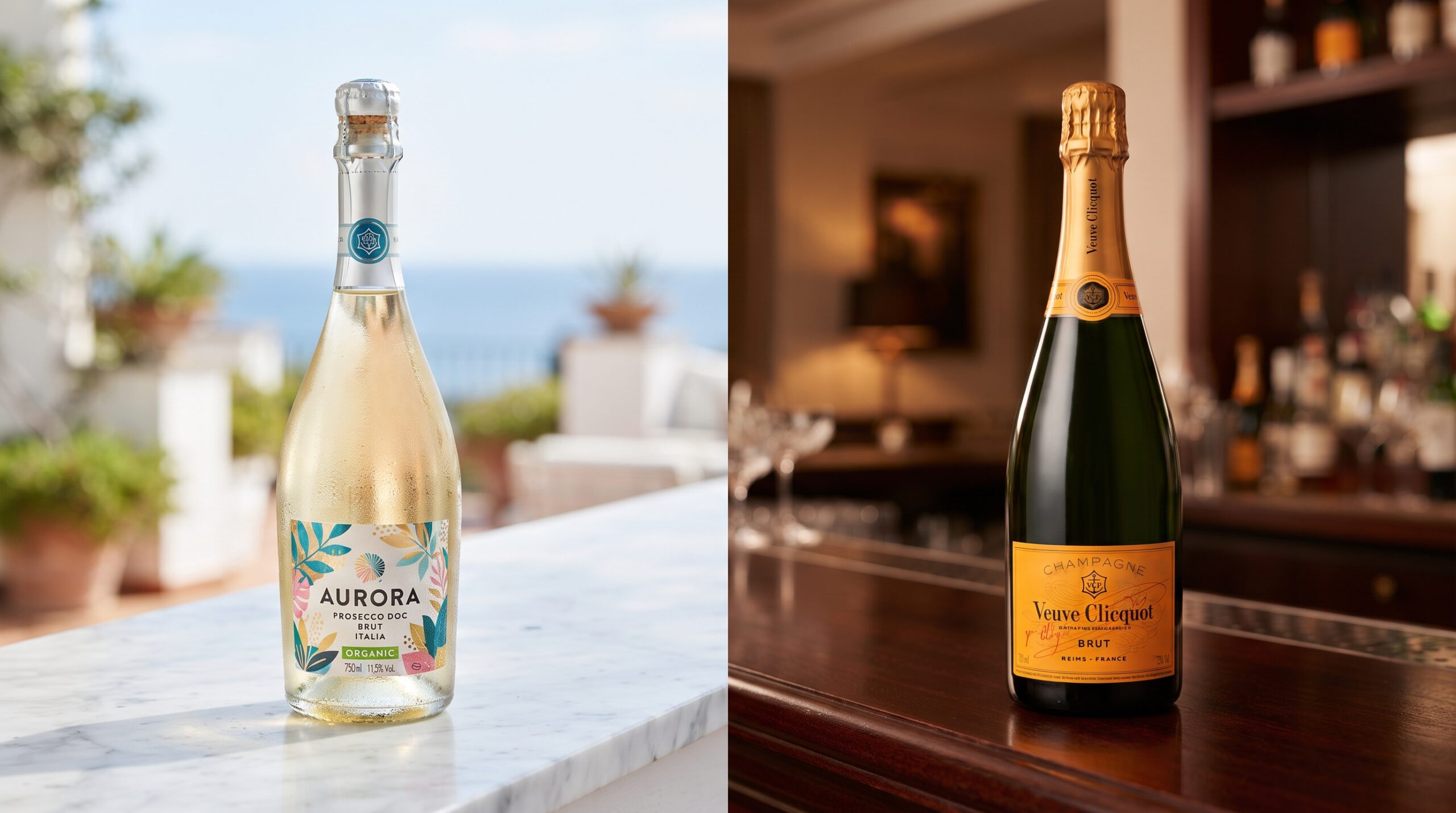
Champagne comes from the Champagne region of France and follows specific production rules that give it a distinctive character. Prosecco is primarily produced in northeastern Italy and is known for its fresh, fruity style and generally more accessible price.
Although both have bubbles and are often served at celebrations, Prosecco and Champagne are not the same drink. Understanding their differences can help you choose the option that best matches your taste, occasion, food pairing, and budget.
Quick Answer
If you prefer a fresh, fruity, lighter sparkling wine at a generally lower price, Prosecco may be the better choice.
If you prefer a more complex, refined, and often toastier sparkling wine with finer bubbles, Champagne may be more suitable.
Choose Prosecco for: casual celebrations, brunches, cocktails, fruity flavors, and budget friendly occasions.
Choose Champagne for: formal celebrations, luxury occasions, special dinners, and people who enjoy complex sparkling wines.
There is no universal winner between Prosecco or Champagne. The best choice depends on your personal taste, budget, occasion, and preferred style.
What Is Prosecco?
Prosecco is a sparkling wine primarily associated with northeastern Italy. It is especially connected with the Veneto and Friuli Venezia Giulia regions.
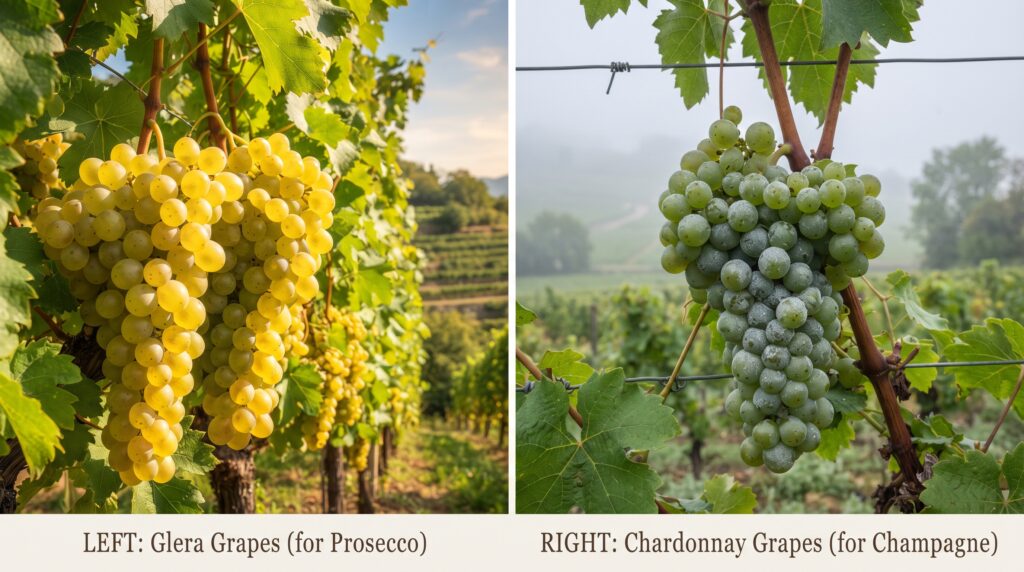
Prosecco is primarily made from the Glera grape and is commonly produced using the tank method, also known as the Charmat method.
This production process helps preserve the fresh fruit character associated with many Prosecco wines.

Main Characteristics of Prosecco
Prosecco is often known for:
- Fresh fruit flavors
- Floral aromas
- Light to medium body
- Bright acidity
- Noticeable bubbles
- Apple and pear notes
- Citrus flavors
- Generally approachable pricing
Prosecco can range from very dry to noticeably sweet, depending on its labeling category.
Common Prosecco Styles
Prosecco is available in different levels of sweetness and carbonation.
You may encounter:
- Brut Nature
- Extra Brut
- Brut
- Extra Dry
- Dry
- Demi Sec
Interestingly, Extra Dry Prosecco is sweeter than Brut Prosecco, which can confuse first time buyers.
What Is Champagne?
Champagne is a sparkling wine produced in the Champagne region of France under strict rules governing production and labeling.
Traditional Champagne commonly uses three major grape varieties:
- Chardonnay
- Pinot Noir
- Meunier
Champagne is traditionally produced using the traditional method, where the second fermentation takes place inside the bottle.
This process can contribute to Champagne’s distinctive texture, complexity, and characteristic flavors.
Main Characteristics of Champagne
Champagne is often associated with:
- Fine bubbles
- High acidity
- Complex aromas
- Toasty flavors
- Bread and biscuit notes
- Citrus flavors
- Apple flavors
- Nutty characteristics
- Long finishes
The flavor profile varies considerably depending on the producer, grapes, vintage, and aging period.
Prosecco vs Champagne: Key Differences
| Feature | Prosecco | Champagne |
|---|---|---|
| Origin | Italy | France |
| Main region | Veneto and Friuli Venezia Giulia | Champagne |
| Main grapes | Primarily Glera | Chardonnay, Pinot Noir, Meunier |
| Production method | Usually tank method | Traditional method |
| Bubble style | Generally softer and more fruit driven | Generally finer and more persistent |
| Flavor | Fresh, fruity, floral | Complex, citrusy, toasty |
| Typical price | Often more affordable | Usually more expensive |
| Aging potential | Usually intended for relatively early enjoyment | Many styles can age well |
| Common occasions | Brunch, parties, casual celebrations | Formal celebrations and special occasions |
| Cocktail use | Commonly used | Also used, but often treated as a premium drink |
| Best for | Fruity and approachable styles | Complex and refined styles |
Taste and Flavor Comparison
Taste is one of the most important factors when deciding between Prosecco or Champagne.
Prosecco Taste
Prosecco often has a fresh and fruit focused profile.
Common flavors and aromas include:
- Green apple
- Pear
- Peach
- Melon
- Citrus
- White flowers
Many people find Prosecco approachable because its fruit flavors can be immediately noticeable.
Champagne Taste
Champagne can have a more complex flavor profile.
Depending on the style and aging process, you may notice:
- Lemon
- Green apple
- Brioche
- Toast
- Almond
- Hazelnut
- Biscuit
- Mineral notes
Champagne can therefore appeal to people who enjoy more layered and developed flavors.
Bubble Comparison
Both Prosecco and Champagne are sparkling wines, but their bubbles can feel different.
Prosecco often has lively, noticeable bubbles with a fresh and approachable texture.
Champagne is often associated with smaller and more persistent bubbles because of its traditional production method and extended contact with yeast during bottle aging.
However, bubble intensity can vary between individual bottles, so production method and producer should also be considered.
Production Method
The production method is a major difference between Prosecco and Champagne.
How Prosecco Is Made
Many Prosecco wines are produced using the tank method.
In this process, the second fermentation occurs in a pressurized tank rather than inside each individual bottle.
This method helps preserve fresh fruit and floral characteristics.
How Champagne Is Made
Champagne uses the traditional method.
The wine undergoes a second fermentation in the bottle, followed by aging on its lees.
The process is more labor intensive and can contribute to the complex aromas and texture associated with Champagne.
Sweetness Comparison
Both drinks can be made in different sweetness levels.
When comparing Prosecco or Champagne, don’t assume that every bottle will have the same sweetness.
Prosecco Sweetness
Prosecco labels can include terms such as:
- Brut Nature
- Extra Brut
- Brut
- Extra Dry
- Dry
- Demi Sec
The terms do not always mean what a beginner might expect. In particular, Extra Dry contains more residual sugar than Brut.
Champagne Sweetness
Champagne can also range from very dry to sweeter styles.
Common categories include:
- Brut Nature
- Extra Brut
- Brut
- Extra Dry
- Sec
- Demi Sec
- Doux
Brut is one of the most commonly encountered styles.
Price Comparison
Price is another major factor in the Prosecco vs Champagne debate.
Prosecco is generally more affordable, although premium Prosecco can still command higher prices.
Champagne is usually more expensive because of its production requirements, regional designation, aging practices, and brand reputation.
However, price alone doesn’t determine quality.
A well made Prosecco can be an excellent choice for someone who prefers fresh and fruity sparkling wine, while a quality Champagne may be worth the additional cost for someone seeking greater complexity.
Food Pairing
Both Prosecco and Champagne can work well with food.
Prosecco Food Pairings
Prosecco’s fruity and refreshing character can pair well with:
- Light appetizers
- Fresh seafood
- Salads
- Soft cheeses
- Pasta
- Pizza
- Light desserts
- Fresh fruit
Its approachable style also makes it popular for casual meals.
Champagne Food Pairings
Champagne’s acidity and complexity make it versatile with many foods.
It can pair well with:
- Oysters
- Shellfish
- Fried foods
- Soft cheeses
- Seafood
- Poultry
- Caviar
- Rich appetizers
The exact pairing depends on the Champagne style and sweetness level.
Best Occasions for Prosecco
Prosecco is often a practical choice for relaxed celebrations and social occasions.
It works particularly well for:
- Brunch
- Birthday celebrations
- Casual parties
- Dinner gatherings
- Cocktails
- Picnics
- Informal celebrations
Its relatively accessible price can also make it suitable when serving sparkling wine to a larger group.
Best Occasions for Champagne
Champagne is traditionally associated with major celebrations and formal occasions.
It can be suitable for:
- Weddings
- Anniversaries
- New Year’s celebrations
- Formal dinners
- Milestone events
- Luxury occasions
- Special gifts
That does not mean Champagne should only be consumed during major events. Many people enjoy it with ordinary meals as well.

Pros and Cons
Prosecco
Pros
- Generally affordable
- Fresh and fruity flavor
- Easy to enjoy
- Widely available
- Good for casual celebrations
- Suitable for many cocktails
- Works well with light foods
Cons
- Usually less complex than aged Champagne
- Some styles can taste overly sweet for people who prefer very dry wines
- Often intended for relatively early consumption
- Bubble texture may be less persistent than traditional method sparkling wine
Champagne
Pros
- Complex flavor profile
- Fine and persistent bubbles
- Excellent food pairing versatility
- Strong association with special occasions
- Many high quality styles are available
- Some bottles can develop additional complexity with age
Cons
- Usually more expensive
- Can be less approachable for people who prefer fruity wines
- Premium bottles can become very expensive
- Some styles may require more familiarity to appreciate fully
Common Mistakes When Choosing Prosecco or Champagne
Choosing Only Based on Price
A higher price does not automatically mean you will prefer the wine.
Consider taste, style, occasion, and personal preference as well.
Assuming They Taste the Same
Both are sparkling wines, but their grapes, production methods, and regional identities are different.
Ignoring Sweetness
Always check the sweetness category before buying.
This is particularly important with Prosecco because Extra Dry is actually sweeter than Brut.
Choosing Champagne Only for Status
Champagne has a strong reputation, but Prosecco can be an excellent choice when you prefer a fresh, fruity, approachable style.
Serving Them at the Wrong Temperature
Sparkling wine is generally best served chilled. Excessive warmth can make the alcohol and flavors seem unbalanced.
Assuming Every Prosecco Is Cheap
There are different levels of Prosecco quality and pricing. Premium examples can be considerably more expensive than entry level bottles.
FAQs
Is Prosecco or Champagne better?
Neither is universally better. Prosecco is often better for people who prefer fresh, fruity flavors and a more affordable sparkling wine, while Champagne may be better for people who prefer complex flavors and fine bubbles.
Is Prosecco cheaper than Champagne?
Prosecco is generally less expensive than Champagne, although prices vary depending on the producer, quality, region, and bottle.
Does Prosecco taste sweeter than Champagne?
It can. Prosecco is available in several sweetness levels, and some styles contain more residual sugar. Champagne also ranges from very dry to sweet.
Which has more bubbles, Prosecco or Champagne?
Both are sparkling wines, but their bubble texture can differ. Champagne often has finer and more persistent bubbles, while Prosecco commonly has a lively and fruit focused sparkling character.
Which is stronger, Prosecco or Champagne?
Alcohol content varies by bottle, but many Prosecco and Champagne wines have similar alcohol levels. You should check the specific bottle for its alcohol percentage.
Can Prosecco replace Champagne?
Yes, in many casual situations. Prosecco can be an excellent alternative when you want sparkling wine without the typical price of Champagne.
Is Champagne more expensive than Prosecco?
Generally, yes. Champagne often costs more because of its protected region, traditional production method, aging requirements, and production costs.
Which is better for cocktails, Prosecco or Champagne?
Prosecco is commonly used in cocktails because of its fresh fruit character and generally lower price. However, Champagne can also be used when a more complex and premium result is desired.
Which is better for weddings?
Both can work well. Prosecco may be more practical for larger celebrations because it is often more affordable, while Champagne can provide a more traditional premium experience.
Which is better for food pairing?
Both are versatile. Champagne’s acidity and complexity make it particularly adaptable to seafood, fried foods, poultry, and rich appetizers. Prosecco can work especially well with lighter dishes and fruit focused foods.
Final Verdict
The choice between Prosecco or Champagne ultimately comes down to taste, occasion, budget, and the type of sparkling wine experience you want.
Choose Prosecco if you prefer fresh fruit flavors, floral aromas, approachable bubbles, and generally lower prices. It is particularly suitable for brunches, casual celebrations, cocktails, parties, and everyday enjoyment.
Choose Champagne if you prefer more complex flavors, finer bubbles, traditional production, and a premium experience. It can be an excellent choice for weddings, anniversaries, formal dinners, and other important celebrations.
The biggest difference is not simply price. Prosecco and Champagne come from different regions, use different grapes, and are generally made using different production methods. These factors create distinct flavors, aromas, textures, and drinking experiences.
Ultimately, there is no single winner in the Prosecco vs Champagne comparison. The best choice is the one that matches your personal taste, budget, food, and occasion.