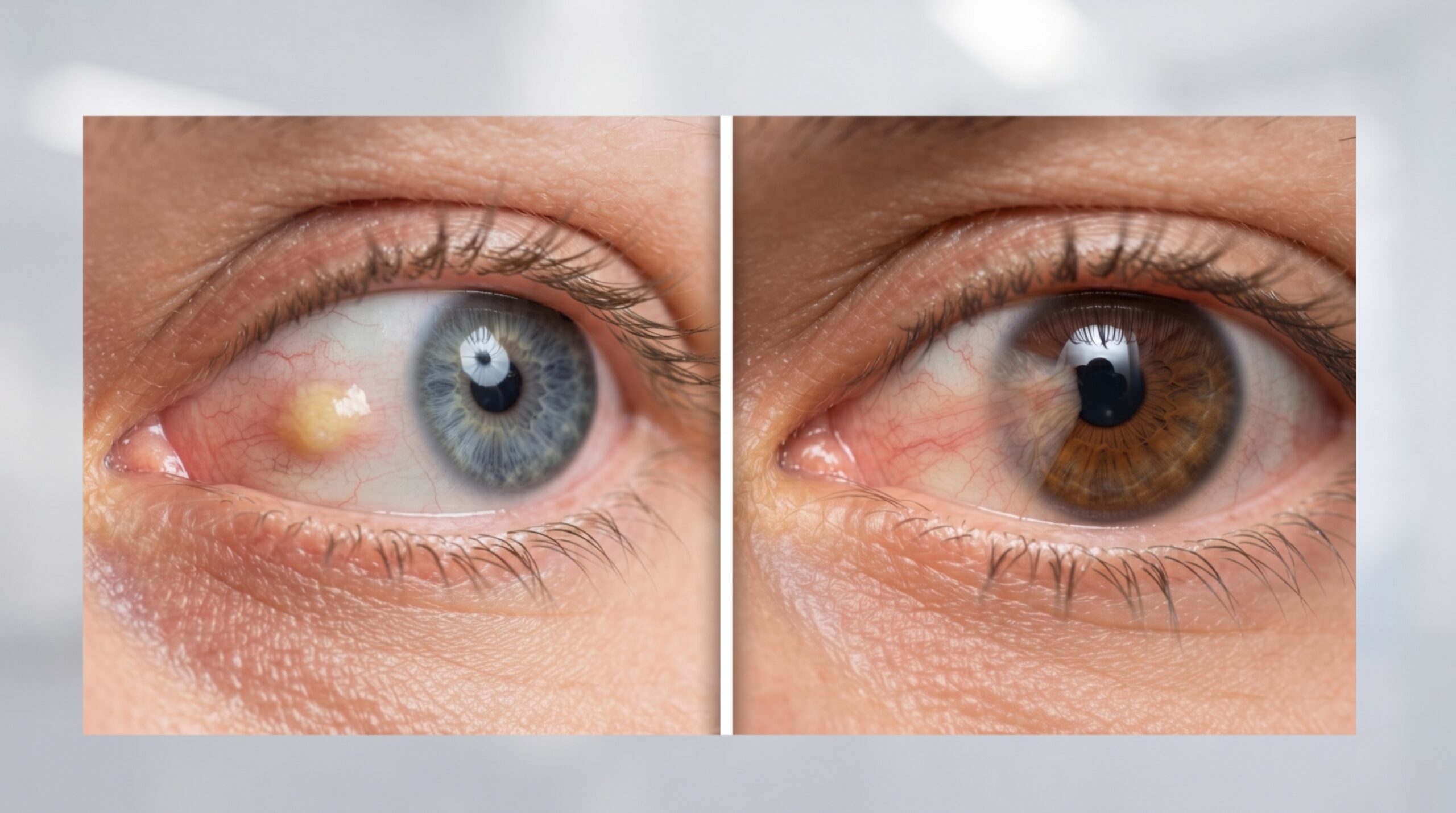
pterygium or pinguecula comparison

Pterygium or Pinguecula: 9 Essential Differences, Symptoms, Causes and Treatment

Pterygium or pinguecula can be confusing because both conditions involve abnormal growths or changes on the surface of the eye. They are often associated with long term exposure to sunlight, wind, dust, and other environmental irritants.

Although they can look similar, a pterygium and a pinguecula are not the same condition. A pinguecula is usually a small yellowish or whitish raised area on the conjunctiva, the clear membrane covering the white part of the eye. A pterygium is a wedge shaped growth of tissue that can extend from the conjunctiva onto the cornea, the clear front surface of the eye.

Understanding the difference between pterygium or pinguecula can help you recognize changes in the eye and understand when professional evaluation may be needed.

 Quick Answer

A pinguecula is usually a yellowish or whitish raised spot on the conjunctiva and generally does not grow onto the cornea.

A pterygium is a triangular or wedge shaped tissue growth that can extend from the conjunctiva onto the cornea.

Both conditions can be associated with ultraviolet light exposure, wind, dust, and chronic irritation.

Pinguecula is usually less invasive, while a pterygium can sometimes grow far enough across the cornea to affect vision.

If you notice a new growth, persistent redness, eye discomfort, or changes in vision, an eye care professional should examine it rather than relying on appearance alone.pterygium or pinguecula

What Is a Pinguecula?

A pinguecula is a noncancerous growth or degeneration of the conjunctival tissue. It commonly appears as a small yellowish or whitish bump on the white part of the eye.

It usually develops on the side of the eye closest to the nose, although it can occur elsewhere on the conjunctiva.

Common Characteristics of Pinguecula

A pinguecula may:

  • Appear yellow or pale
  • Look slightly raised
  • Develop on the conjunctiva
  • Remain relatively small
  • Cause dryness or irritation
  • Become red or inflamed
  • Usually remain outside the cornea

A pinguecula does not normally grow across the cornea.

Common Symptoms

Many people with pinguecula have no symptoms.

When symptoms occur, they may include:

  • Eye dryness
  • Redness
  • Irritation
  • Burning
  • Foreign body sensation
  • Mild discomfort

Environmental conditions such as dust, wind, and prolonged sun exposure can make symptoms more noticeable.

What Is a Pterygium?

A pterygium is a noncancerous growth of conjunctival tissue that can extend onto the cornea.

It is sometimes called “surfer’s eye” because long term exposure to sunlight, wind, and outdoor conditions can increase the risk.

A pterygium may begin as a small area of tissue and gradually extend toward the center of the cornea.

Common Characteristics of Pterygium

A pterygium may:

  • Have a triangular or wedge shape
  • Appear pink, white, or reddish
  • Extend toward the cornea
  • Cause eye irritation
  • Produce redness
  • Cause dryness
  • Affect the appearance of the eye
  • Sometimes interfere with vision
  • The effect on vision depends on the size and location of the growth.

Pterygium vs Pinguecula: Key Differences

FeaturePterygiumPinguecula
TypeConjunctival tissue growthConjunctival degeneration or raised area
AppearanceOften triangular or wedge shapedUsually yellowish or whitish
LocationConjunctiva and potentially corneaConjunctiva
Grows onto corneaYesUsually no
Vision effectsPossible if it reaches the visual axis or changes corneal shapeUsually does not affect vision
IrritationCommon in some casesUsually mild or absent
RednessCan occurCan occur
DrynessPossiblePossible
TreatmentLubrication or surgery in significant casesUsually observation and symptom relief
SurgerySometimes requiredRarely required
Main concernGrowth toward the corneaIrritation and cosmetic appearance

Appearance Comparison

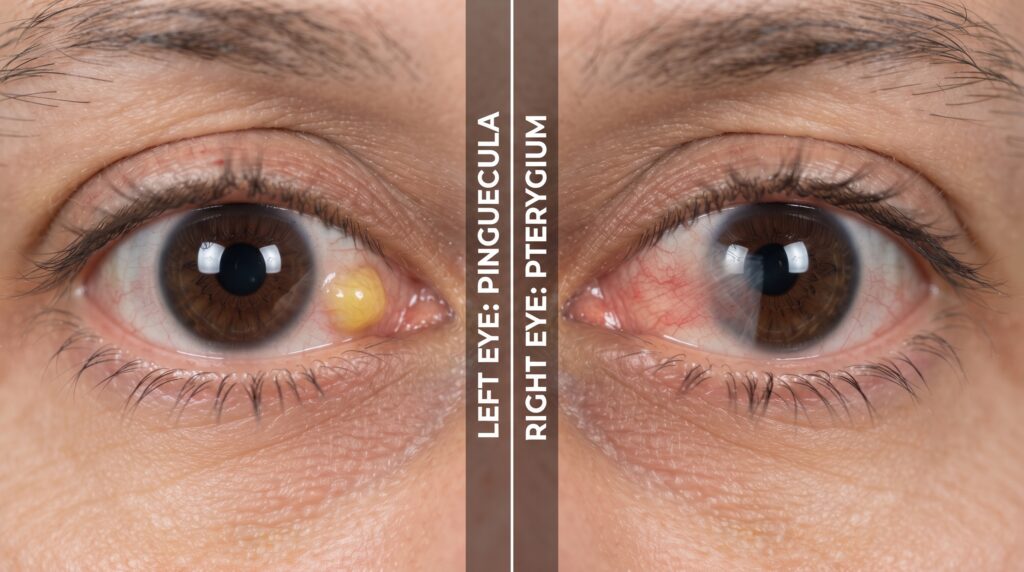
One of the easiest ways to understand pterygium or pinguecula is to compare their appearance.

Pinguecula Appearance

A pinguecula generally looks like a small yellowish or whitish raised area on the white part of the eye.

It usually remains separate from the cornea.

Pterygium Appearance

A pterygium often looks like a triangular or wedge shaped area of tissue.

Unlike a pinguecula, it can extend onto the cornea.

However, appearance alone cannot reliably determine what an eye growth is. An eye doctor can examine the area and make an accurate diagnosis.

Causes and Risk Factors

The exact cause of pterygium and pinguecula can vary, but environmental exposure is an important factor.

Ultraviolet Light

Long term exposure to ultraviolet radiation is associated with both conditions.

People who spend considerable time outdoors without adequate eye protection may have greater exposure.

Wind and Dust

Frequent exposure to wind, dust, sand, and dry conditions can irritate the surface of the eye.

Dry Eye and Irritation

Chronic dryness and irritation may contribute to discomfort and inflammation.

Outdoor Activities

People who spend substantial time outdoors for work, sports, travel, or recreation may have increased exposure to environmental risk factors.

Symptoms Comparison

Symptoms can overlap, but their severity and effects can differ.

Pinguecula Symptoms

A pinguecula may cause:

  • Mild irritation
  • Dryness
  • Redness
  • Burning
  • Foreign body sensation

Many people do not experience noticeable symptoms.

Pterygium Symptoms

A pterygium may cause:

  • Redness
  • Irritation
  • Dryness
  • Burning
  • Foreign body sensation
  • Blurred vision in some cases
  • Astigmatism in larger or more advanced growths

A pterygium that grows toward the central cornea may have a greater effect on vision.

Can Pterygium or Pinguecula Affect Vision?

A pinguecula usually does not affect vision because it remains on the conjunctiva.

A pterygium can affect vision if it grows far enough onto the cornea. It may also change the shape of the cornea and contribute to astigmatism.

Not every pterygium causes vision problems. Many remain relatively small and primarily cause irritation or cosmetic concerns.

Diagnosis

An eye care professional can usually identify these conditions through an eye examination.

The examination may include:

  • Visual acuity testing
  • Examination of the conjunctiva
  • Corneal examination
  • Slit lamp examination
  • Assessment of eye irritation
  • Evaluation of vision changes

A professional examination is important because other eye conditions can sometimes look similar.

Treatment Options

Treatment depends on the size, symptoms, progression, and effect on vision.

Pinguecula Treatment

Most pingueculae do not require surgery.

If irritation occurs, an eye doctor may recommend measures such as:

  • Artificial tears
  • Lubricating eye drops
  • Reducing environmental irritation
  • Sunglasses with UV protection

Inflammation may sometimes require additional treatment prescribed by an eye care professional.

A pinguecula is rarely removed unless there is a specific reason.

Pterygium Treatment

Small pterygia may be monitored if they are not causing significant problems.

Treatment may include:

  • Artificial tears
  • Lubricating eye drops
  • Managing inflammation
  • UV protection
  • Surgical removal in selected cases

Surgery may be considered if the pterygium causes significant irritation, affects vision, interferes with contact lens use, or continues to grow toward the central cornea.

Is Surgery Always Necessary?

No.

Many pterygia do not require immediate surgery. An eye specialist can determine whether monitoring or treatment is appropriate.

Surgery also has potential risks, including recurrence, so the decision should be based on individual circumstances.

Prevention Tips

You cannot always prevent these conditions, but reducing environmental exposure may help protect the eyes.

Wear UV Protective Sunglasses

Choose sunglasses that provide adequate ultraviolet protection.

Wraparound styles can also help reduce exposure from the sides.

Use a Hat Outdoors

A wide brimmed hat can provide additional protection from direct sunlight.

Protect Your Eyes From Dust and Wind

Protective eyewear can be useful in dusty, windy, or hazardous environments.

Manage Dryness

If your eyes frequently feel dry or irritated, ask an eye care professional about appropriate lubricating drops and other measures.

Take Care During Outdoor Activities

People who spend long periods outdoors should pay particular attention to UV protection, especially in environments with strong sunlight, reflective surfaces, wind, or dust.

Pros and Cons

Pinguecula

Pros

  • Usually harmless
  • Often causes few symptoms
  • Generally does not affect vision
  • Usually does not require surgery
  • Can often be managed with simple eye care

Cons

  • Can cause irritation
  • May become inflamed
  • Can cause redness
  • May be cosmetically noticeable
  • Can become more uncomfortable in dry or dusty environments

Pterygium

Pros

  • Often remains manageable
  • Small growths may only require observation
  • Symptoms can often be controlled
  • Preventive eye protection can reduce environmental exposure

Cons

  • Can grow onto the cornea
  • May cause irritation
  • Can cause redness
  • Larger growths can affect vision
  • May contribute to astigmatism
  • Surgery may sometimes be required
  • Can recur after removal

Common Mistakes When Comparing Pterygium and Pinguecula

Assuming They Are the Same

Although they share some risk factors, a pterygium and pinguecula are different conditions.

Ignoring a Growing Eye Growth

A growth that appears to be increasing in size should be evaluated by an eye care professional.

Skipping UV Protection

Long term UV exposure can contribute to eye surface problems. Sunglasses and hats can provide useful protection.

Using Random Eye Drops

Not every eye drop is appropriate for every condition. Avoid prolonged use of medicated eye drops without professional advice.

Waiting Until Vision Changes

Vision changes can be a sign that an eye condition needs assessment. You do not have to wait until vision is affected before seeking an examination.

Assuming Every Red Eye Is a Pterygium

Redness can have many causes, including allergies, infections, dryness, and other eye conditions. A professional examination is needed when symptoms are persistent, severe, or unusual.

When Should You See an Eye Doctor?

Seek professional eye care if you notice:

  • A new growth on the eye
  • A growth that appears to be increasing
  • Persistent redness
  • Ongoing eye pain
  • Significant irritation
  • Light sensitivity
  • Blurred or changing vision
  • A foreign body sensation that does not improve
  • Sudden changes in vision

Sudden vision loss, severe eye pain, significant injury, or severe inflammation requires urgent medical evaluation.

FAQs

Is pterygium or pinguecula more serious?

A pterygium can potentially be more significant because it can grow onto the cornea and sometimes affect vision. A pinguecula generally remains on the conjunctiva and is usually less likely to affect vision.

Can a pinguecula turn into a pterygium?

A pinguecula and pterygium are related to similar environmental risk factors, but a pinguecula does not simply transform into a pterygium. They are considered different conditions.

Does pinguecula affect vision?

Usually, no. A pinguecula normally remains outside the cornea and does not interfere with the visual axis.

Can pterygium cause blurred vision?

Yes. A larger pterygium can grow onto the cornea and may alter its shape, potentially causing blurred vision or astigmatism.

Can pterygium go away on its own?

A pterygium generally does not disappear on its own. Small growths may remain stable and can often be monitored.

Does pinguecula need surgery?

Usually not. Most pingueculae are managed with observation and treatment for symptoms when necessary. Surgery is uncommon.

How can I prevent pterygium and pinguecula?

Reducing UV exposure and protecting the eyes from wind, dust, and dryness can help reduce environmental exposure. Sunglasses with UV protection and a hat are useful preventive measures.

Can children develop pterygium or pinguecula?

These conditions are more commonly associated with cumulative environmental exposure over time, but eye growths can have different causes. Any unusual growth in a child’s eye should be evaluated by an eye care professional.

Is pterygium cancer?

A typical pterygium is a noncancerous growth. However, other eye surface lesions can look similar, which is why an unusual or changing growth should be examined professionally.

Conclusion 

Understanding pterygium or pinguecula starts with recognizing that they are different eye surface conditions.

A pinguecula is generally a small yellowish or whitish raised area on the conjunctiva. It usually does not grow onto the cornea and often causes little or no discomfort.

A pterygium is a wedge shaped growth that can extend from the conjunctiva onto the cornea. Small pterygia may cause only mild irritation, while larger growths can sometimes affect vision or change the shape of the cornea.

Both conditions are associated with environmental factors such as UV exposure, wind, dust, and chronic irritation. Protecting your eyes with UV blocking sunglasses, a hat, and appropriate protective eyewear can help reduce exposure.

If you’re unsure whether an eye growth is a pterygium or pinguecula, don’t rely only on online pictures or self diagnosis. An eye care professional can examine the eye and determine the appropriate approach.

SEO note: This structure includes the focus keyword in the SEO title, slug, meta description, introduction, headings, body, FAQs, and conclusion, while also using related terms naturally. For Rank Math, the final score can still vary depending on your exact title length, keyword placement, internal links, external links, images, alt text, readability, and other settings.

Scroll to Top