
pumice or perlite

Pumice or Perlite: 7 Powerful Differences Explained to Choose the Best Growing Medium

Pumice or Perlite: 7 Powerful Differences Explained for Gardening and Soil Health

Choosing between pumice or perlite can be confusing because both materials are lightweight, volcanic, and commonly used in gardening. They are added to soil mixes to improve drainage, airflow, and root health.

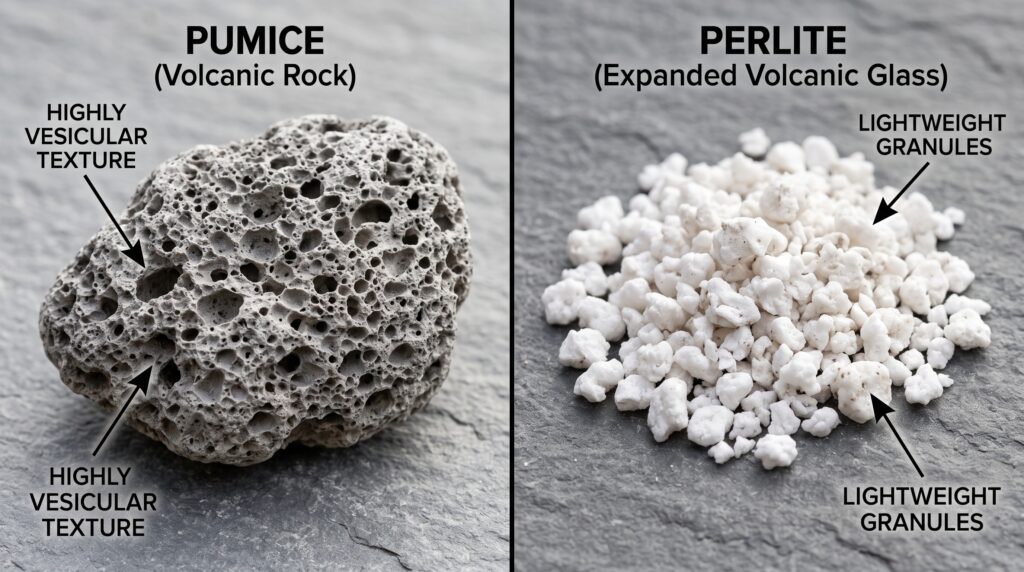
Although they look similar, pumice and perlite have different structures, benefits, and uses. Pumice is a natural volcanic rock, while perlite is expanded volcanic glass processed for horticultural use.

The right choice depends on your plants, climate, watering habits, and the type of soil improvement you need.

This guide explains the differences between pumice and perlite, including drainage, moisture retention, plant uses, durability, and which option works best.


Quick Answer: Pumice or Perlite?

Pumice is heavier, more durable, and holds moisture better. Perlite is lighter, more affordable, and provides excellent soil aeration.

Choose pumice for long term soil structure and outdoor plants. Choose perlite for lightweight mixes and improving drainage.
pumice or perlite


What Is Pumice?

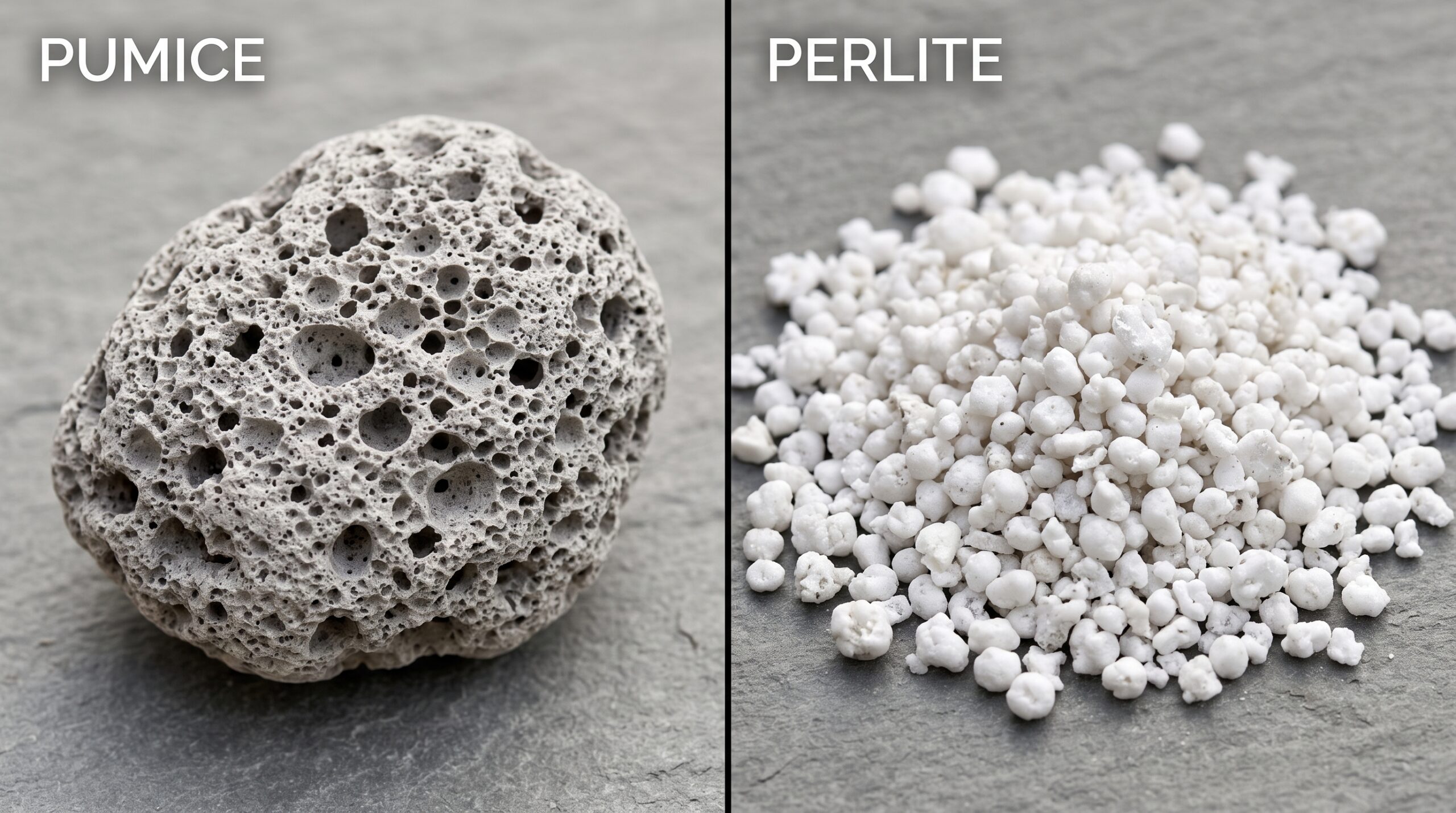
Pumice is a natural volcanic rock formed when volcanic lava cools quickly and traps air bubbles inside.

Because of its porous structure, pumice helps improve soil without breaking down quickly.

Common uses:

• Succulent soil mixes
• Bonsai growing
• Landscaping
• Improving heavy soils

Benefits of Pumice

Pumice provides:

• Long lasting soil improvement
• Good drainage
• Stable structure
• Moderate moisture retention
• Better root airflow

Key insight: Pumice is a durable soil amendment that stays effective for years.


What Is Perlite?

Perlite is a lightweight material made by heating volcanic glass until it expands.

It is commonly used in gardening because it creates air spaces in soil.

Common uses:

• Seed starting mixes
• Potting soil
• Indoor plants
• Hydroponic systems

Benefits of Perlite

Perlite helps with:

• Faster drainage
• Better aeration
• Lightweight soil mixes
• Preventing compact soil

Key insight: Perlite is excellent for creating loose and breathable soil.

Pumice vs Perlite: Main Differences

Feature Pumice Perlite
Origin Natural volcanic rock Expanded volcanic glass
Weight Heavier Very lightweight
Durability Long lasting Can break down easier
Moisture Holding Holds more water Holds less water
Drainage Good Excellent
Best Use Long term soil structure Improving aeration

Real World Usage Scenarios

Example 1: Succulent Plants

Person:
“My succulents need better drainage.”

Better choice:
Pumice or perlite

🎯 Lesson: Both improve drainage, but pumice provides longer lasting structure.


Example 2: Indoor Potting Mix

Person:
“I need a lightweight soil mix for houseplants.”

Better choice:
Perlite

🎯 Lesson: Perlite helps keep indoor soil airy and light.


Example 3: Outdoor Garden Soil

Person:
“My garden soil becomes compact.”

Better choice:
Pumice

🎯 Lesson: Pumice improves soil structure over a longer period.


Example 4: Seed Starting

Person:
“I need a light growing medium.”

Better choice:
Perlite

🎯 Lesson: Perlite helps young roots get air and drainage.


Common Mistakes When Choosing Pumice or Perlite

Mistake 1: Thinking they are exactly the same

Why it happens:
Both look like white volcanic materials.

Correction:
They have different textures and performance.


Mistake 2: Using too much perlite

Why it happens:
More drainage seems better.

Correction:
Too much can reduce moisture retention.


Mistake 3: Choosing only by price

Why it happens:
Perlite is often cheaper.

Correction:
The best option depends on plant needs.


Memory Trick: Pumice vs Perlite

Remember:

Pumice = Permanent and Powerful

Perlite = Light and Loose


Expert Insight: Which One Is Better?

Neither pumice nor perlite is universally better. They solve different soil problems.

Pumice is better when you need:

• Long term soil improvement
• Stable structure
• Moderate moisture control

Perlite is better when you need:

• Lightweight soil
• Faster drainage
• More air around roots

Many gardeners use a combination of both to create a balanced growing medium.


Conclusion: Pumice or Perlite?

The choice between pumice or perlite depends on your gardening goals.

Choose pumice for durability, natural structure, and long lasting soil improvement.

Choose perlite for lightweight mixes, improved airflow, and quick drainage.

Both materials can help plants grow better when used correctly. The best choice depends on your soil type, plant variety, and growing conditions.

 
Scroll to Top