
seamstress or tailor

Seamstress or Tailor: 7 Ultimate Differences Explained for the Best Clothing Choice

Seamstress or Tailor: What’s the Difference?

If you need clothing altered, repaired, or custom-made, you may wonder whether you should hire a seamstress or tailor.

Many people use these terms interchangeably, but they traditionally refer to different types of clothing professionals. Understanding the distinction can help you choose the right expert for your project.

Although they both work with fabric and garments, their training, specialties, and services often differ.

This guide explains the difference between a seamstress and a tailor, including real-world examples, common misconceptions, and practical tips.


Quick Answer : Seamstress or Tailor

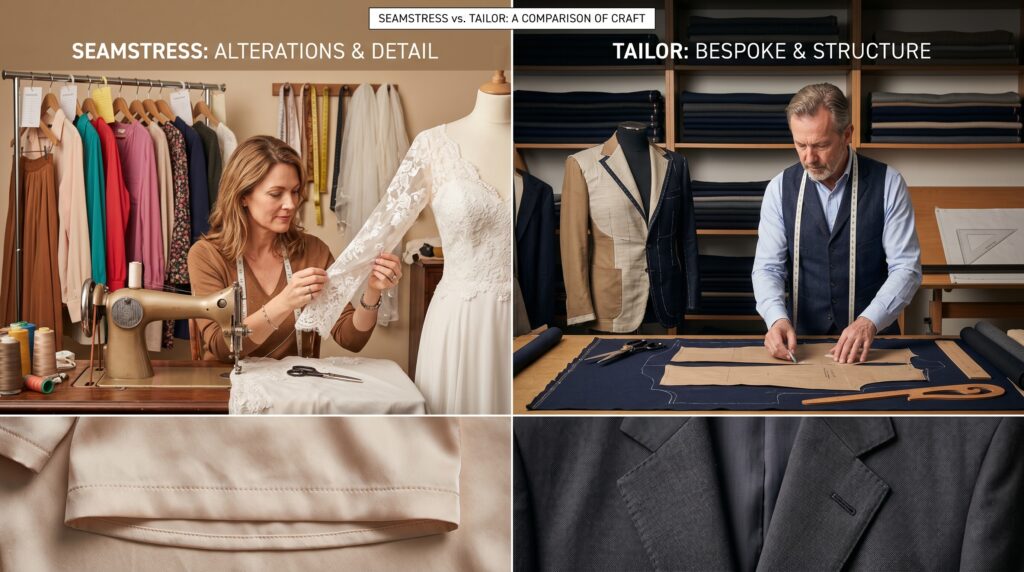
A seamstress is a person who sews, repairs, alters, or creates garments using sewing skills.

A tailor specializes in fitting, altering, and constructing garments to match a person’s body measurements, particularly structured clothing such as suits, jackets, and formal wear.

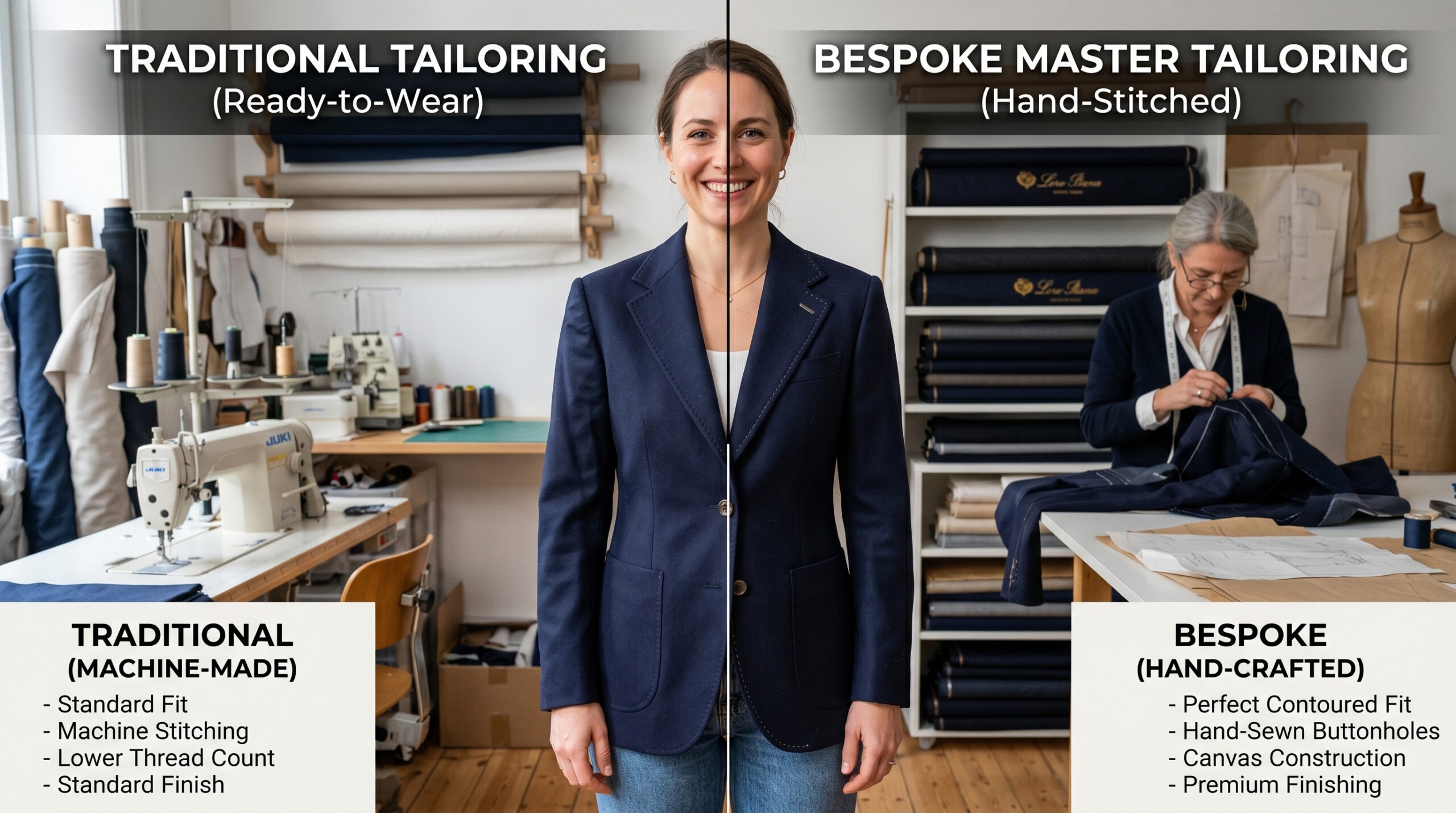
In modern usage, many professionals perform both roles, but tailoring generally involves more advanced garment fitting and customization.
seamstress or tailor


What Is a Seamstress?

Definition

A seamstress is a skilled sewing professional who creates, repairs, alters, or modifies clothing and fabric items.

Traditionally, the term referred to a woman who sewed professionally, although many people today use gender-neutral terms such as “sewer” or “sewing professional.”

Common Services

  • Clothing repairs
  • Hemming pants and skirts
  • Replacing zippers
  • Altering dresses
  • Sewing custom fabric items
  • Mending torn garments

Real Examples

Example 1

A seamstress shortens a wedding dress hem.

Example 2

A customer brings a jacket for zipper replacement.

Example 3

A seamstress repairs a torn seam in a shirt.

Key Insight

Seamstresses focus heavily on sewing, repairs, alterations, and garment construction.


What Is a Tailor?

Definition

A tailor is a clothing specialist trained to fit, alter, and construct garments according to a person’s body measurements.

Tailors are particularly associated with structured garments that require precise fitting.

Common Services

  • Suit alterations
  • Jacket fitting
  • Custom suit creation
  • Formalwear adjustments
  • Measurement-based garment construction
  • Advanced fit modifications

Real Examples

Example 1

A tailor adjusts a business suit to fit perfectly.

Example 2

A groom orders a custom-made wedding suit.

Example 3

A tailor reshapes a jacket’s shoulders and sleeves.

Key Insight

Tailoring focuses on fit, structure, and body-specific garment customization.


Seamstress vs Tailor: Key Differences

Main Differences

  • Seamstresses focus primarily on sewing and garment alterations.
  • Tailors specialize in garment fitting and shaping.
  • Tailors often work with suits and formalwear.
  • Seamstresses frequently handle repairs and general alterations.
  • Tailoring typically involves more body measurement analysis.
  • Both professions require strong sewing skills.

Comparison Table of Seamstress or Tailor

FeatureSeamstressTailor
Primary FocusSewing and alterationsFit and customization
RepairsCommonLess common
HemmingCommonCommon
Custom ClothingPossibleCommon
Suit ExpertiseLimited to varies by professionalSpecialized
Measurement-Based FittingBasic to moderateAdvanced
Formalwear AlterationsOftenFrequently
Garment ConstructionYesYes

Real-World Usage Scenarios

Scenario 1

Customer: “My dress is too long.”

Professional: “A seamstress can hem it.”

🎯 Lesson: Basic alterations are often handled by seamstresses.


Scenario 2

Customer: “My suit doesn’t fit properly.”

Professional: “A tailor can adjust it.”

🎯 Lesson: Tailors specialize in fit-related changes.


Scenario 3

Customer: “My zipper broke.”

Professional: “A seamstress can replace it.”

🎯 Lesson: Repairs are common seamstress services.


Scenario 4

Customer: “I want a custom wedding suit.”

Professional: “A tailor is the best choice.”

🎯 Lesson: Tailors excel at structured custom garments.


Scenario 5

Customer: “Can one person do both?”

Professional: “Many modern professionals offer both sewing and tailoring services.”

🎯 Lesson: The distinction can overlap in practice.


Common Mistakes

Mistake 1: Assuming They Are Identical

Why it happens:

Both work with clothing.

Correction:

Their specialties are often different.


Mistake 2: Taking Complex Suit Alterations to a Basic Repair Shop

Why it happens:

People underestimate the skill required.

Correction:

Choose a tailor for advanced fitting work.


Mistake 3: Thinking Tailors Only Make New Suits

Why it happens:

Tailoring is often associated with custom clothing.

Correction:

Many tailors also perform alterations.


Mistake 4: Ignoring Experience

Why it happens:

Job titles alone influence decisions.

Correction:

Review a professional’s portfolio and expertise.


Memory Tricks

Remember Seamstress

Seamstress = Seams + Sewing

Think repairs, stitching, and alterations.

Remember Tailor

Tailor = Tailored Fit

Think custom measurements and perfect fit.


Expert Insight

Historically, seamstresses and tailors had more clearly defined roles. Seamstresses often focused on sewing garments and household textiles, while tailors specialized in shaping structured clothing to fit individual clients.

Today, many clothing professionals combine both skill sets. However, tailoring remains associated with precision fitting, garment structure, and custom clothing construction.

The growing popularity of custom fashion and sustainable clothing repair has increased demand for both seamstresses and tailors.

Conclusion : Seamstress or Tailor

When comparing seamstress or tailor, the right choice depends on the type of clothing service you need.

A seamstress is typically the best option for repairs, hemming, zipper replacements, dress alterations, and general sewing work. A tailor, on the other hand, specializes in precise fitting, suit alterations, formalwear adjustments, and custom-made garments designed to match your body measurements.

While the distinction between the two professions has become less strict over time, tailoring still focuses more on fit and garment structure, whereas seamstress work centers on sewing and alterations.

Before choosing a professional, consider your specific needs, the complexity of the garment, and the level of customization required. By selecting the right expert, you can ensure your clothing looks, fits, and feels its best.

Scroll to Top